
Add us as your preferred source on Google to see more of our content in Search.
 Add to Preferred Sources
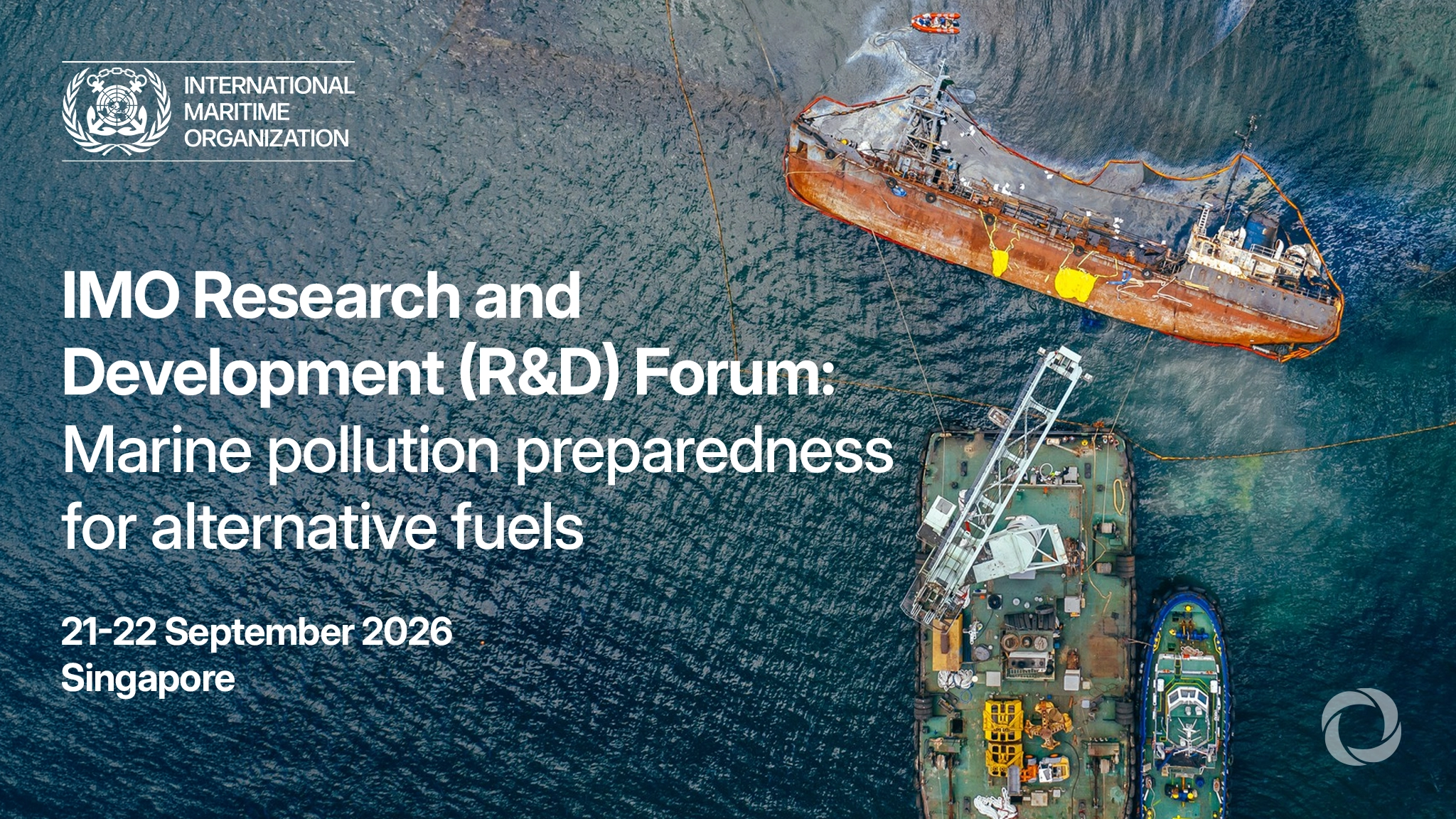
📅 21-22 September 2026
Suntec Singapore
The transition to alternative marine fuels is essential to achieving IMO’s decarbonisation goals, but it also introduces new and complex pollution response risks. Strengthening global preparedness through research, innovation and cooperation is therefore a critical priority.
The IMO Research and Development (R&D) Forum will address the critical knowledge and capability gaps in responding to spills involving alternative marine fuels (liquefied natural gas, liquefied propane gas, methanol, ammonia, hydrogen, bio/e-fuels).
Scheduled for the same week as World Maritime Day 2026, the forum directly supports the World Maritime Day theme 2026-2027, “From Policy to Practice: Powering Maritime Excellence”, by translating high-level environmental policy into practical implementation tools.
The forum, in partnership with Singapore and China, will convene global experts, including representatives from least developed countries (LDCs) and small island developing States (SIDS), to advance science-based preparedness and response to alternative fuel spills.
The Forum will include the following thematic sessions:
- Introduction and Scene Setting;
- Spill Fate and Behaviour;
- Atmospheric and water column Modelling;
- Risk Assessment and Preparedness;
- Emergency Response;
- Post-spill Actions;
- Cooperation and coordination mechanisms.
Each theme will include expert presentations, case studies, panel discussions and interactive working sessions.
The Forum aims to:
- Improve technical knowledge exchange, information sharing and collaboration between stakeholders;
- Strengthen existing and create new international cooperation frameworks;
- Generate a global research and development roadmap;
- Create of a centralised knowledge repository, freely accessible by all stakeholders;
- Develop a capacity building framework for response to incidents involving alternative fuels; and
- Initiation of national and regional post-event follow-up activities.
A full report summarising the outcomes of the discussions, and highlighting opportunities for future collaboration, will be produced after the event.
Special emphasis will be placed on participation from least developed countries (LDCs) and small island developing States (SIDS).