
Add us as your preferred source on Google to see more of our content in Search.
 Add to Preferred Sources
Palestinians living along Israel’s “yellow line” in Gaza face repeated cycles of displacement, gunfire, and dire humanitarian conditions, according to the United Nations (UN). The line, initially set up following the announcement of the Israel-Hamas ceasefire agreement of October 2025, splits Gaza into two sections, confining most Palestinians to the western zone while the eastern zone remains under Israeli military control. Testimonies gathered from residents of Al-Tuffah and Zeitoun neighborhoods describe daily fear, loss, and uncertainty. UN agencies report continued Israeli military operations despite the ceasefire declared last year. The situation underscores mounting humanitarian needs across the Strip.
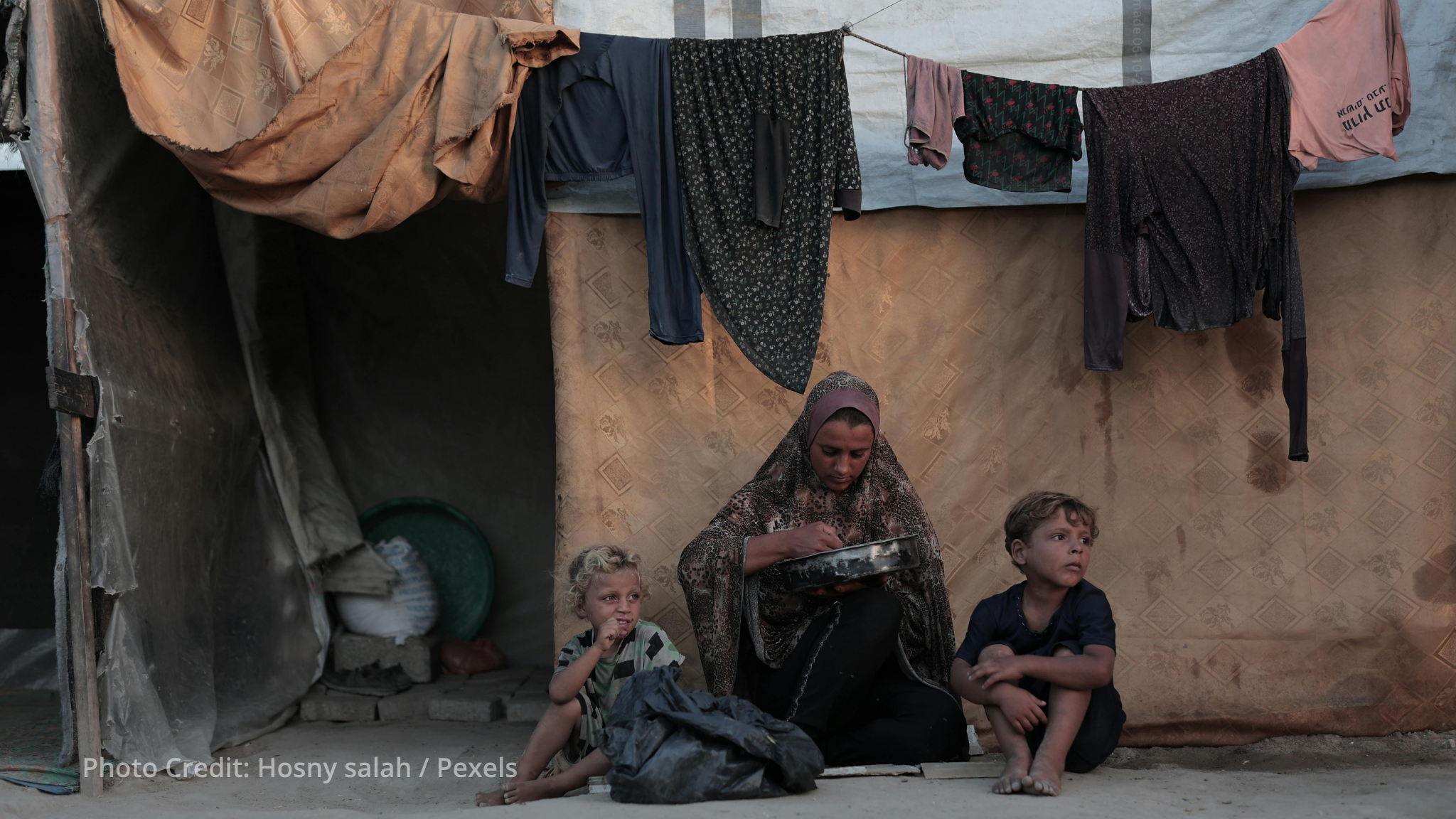
At first, the “yellow line” left roughly 47 per cent of the Strip for the Palestinian population, but Israeli forces have gradually pushed the line inwards, according to the UN Office for the Coordination of Humanitarian Affairs (OCHA). Palestinians currently live in less than 40 per cent of Gaza’s land area, the UN said. This inward push has forced families living close to the line into repeated displacement. Some 2.1 million people – almost the entire population of the Strip – are currently displaced and living within the limits of the “yellow line”. Many remain in eastern Gaza City neighborhoods because they have nowhere else to go.
Ibtisam Malika, a resident of the Zeitoun neighborhood near the line, described the recurring cycle of displacement, return, and displacement again.
“Every two to three months, we are forced to move and leave our belongings behind,” she said. “We can’t take it anymore. We lost half of our children in the war, and only remnants of us remain.”
Families near the painted yellow blocks remain on high alert, fearing they may have to abandon their property and flee if the security situation changes.
The UN said finding safer sites to establish camps for displaced people has become more difficult because much of the suitable land lies within prohibited or restricted areas east, south, and north of the “yellow line” and beyond. Some 1.98 million people, or 94 per cent of Gaza’s population, need assistance related to shelter and non-food items, according to the latest shelter assessment published by OCHA. Additionally, 84 per cent of families live in extremely difficult conditions, including shelters or tents that do not provide adequate protection from the weather. Ahmed Arhim, from the Zeitoun neighborhood, said the sounds of gunfire and drones make it difficult to sleep, especially for children. “This is not life,” he said.
Local authorities have reported 1,334 deaths and 4,429 injuries since the ceasefire’s announcement on 10 October 2025, according to OCHA’s latest humanitarian update. “The bloodshed in Gaza must stop,” the UN Human Rights Office said in a recent statement, noting that over a five-day period in late August, 24 Palestinians were killed in Israeli attacks, including four children and a woman. Twenty-one of them were killed in air raids. Residents near the “yellow line” continue to ask where they can move next. For many, as Safaa Mushtaha of Al-Tuffah put it, that question has defined daily life for three years.