

Add us as your preferred source on Google to see more of our content in Search.
 Add to Preferred Sources
Key reasons to read this article:
- Nearly half of farmers worldwide face acute pesticide poisoning each year, but the actual number could be even higher.
- Reducing the use of pesticides sounds simple until yields, income and food security enter the equation.
- Do safer farming alternatives exist? If so, who will pay for the volatile transition period?
- Who should bear the cost of using pesticides more safely?
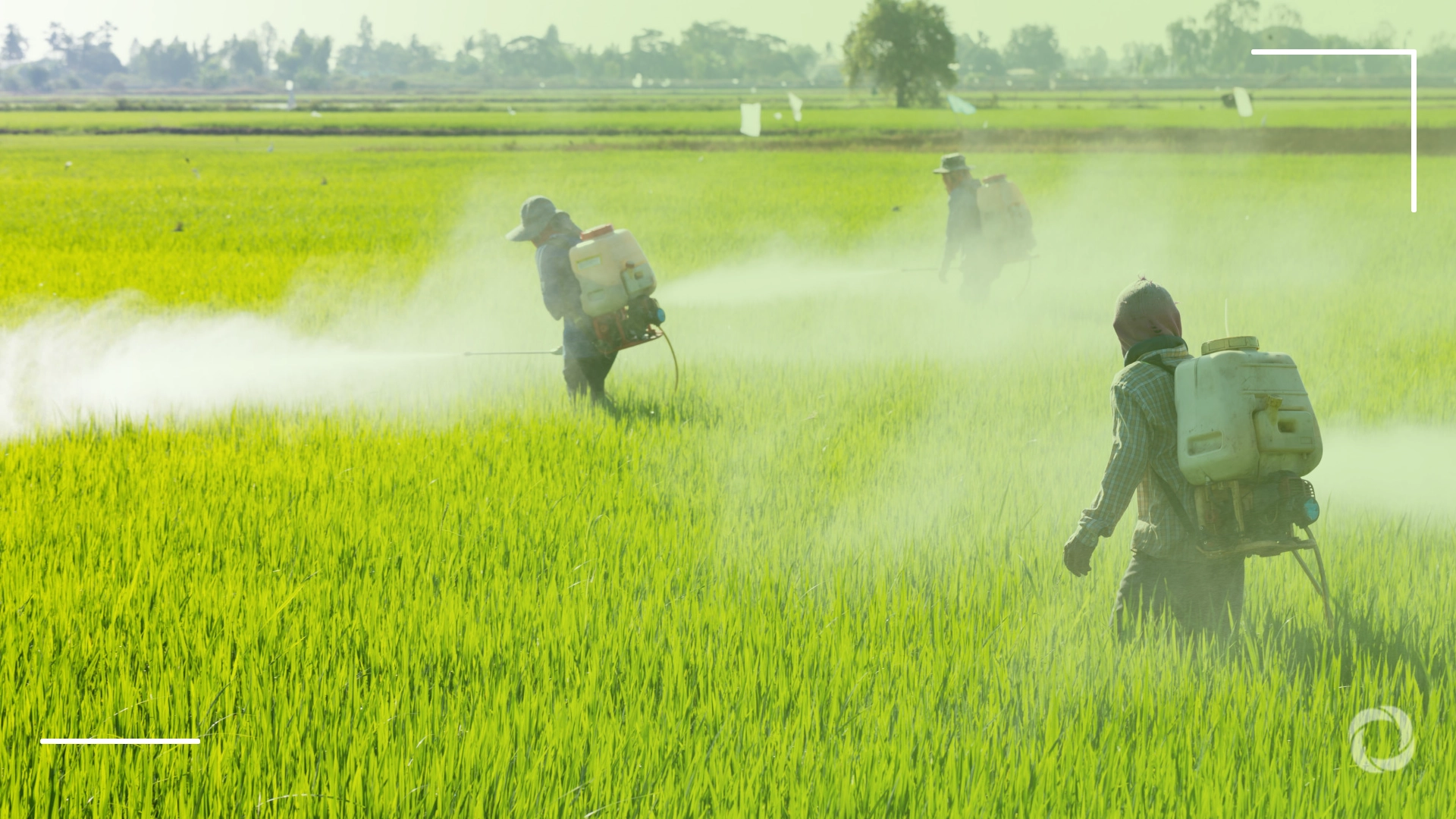
Nearly half of the world’s farmers experience acute pesticide poisoning each year as they grow the food we eat. New data commissioned by Pesticide Action Network estimates 402 to 433 million cases of unintentional acute pesticide poisoning occur annually among 934 million farmers and farm workers. That represents about 46% of the farming population. The same analysis puts deaths from such poisoning at around 11,000 per year.
This is a staggering figure. Agriculture depends on chemicals to protect crops, improve yields and safeguard food security, especially in vulnerable regions. But the people producing that food are paying a significant, and often inaccurately measured, health cost.
Where the burden is heaviest
The impact is not evenly distributed. Burkina Faso recorded the highest national rate of pesticide poisoning, with nearly 84% of farmers and farm workers reporting exposure. India had the largest share of fatalities globally, accounting for almost 60% of the estimated deaths from unintentional poisoning.
Geographically, the burden is concentrated in low- and middle-income countries across Southern Asia, followed by South East Asia and East Africa. Sarojeni Rengam, Executive Director of PAN Asia Pacific, explained that South and South-East Asia lead in non-fatal pesticide poisonings, and this result is not surprising.
“We witness the daily toll on farmers, workers, women and rural communities,” she noted.
Why exposure remains so widespread
Despite decades of regulations, pesticide use has doubled. Global data shows 3.8 million tons were used in 2023, up from roughly 1.9 million tons in 1990.
Three issues may help to explain why exposure remains widespread:
- Regulatory and enforcement gaps: Highly hazardous pesticides that are banned in some high-income countries are still manufactured and exported to countries with weaker controls. In 2024, EU member states, for instance, exported almost 122,000 tons of banned pesticides, many of which were shipped to low- and middle-income countries where their use is permitted or where regulatory controls differ. Labels are often in languages farmers do not read, and safety is treated as discretionary rather than mandatory.
- Economic lock-in: Modern farming is built around chemical inputs to guarantee yields. Moving away from this creates immediate financial risk. The “pesticide treadmill” makes it worse: overuse leads to pest resistance, forcing farmers to spray more or use older, more toxic mixtures.
- Practical barriers on the ground: Safer alternatives and Personal Protective Equipment (PPE) are expensive and hard to find in rural areas. PPE is also impractical in tropical heat. Training in Integrated Pest Management is rare where government extension services are weak.
“Women across Africa face greater risks from pesticide exposure because they do much of the farming, weeding, and harvesting. Many lack protective equipment, safety training, and control over farm resources. This leaves them vulnerable to both short-term and long-term health problems, with added risks for unborn and breastfeeding children,” commented Dorah Swai, PAN Anglophone Africa Coordinator.
Why the numbers are underreported
The 402 to 433 million cases are likely to be an underestimate. Health systems in rural areas rarely track pesticide poisoning. Symptoms such as headaches, nausea and dizziness are often mistaken for flu or heat exhaustion. Clinics are usually far away, so many farmers self-medicate.
Farmworkers also fear losing jobs or pay if they report illness. In some countries, deaths linked to self-harm are hidden due to stigma or legal barriers. Without proper surveillance, governments and donors lack the data required to act effectively.
The tension: health vs. productivity
This creates a hard trade-off. Reduce the use of pesticides without alternatives being available and yields drop, incomes fall, and food prices rise. Maintain the current levels of use and the resultant poisoning, soil damage, and pollinator loss increase.
A UN Report of the Special Rapporteur on the right to food warns that heavy pesticide use drives biodiversity loss. Residues can persist for decades, contaminating both the soil and water. This weakens ecosystems, reduces beneficial insects that control pests, and can lower food nutrition.
For smallholders, switching to agroecology is risky. Safer practices like crop rotation, biopesticides and biological controls involve more labor, training, and upfront investment. It also takes time for the land to recover. Nevertheless, agroecological practices are being adopted in some farming systems.
“Asia has deep knowledge of agroecology. Farmers across the region are already proving that pesticide-free food systems are possible and are growing them,” Sarojeni Rengam highlighted.
Agroecology might offer an alternative, but the transition is complicated. Field studies show farms using diversified cropping, natural pest predators and targeted spraying can maintain or even increase yields. One meta-analysis found an average 79% yield increase on farms integrating agroecological practices. The catch is the transition period, when labor rises and yields can be volatile before soil health and natural controls recover.
Pesticides do have a role in this system. The aim is to use less, more precisely, and only when needed.
Shifting the cost
As farmers seek to reduce unnecessary pesticide use and adopt safer practices when feasible, the global food system faces an important question: who bears the cost of making food production safer, particularly for smallholders in low-income countries?
Fixing this will take more than simply reducing chemical use. It requires investment from governments, development banks, and food companies in training, safer products, and agroecology. Without that, we risk trading short-term food security for long-term damage to both human health and the ecosystems farming depends on.