


Add us as your preferred source on Google to see more of our content in Search.
 Add to Preferred Sources
For international development consultants, life is often lived out of suitcases, filled with goodbyes and new beginnings. Lately, amidst tightening budgets and localized implementation mechanisms, the future of international consultants looks uncertain, to say the least. More and more, donors focus on offering money for strengthening local organizations and governments, which leaves less room for international consultants, whose costs cannot be covered during austerity times. What seemed like a dream career just a few years ago has now become a struggle to secure one’s next assignment. We discussed this challenge with seven international development professionals who shared their opinions on the future of development consultancy. Read their insights below.
Key Takeaways:
- According to experts’ opinions, international consultants can bring knowledge and experience from different contexts and help organizations avoid constantly reinventing the wheel.
- The real opportunity is to combine local strength with selected international expertise, cross-country experience, independent benchmarks, and access to broader professional and financial networks.
- The role of international consultants is likely to become more focused: less on substituting local capacity, and more on providing specialist advice, integration, quality assurance, knowledge transfer and access to IFIs, investors and lenders.
- It would be necessary to reinforce locally led systems by emphasizing the strengthening of institutions, infrastructures, and local human resources with the goal of mitigating reliance on external intervention.
DevelopmentAid: As donors increasingly turn to localization, what is the role of international consultants and what does their future look like?

“As development becomes increasingly localized, the role of international consultants should undergo a profound transition: from directive leadership to technical partnership and “critical friendship,” facilitating active listening and helping to rebalance power relations (Chambers, 1997; Pailey, 2021). This also entails an ethical responsibility to address historical asymmetries in knowledge production and access to resources between the Global North and Global South (Rist, 2014; Santos, 2014). Authentic localization requires an “ecology of knowledge” that recognizes local expertise and challenges epistemic injustice (Fricker, 2007). It cannot mean merely replacing international staff while leaving underlying hierarchies unchanged (Mohan & Stokke, 2000; Peace Direct et al., 2021). In practice, local actors should shape agendas, questions, methodologies and criteria for success, while international experts contribute complementary knowledge and methods. This is where action research and iterative adaptation become more than methodological choices: they create structured cycles of learning, acting, reflecting and adapting together, allowing locally grounded knowledge to shape decisions throughout implementation (Burns, 2007; Andrews et al., 2017). International consultants should therefore act as facilitators, specialised technical partners and critical friends—helping knowledge circulate in both directions while ensuring that ownership, decision-making and lasting capacity remain local.”

“Localization in international development has emerged as a pivotal strategic direction reshaping the consultancy landscape. Driven by shifts in international funding priorities, donor emphasis on local contexts, and rising demands for national self-reliance, this shift deserves to be embraced. Localization not only reinforces national leadership but also creates space for local consultants to assume more strategic and influential roles. In this new paradigm, international consultants are no longer primary implementers. They evolve into catalysts, and their true value lies in transformative roles including building capacity, driving partnerships, and enabling knowledge transfer that accelerate institutional growth and resilience. The transition toward localization is most pronounced in developing countries, including Indonesia. National and local actors contribute irreplaceable strengths: regulatory insight, socio-cultural awareness, community dynamics, and on-the-ground realities. These assets are critical to project success, acceptance, and long-term sustainability. Still, significant challenges persist across this broader ecosystem: project management systems not fully aligned with global standards, slower adoption of advanced technologies, limited access to large-scale projects, a shortage of certified professionals, and institutional capacity gaps in governance, finance, and monitoring and evaluation. Despite these challenges, national and local actors are consolidating leadership roles, reinforcing institutional capacity, and steadily earning greater professional recognition. At this stage, international consultants serve as a crucial bridge aligning local leadership and capacity with global standards. In strategic partnership, each side plays a complementary role: national and local actors provide the driving force, while international consultants ensure stability and alignment. By offering expertise, opening international networks, and facilitating knowledge transfer, consultants help local leadership grow into global competitiveness. This partnership strengthens local capacity and nurtures a resilient, adaptive, and sustainable development ecosystem.”

“Localization should not mean replacing international expertise with local expertise. It should mean changing how the two interact. First, knowledge exchange remains essential. Working in silos, without understanding what has already been tried, what worked, what failed and why, is rarely a good use of resources. International consultants can bring knowledge and experience from different contexts and help organizations avoid constantly reinventing the wheel. Second, localization is being discussed because existing approaches have not always produced sustainable change. Sometimes external support was insufficiently adapted to the context; sometimes expertise was left without enough local capacity to continue, challenge or advance the work. This leads to a third point: international expertise creates the most value when it meets strong local expertise. External consultants can bring experience, evidence and lessons, but local professionals must be positioned not simply to absorb or apply that knowledge, but to transform it into context-specific strategies and new solutions. International consultants therefore need humility. What worked elsewhere may fail locally, while an approach that failed in one context may succeed in another. Their future role should be less about transferring solutions and more about exchanging knowledge that local actors can question, adapt and ultimately own.”
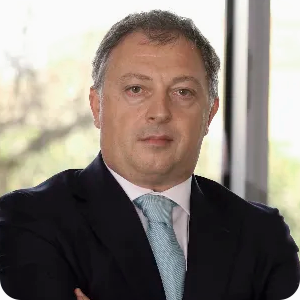
“Localization is important because strong local teams bring deep knowledge of institutions, stakeholders, market dynamics and implementation realities. The real opportunity is to combine this local strength with selected international expertise, cross-country experience, independent benchmarks and access to broader professional and financial networks. In my experience, the most effective model has been a limited number of highly qualified international specialists working alongside strong local professionals. This does not necessarily require senior international experts to be permanently embedded in a ministry or project unit for several years. A better approach can often combine locally led, full-time teams with continuous access to senior international expertise, supported by targeted in-country missions at critical stages. The role of international consultants is therefore likely to become more focused: less on substituting local capacity, and more on providing specialist advice, integration, quality assurance, knowledge transfer and access to IFIs, investors and lenders. The future is neither purely international nor purely local. It is about building the best team around the problem, based on competence rather than geography.”
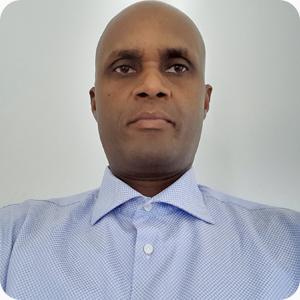
“My conviction is that operational frameworks should be completely restructured in light of localization that has become an increasingly important principle in international development. Accordingly, the responsibilities of international consultants should shift to offering highly specialized expertise as technical advisors who bridge highly specific knowledge gaps in various domains that cannot yet be met locally. Another approach could involve promoting knowledge exchange instead of requiring multiple deliverables through consulting services. In this section, solutions should include training that equips local resources with global best practices relevant to local ecosystems. Finally, it would be necessary to reinforce locally led systems by emphasizing the strengthening of institutions, infrastructures, and local human resources with the goal of mitigating reliance on external intervention.”
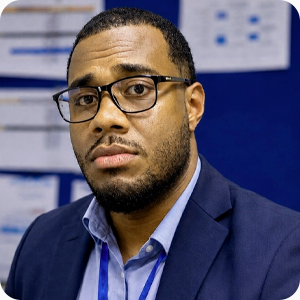
“As development becomes increasingly localized, international consultants should increasingly become partners and facilitators who strengthen local capacity rather than substitutes for it. Their role should evolve toward bringing specialized expertise, facilitating knowledge exchange, supporting locally led decision-making and helping institutions build sustainable systems that remain after the consultant leaves. For the Pacific, this shift is particularly important. Many global health concepts, frameworks and implementation approaches are developed from experiences in larger or better-resourced settings. These can provide useful foundations, but they do not always translate directly to small island contexts where geography, workforce capacity, health-system structures, financing and community realities are different. Localization should therefore go beyond asking who delivers a programme. We should also ask who generates the evidence, whose experience informs the framework and who decides what adaptation is needed. International consultants can add value by helping local professionals generate and use their own evidence, connect Pacific experience to global learning and strengthen systems to make locally appropriate decisions. The future should not be about replacing international expertise, but about making that expertise increasingly useful to locally led solutions.”

“I’m a near-50-year old white male consultant who actively supports localization and diversification of funding partnerships across Asia, Africa, and Latin America. It took time and reflection for me to see and find a place for myself in supporting this work. For me, the first step was the internal journey – that started with understanding my white male privilege and unearned power and also recognizing the origins of my “expertise”, which was all co-created with nonprofit leaders I have worked and walked alongside. These ideas, knowledge, stories, and tools have never been mine; they belong to the sector and the communities that can put them to use. Then it was about seeing what I can offer and, importantly, where the boundaries of my own narrow fundraising experiences are: that these were built on the experiences of a white man, working in wealthy geographies (like Europe and North America, and Asian philanthropic-hub cities). Accepting that these are not automatically relevant in places like Bangladesh, Peru, Palestine, or Ghana. For my practice, regional nuances in partnership practice and expertise must come first, and consultants like me can only offer value if we start with humility and willingness to see our limits and learn. Then, I feel there’s a duty to share the relevant parts of my experience and blend this with the expertise of consultants and practitioners who are from these regions and countries, who live within the culture and communities. This is why convening the altFund programme is such an important part of my work; it’s about prioritising and sharing relevant regional experiences of partnership building, from people who have walked this path where participants are based. As I said, it took me a while to see the value I offer the localization and diversification movement, and I’m still learning – but I’ve seen that sharing the breadth of my global experiences (three decades of working in more than 100 countries), knowing how to shift organizational culture, how to technically evolve funding models and strategies, mentoring leaders and other consultants, exploring internalised colonial narratives and practices, co-creating completely new approaches for new situations – these are all ways I can contribute. There is a huge need for more consultants like me to roll up their sleeves and support the localization and diversification drive. But first we need to commit to do no harm, which means reflecting on our privilege, arriving with humility, lifting the expertise of others, and actively using our platforms to support and nurture others into this work.”
See also: Reimagining NGOs’ role in a world of shifting landscapes | Experts’ Opinions
Understanding the competition enables a consultant to identify which skills need to be honed and adjust their expert fees accordingly. Over 270,000 tenders and 16,000 grants for individuals are available on the DevelopmentAid platform. Individual Professional Members can access all these opportunities to learn, analyze, and secure their next consultancy role. For those looking for short-term, long-term or permanent jobs, there is also the Job Board, which currently lists more than 4,500 openings in the international development sector. Members can also check salary trends, access the contact information of some of the biggest donors and organizations in the sector, and gain increased exposure to potential employers. With all these tools at hand, development professionals can navigate an increasingly competitive job market more strategically and improve their chances of securing their next opportunity.