
Inside the UN Secretary-General race: political pressures, the limits of the job, and the stakes for global development
Add us as your preferred source on Google to see more of our content in Search.
 Add to Preferred Sources
Key reasons to read this article
- Can the next UN chief reform an organization controlled by powers that resist change?
- Will the funding crisis force development and humanitarian agencies to sacrifice long-term priorities?
- Do the candidates offer realistic solutions or simply promises that a Secretary-General will have little power to deliver?
- Can the next UN chief restore global trust without alienating the powerful states whose support the job depends on?
The next United Nations Secretary-General will be expected to restore the organization’s credibility, tackle a deepening funding crisis, and defend multilateralism amid mounting geopolitical divisions. But the leader, due to take office in January 2027, will owe their appointment to five permanent members of the Security Council whose competing interests may constrain how much the new leader can achieve.
This issue is already visible in the selection process. The latest Security Council poll on 16 October exposed the lack of consensus among the permanent five, with each candidate facing rejection by at least two of them.
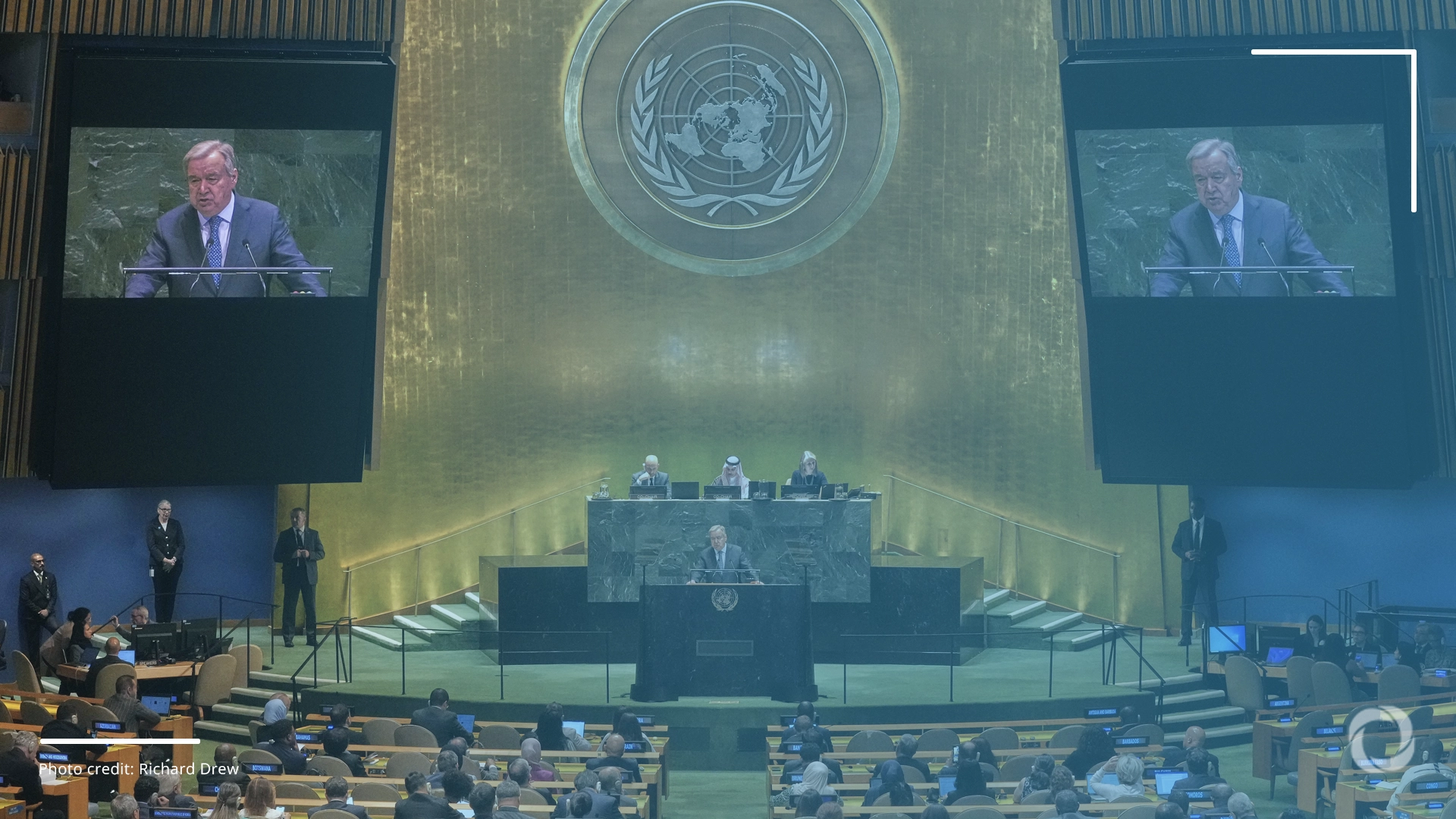
“The Secretary-General has no powers,” outgoing UN Secretary-General António Guterres commented in August, pointing instead to the position having the ability to speak out and bring parties together.
For global development, the question is not simply who lands the job. Instead, as Thibault Camelli of the Center on International Cooperation (CIC) argued, it is whether a leader who is acceptable to all members of the Security Council can also command legitimacy among the wider UN membership and deliver reforms that will impact countries beyond the most powerful states. That tension is expected to shape the next Secretary-General’s ability to influence global priorities, leading to consequences for development and humanitarian agencies in terms of limited funding while facing growing pressure to demonstrate results.
What will the next Secretary-General inherit?
The CIC claims the UN faces a crisis of liquidity, legitimacy, and relevance. At US$3.45 billion, the UN’s 2026 operating budget is 7% lower than last year’s. Unpaid assessed contributions exceeded US$1.6 billion at the beginning of 2026, unpaid peacekeeping assessments topped US$4.1 billion as of September 2026, and some 2,900 posts have been cut.
These shortfalls extend to the UN’s wider operating environment. Official development assistance fell by 23.1% in 2025, with a further 5.8% drop expected in 2026, according to preliminary OECD data. Core funding to UN entities fell by 27%, while the annual financing gap for the Sustainable Development Goals stands at up to US$4 trillion.
These pressures are converging with growing geopolitical paralysis. Guterres, whose second five-year term ends on December 31st, said in September that divisions among superpowers had left the Security Council ‘paralyzed‘ and unable to act effectively on key issues. Richard Gowan, a former UN Director, has questioned whether any successor can reverse the organization’s decline, describing it as being in a “very bad place”.
The incoming chief will therefore face a double bind: fewer resources to respond to growing needs and less political agreement on how the organization should respond.
What can the Secretary-General actually change?
The Secretary-General is not a global executive and cannot force governments to pay their contributions, impose sanctions independently, or insist the Security Council agrees on a response to war.
However, limited formal authority does not mean a total absence of influence. Article 99 of the UN Charter allows the Secretary-General to bring any threat to international peace and security to the Security Council’s attention and appoint envoys, undertake discreet mediation, engage directly with parties to conflicts, and set administrative priorities within the secretariat.
The Secretary-General can also push for reforms within the UN80 initiative, although any wider restructuring has to be referred to member states and the bodies that govern the UN system. For example, the General Assembly approves the regular budget, the Security Council establishes peacekeeping mandates, and changes to individual agencies require decisions by their governing bodies.
That leaves the next chief with some influence as to how the UN uses its limited resources, frames international debates, and pursues diplomacy, but without the power to force governments to back those efforts.
What is the next chief expected to deliver?
The expectations are greatest in the areas where the office actually has least control.
Peace and security. According to Robert A. Wood, a former US alternate representative at the UN, the next chief must put peace at the center of the organization’s work. Ecuador’s Ambassador, Andrés Montalvo Sosa, offers a more skeptical assessment, arguing that the UN has never resolved questions of peace when the interests of a major power are at stake.
Reform and efficiency. The UN80 initiative, a system-wide reform that seeks to modernize the UN, has placed the organization’s effectiveness, structure, and spending under perusal. The Bogotá-based think tank, Cepei, has argued that reform efforts have been halted and the Secretary-General’s office has lost authority. Retired diplomat Simon Hutagalung suggests the next chief must transform UN80 “from a set of cost-cutting exercises to a sustained, far-reaching effort to revitalize multilateralism.”
Development financing. The annual funding shortfall for the SDGs is approximately US$4 trillion, and growing, as Guterres has warned. Gowan argues that the next chief must compel the UN system to streamline how it raises money, responds to crises, and avoids overlapping mandates. That will require balancing demands for efficiency with resistance from agencies and member states that are reluctant to surrender resources or influence.
Restoring confidence in multilateralism. A Southern Voice survey found that only 3.8% of respondents from the Global South believe the UN has sufficient political authority. Its executive director, Margarita Gómez, argues that this does not reflect a rejection of multilateralism but reinforces demands to reform its structures, broaden representation, and give greater weight to underrepresented voices. Kaitlyn Hladik of the Stimson Center explains that Security Council reform is vital to restoring the UN’s legitimacy, and the next chief must “bridge divides among disgruntled states”.
Who will actually choose the next UN chief?
The election process formally began in November 2025, when the Presidents of the General Assembly and Security Council invited nominations and encouraged countries to consider women for the position. The selection process has become more public since 2015 reforms. Candidates submit vision statements and take part in interactive dialogues with member states.
Under Article 97, the General Assembly appoints the Secretary-General on the recommendation of the Security Council. A candidate requires at least nine votes from the 15-member council and must avoid a veto from any of its five permanent members: China, France, Russia, the UK and the US.
Informal straw polls indicate support and opposition but do not indicate what the final outcome will be. According to the latest poll, no candidate has yet emerged with sufficient backing to overcome the council’s divisions. The possibility of further political maneuvering or additional candidates entering the frame highlights the limits of a process that has become more transparent without becoming less dependent on agreement among the superpowers.
Two informal conventions have shaped the 2026 race: regional rotation, which strengthens Latin America and the Caribbean’s claim, and calls for the first female Secretary-General after nine men have held office. Members of BRICS, an intergovernmental organization of major emerging economies that includes 11 full members and 10 partner countries, have backed both greater regional representation and female leadership. However, Washington argues that merit, reform, and results should come first, noting that neither of the two informal conventions is legally binding.
What are the candidates actually proposing?
The six active candidates broadly agree that the UN requires reform but their published platforms differ in emphasis. The important distinction is not whether the candidates support development, peace or reform. These objectives are shared across the field. The distinction is how they intend to achieve these and whether, if they succeed, they will have the authority to implement what they proposed.
Development financing: reform the system or spend more wisely?
Carolyn Rodrigues-Birkett, Guyana’s UN Ambassador, would push for fairer access to finance and help countries to attract investment. Uganda’s Olara Otunnu would use the UN’s convening power to mobilize long-term financing and partnerships. Costa Rica’s Rebeca Grynspan, the current frontrunner, favors more focused priorities and less duplication. María Fernanda Espinosa of Ecuador advocates that budgets are tied to measurable results and has called for a “balanced, sustainable, and predictable UN budget.” Ivonne A-Baki, an Ecuadorian diplomat nominated by Tonga, proposes “resolving development debt and unlocking finance” while Argentina’s Rafael Grossi champions closer coordination with international financial institutions.
Peace, security and humanitarian action: respond to crises or prevent them?
Grynspan advocates earlier intervention and a more proactive UN, drawing on her role in negotiating the Black Sea grain agreements. Grossi supports preventive diplomacy and coordinated responses. Rodrigues-Birkett makes improving humanitarian conditions in conflict zones a first-100-days priority. A-Baki proposes direct engagement with opposing parties to prevent and resolve conflicts. Otunnu would prioritize protecting people affected by war and translating international pledges into practical support, and Espinosa promotes improved delivery.
Donors and member states: rebuilding trust or changing the system?
Grossi argues that dialogue with major powers can help to restore donor confidence and advocates a performance-driven approach to rebuilding trust. Grynspan combines calls for a more agile and accountable organization with a willingness to take diplomatic risks. Rodrigues-Birkett seeks collective responsibility among member states. Espinosa recommends clearer evidence of what UN spending achieves. Otunnu emphasizes institutional accountability and seeks to restore the UN’s moral authority.
What could the outcome mean for development and humanitarian work?
The leadership contest matters to development and humanitarian organizations on two fronts: the resources available to them and the political conditions under which they operate.
Firstly, funding pressure from the US could dictate the next chief’s room for maneuver. POLITICO has reported that a congressional aide stated the Republicans would resist funding the UN regular budget if Grynspan was selected. The Trump administration has also opposed all the current candidates, arguing that none is sufficiently committed to its vision of a sweeping UN reform. Such pressure raises the possibility of a prolonged contest or a search for a candidate who is more acceptable to Washington.
A US-Aligned Secretary-General might have more scope to negotiate with the administration, but any restoration of funding would not necessarily come without political expectations. The risk is that financial concessions could impact which agendas receive attention, including development and climate action.
Secondly, political pressure could affect humanitarian coordination. The Council on Foreign Relations has warned that a Trump-influenced UN leadership could push agencies such as the World Food Programme towards procurement decisions that are driven by US priorities or direct political demands. The dispute over the US-backed Gaza Humanitarian Foundation provides an example of how humanitarian delivery can become entangled in geopolitical objectives.
A Secretary-General who prioritizes institutional restructuring may compel agencies to reduce duplication and demonstrate results, while one who emphasizes broader representation may place a stronger focus on the concerns of underrepresented countries. Neither approach would guarantee better outcomes and their impact would depend on which reforms are chosen, the resources available and whether member states support implementation.
For development actors, the practical questions are therefore specific. Will the next Secretary-General encourage predictable funding, support improved coordination across agencies, defend humanitarian principles, and maintain focus on long-term development when political and financial pressures favor immediate priorities?
Whoever is appointed as the new UN chief may influence these conditions, but will not be able to achieve them on their own.