
Add us as your preferred source on Google to see more of our content in Search.
 Add to Preferred Sources
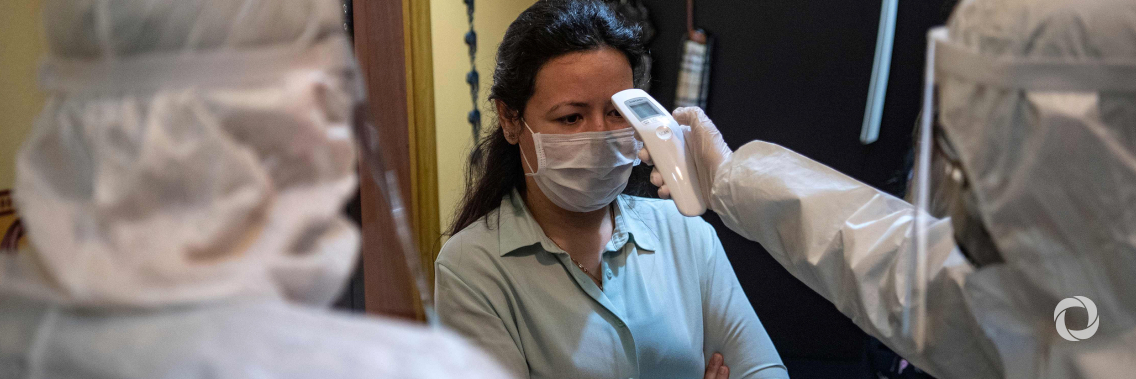
As cases of COVID-19 have more than doubled in the region of the Americas in the past weeks, reinforcing contact tracing and data management are key when many countries are reopening their activities.
The number of new COVID-19 infections reported in the Americas has more than doubled, rising from 5.3 million on July 1st to more than 12 million cases on August 25.
“Primary health care should be at the center of the response: identifying cases, acting to contain transmission and providing timely care in the community,” the Director of the Pan American Health Organization, Dr. Carissa F. Etienne said. “Local health authorities have a central role to play in generating and analyzing data to adjust public health measures to the reality in each area”.
Despite the rise in cases, countries have gradually relaxed restrictions, resumed commerce and some are gearing up to head back to school.
“In far too many places, there seems to be a disconnect between the policies being implemented and what the epidemiological curves tell us. This is not a good sign. Wishing the virus away will not work, it will only lead to more cases, as we’ve seen over these past 6 weeks,” Etienne said.
There are good tools today: data that show where the hot spots are, contact tracing protocols to slow onward transmission, and public health measures that can reduce the risk of exposure. National and local governments need to be strategic about how they use these tools – old and new – to achieve the desired impact.
Data from all over the Americas show that the majority of cases are reported in people between 20 and 59 years of age, but almost 70% of deaths are reported in people over 60.
Dr. Etienne said she was concerned about new infections in the Caribbean as countries open their borders. While Caribbean islands have avoided major outbreaks thanks to the strong political resolve and a smart mix of public health measures, “now that non-essential air travel is resuming across the region, several countries are reporting spikes in cases.”
Two weeks ago, the Bahamas observed a 60 percent increase compared to the previous week, while Sint Maarten, Trinidad and Tobago, and the US Virgin Islands all reported a 25 percent jump.
“This is not just driven by tourism, but also by citizens returning home after the lockdown. We know that countries that depend on tourism can’t remain closed indefinitely, but as they reopen, they must use all the resources available to reduce the risk for their people,” she said.
Dr. Etienne said encouraging signs in the data from some countries show that countries have the tools to reduce the spread of COVID-19 and save lives.
“One of the most effective strategies we have is contact tracing,” as shown in work to stop the chain of transmission by using it to track all new cases and limit the spread of the virus in Dominica, The Bahamas, Argentina, Guatemala, and Suriname, she said.
Costa Rica had low transmission when they implemented stay-at-home orders and used the opportunity to prepare, by expanding testing and hospital capacity.
Original source: PAHO