Hero Stories | Samantha Torrance – the development executive who views sustainability as the key factor to success
Add us as your preferred source on Google to see more of our content in Search.
 Add to Preferred Sources
By Natalia Turcan
Hero Stories is a new DevAid project that aims to shed light on the stories of those people who are making change happen step by step, day by day. It is about the people whose dreams and goals go hand in hand and whose achievements and drive are inspirational. It could be you, him or her. It can be anyone whose determination to make the world a better place is robust. We at Development Aid are here to discover those people and to tell you their hero story.
Samantha Torrance, Executive Vice President, Government, and Economic Reform Division, at Cowater International, has been described as “an exceptional professional” and a person of “an amiable character” who “inspires trust and loyalty”.
Encouraged by such endorsements, we looked forward to getting to know the woman who has put her experience, expertise, and personal qualities to the service of dozens of communities to help them solve complex challenges and build a better future. This, as she said, would not have been possible without her team at Cowater International, a leading global development consulting company that has implemented more than 2,500 projects and assignments in over 95 countries over the past 36 years.
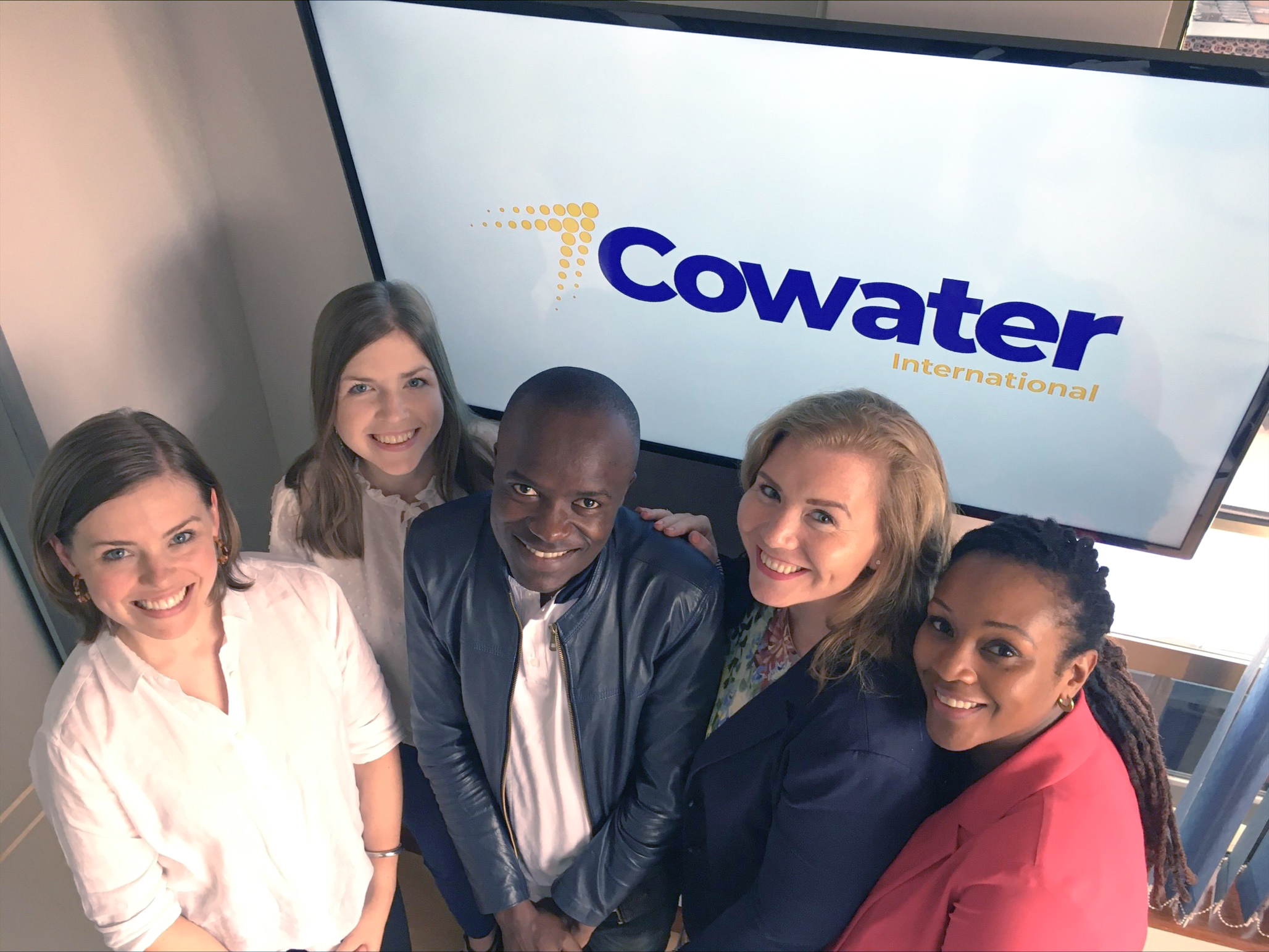
Even before joining the Cowater International team, Samantha’s life was far from ordinary. Her experiences became extremely valuable and developed her capacity to adapt to various changing circumstances.
After graduating from university, I worked in the Pacific and then predominantly in Africa, and this defined the approach that I take, not only from a management and leadership perspective, but also in terms of the technical skills that I have developed. You need time to understand the environment and context and be aware of any preconceptions that you may have. You cannot plan everything, so you must stay open to learning, and adapt very quickly. I think there is no better way of equipping yourself with these tools than being physically present in the countries that you work in. At Cowater International, we encourage our staff members to spend time in the project countries, increasing their knowledge of the context and building strong relationships with the team and our partners. This experience is really crucial to the success of what we do, and the industry as a whole.
This sounds like an excellent approach that could be adopted by other companies. However, we could not refrain from asking whether Cowater International has been able to adhere to this approach during the pandemic as well.
The pandemic has definitely had an impact. When it was declared, I was in Mozambique starting a new program. The global travel restrictions as a result of the pandemic have meant that I have been unable to visit our projects, something which I did very regularly, and this is certainly very strange for me, although it’s had a positive impact on my carbon footprint. Corporately, we had to adapt very quickly to the travel restrictions and ensuring the health and safety of our staff across the world, whilst continuing to deliver our projects. Travel and domestic restrictions were different country by country, and constantly changing, so our Risk Committee has had a busy time! As a company, we have always tried to build strong local teams and this has been critical to this continuity, even when external experts have not been able to travel. From an operational perspective, we’ve gone very digital. We also tried to communicate more explicitly and regularly, and we’ve become quite dependent on video communication. There are benefits to this approach from both a time and cost efficiency perspective, but meeting in person cannot be replaced entirely. Getting through this pandemic has brought our teams closer together and I think it’s going to stay that way going forward.
Many organizations and companies saw the pandemic as an opportunity to do more or to revise their priorities. Cowater International was no exception to this, Samantha said. It considered ways to utilize its resources and channel its activities to support the global health crisis.
Since the start of the pandemic, we have focused on how we could adapt our programs to be relevant to the health and economic crises unfolding in the countries we were operating within. Under the umbrella of our existing projects, we worked closely with our donors and counterparts to reallocate resources and redirect our work to be sure that we supported the country’s response to the pandemic.
In Zambia, for example, at part of our Cities and Infrastructure for Growth program, funded by UKAid, we focused on supporting the movement of COVID-19 related goods and equipment into the country by facilitating greater coordination and collaboration between border agencies, creating ‘fast-track’ lanes and launching a successful communications campaign for stakeholders. In addition, we rapidly supported a review of the oxygen supply chain in Zambia, in order to help the authorities get oxygen to hospitals treating COVID patients that needed it most. It’s been challenging, but we’ve been responding in a very flexible way, and UKAid, as well as our other donors on other programs, have been very supportive.
In some cases, we have now moved to the recovery phase and are focusing on building future resilience to crises and strengthening systems to make sure that institutions will be ready to respond better in the future. In general, this is a good time to think about the future particularly given the impact and costs, both human and financial, of the pandemic. Reimaging our approaches and looking at new priorities will be crucial to our programming going forward, whether it is about technology and how we can leverage it better or redefining our policy recommendations to make sure that we are capturing gender equality and social inclusion more comprehensively in our projects. These are just a couple of examples.
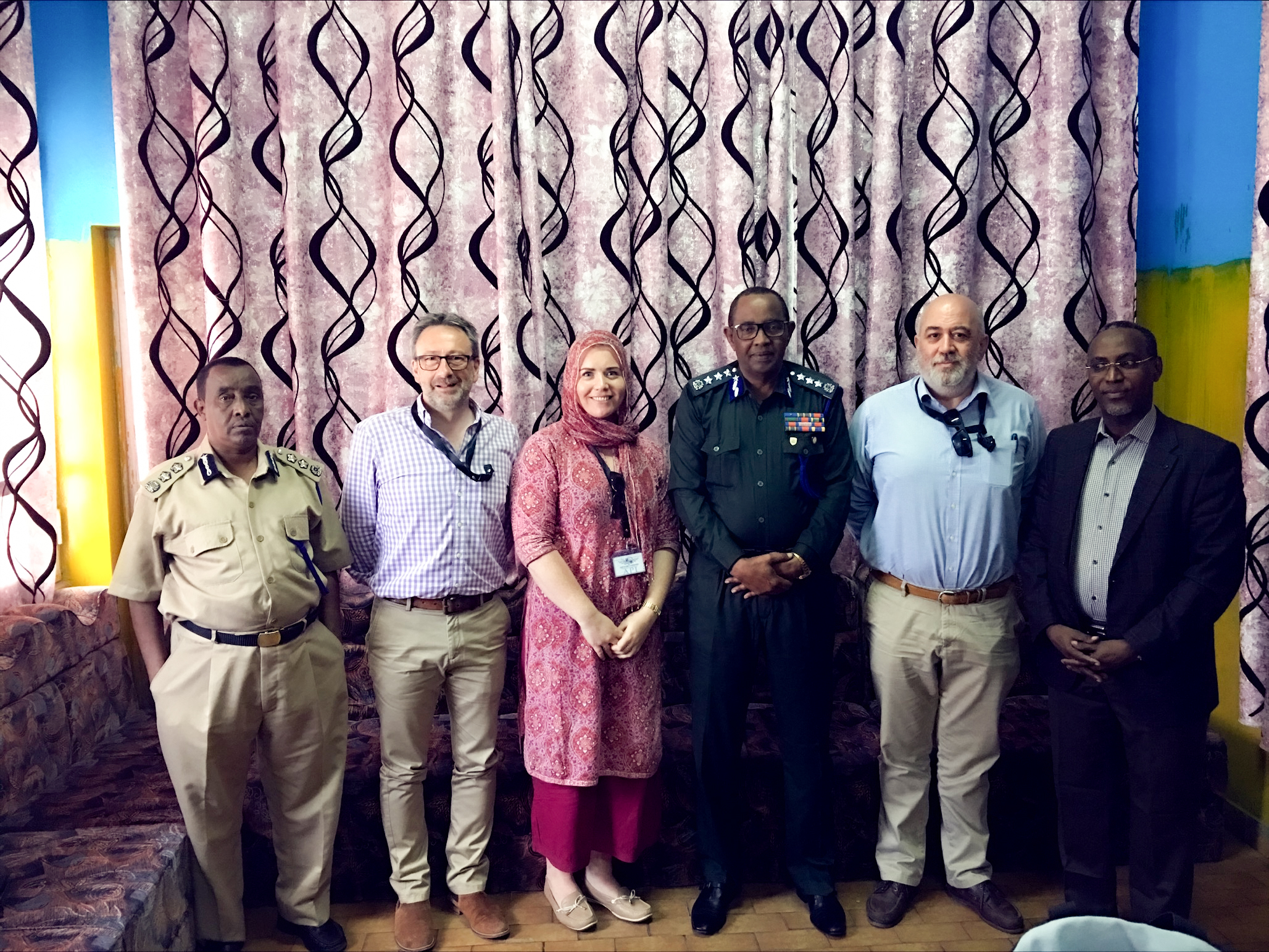
As our interview unfolded, Samantha spoke so passionately about her experience and the company she works for that at some point I found myself wondering whether, to her, passion was the antidote that kept stress away from her.
Well, international development is a stressful industry to work in, as well as being incredibly fulfilling. Undeniably, there is a lot of change and you need to have a level of personal resilience to operate in a highly dynamic environment. You can have the best plan, but inevitably something happens and you have to be prepared to learn and adapt quickly, changing course or even going back to the drawing board. The pandemic allowed me to re-evaluate the balance between work and my personal life, and the importance of being mentally and physically healthy. Working in politically, economically and socially complex environments is challenging, and it’s important that the implicit impact of this work on mental health, for instance, is recognised. This is incredibly important to me personally, as a manager and leader, but also for Cowater International as a company. Our team has seen impressive growth over the last few years, and consequently, we’re implementing many ambitious projects. It’s important to enjoy this success, but it also comes with hard work, and it’s vital we all keep a balance.
As an economist, Samantha has always been interested in tax reform and public finances. Over the years, she has become increasingly interested in the role of technology and IT in improving access to information on the performance of public finance, critical to ensuring accountability of the government to its citizens, as well as how tax and Customs policy can be more responsive to gender and social inclusion objectives.
I work in government reform and a core objective of our work is to ensure the reforms we support are efficient, effective and transparent. Our primary offer is technical assistance to support our counterparts to implement internal, institutional and policy reforms. But equally, we need to ensure that we encourage the inclusion of mechanisms to communicate reforms in a very accessible way to those implicated by the policies, users of the resultant systems and to wider communities that hold government accountable. There are many exciting developments using mobile phone technology, as well as internet-based services, that tie in well with the rapid technological revolution taking place in developing countries. Not only can we increase access to information and services, we can also tackle issues of corruption, which are still prevalent. In addition, an increasing focus of our work is supporting the integration of gender and social inclusion objectives into the revenue system –domestic tax and Customs – in terms of policy and operations. This is not always an obvious priority for the donors or our counterparts, but Cowater International’s commitment to this important agenda means we work creatively to ensure it’s well reflected in the projects we design and implement.
Speaking about international development as an inter-connected web of dependencies, both human and systems-based, Samantha highlighted that public finance has an important role to play in this broader eco-system.
Public finance sits at the heart of government, but not in isolation, it has a profound impact both across sectors, like health, education, infrastructure, but also has implications for cross-cutting issues including, gender and social inclusion, climate change, transparency and accountability. I always examine holistically the connections that exist between my work in public finance and broader social and economic development priorities. In this way, it is a very dynamic field and there’s always something to learn. Understanding these connections and then designing a project that appropriately targets broader issues is something that I most enjoy about my job and an area where we really excel at Cowater International. It’s when we put our skills to the greatest use, thinking creatively and innovatively and trying to achieve rather ambitious objectives within the constraints of a budget. Often a puzzle to solve, but problem-solving is what international development is all about.
Despite her vast professional experience and expertise, Samantha says that learning is endless and can have its roots everywhere.
I try to take time to read different reports and documents related to the technical issues that I work on. At the moment, climate change is a big topic and it’s not something I have worked on directly, so I’m doing a lot of research to understand how we can adapt public financial management systems to be more supportive of the green growth initiative, for instance. Learning doesn’t always come from the top down or from those considered experts, you can learn from anybody and sometimes those experiences, when you least expect them, are the most rewarding.
To conclude our interview, we asked our guest to share her own vision for success.
Success for me means not just achieving the results and the objectives that we set for our programs, but doing so in an efficient, equitable and sustainable manner. There’s nothing more demotivating when you close a program knowing that none of that work is going to continue. But when you leave behind a structure, an embedded system, ably driven by the counterparts you’ve worked with over the life of the project, which continues to generate impact into the future, that’s how I view success.