
Add us as your preferred source on Google to see more of our content in Search.
 Add to Preferred Sources
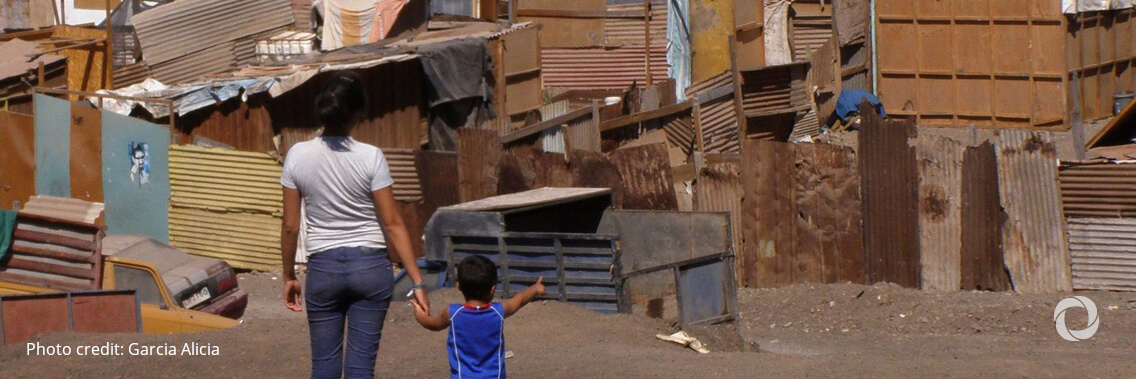
Chile will expand its program to prevent the formation of informal settlements with $120 million in funding from the Inter-American Development Bank (IDB). The project’s goal is to reduce the number of people living in “campamentos,” as informal settlements are known in Chile.
It will include measures to prevent the formation of new campamentos and the expansion or repopulation of precarious settlements located in areas vulnerable to climate threats. Specifically, the national registry of precarious settlements will be strengthened to identify disaster risks and vulnerable populations, and a periodic monitoring system for the growth of such settlements will be implemented. Rent subsidies will also be assigned to families that are susceptible to settling in campamentos as well as to the registered migrant population.
The program also addresses the socio-urban integration of campamento households. A purchasing model will be implemented to fund a soil bank with high regional well-being indicators and criteria for reducing climate risk in the provision of housing solutions for families in precarious conditions. In addition, urban planning works and subsidies will focus on offering eco-efficient housing and urban infrastructure solutions.
The loan will also help strengthen the Chilean Government’s Campamento Program to articulate intersectoral actions that promote the social and economic inclusion of citizens as well as immigrants who have formalized or are in the process of formalizing their legal status. By the end of four years, the program is expected to benefit more than seven thousand households with better living conditions.
With more than 87% of its population residing in cities, Chile faces housing deficits as a result of a lack of affordable housing for lower-income segments. The sustained increase in migration flows, together with the high degree of vulnerability of immigrant populations, has added to the number of households living in informal settlements.