
Add us as your preferred source on Google to see more of our content in Search.
 Add to Preferred Sources
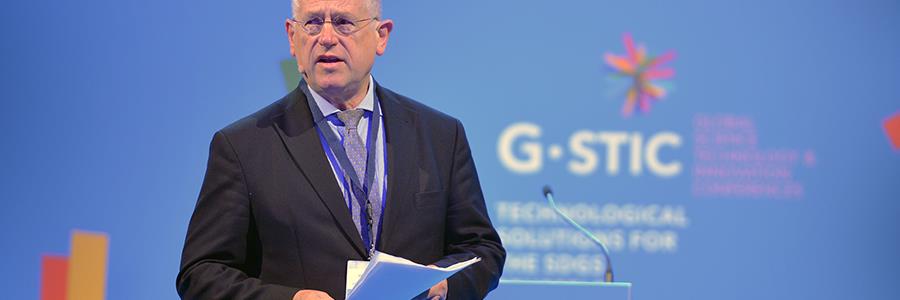
The 2017 Global Science, Technology & Innovation Conference (G-STIC 2017) brought together over 1000 participants for discussions on technological innovations related to agroecology, urban mobility and building, water, carbon capture and use, and more to enable the achievement of the Sustainable Development Goals (SDGs).
Participants discussed technological innovations related to several themes, including agroecology for sustainable food systems; circular economy and the role of industry; urban electric mobility; urban design and sustainable building; smart water solutions; wastewater as a resource; energy positive communities; and sustainable technology and development. Topical sessions were also held on bamboo, carbon dioxide (CO2) as a resource and information and communications technology (ICT) as enabling technology.
The draft co-hosts’ statement from the meeting, which is open for comment for two weeks, identifies four key findings from the first G-STIC conference: many technologies that are needed to achieve SDG-related targets already exist and require strategies for deployment at scale; distributed and bottom-up technological solutions are necessary to achieve SDG 2 (zero hunger) and SDG 7 (affordable and clean energy); a “circular economy” is an essential element of the new narrative, including resource recovery and use such as wastewater and CO2; and ICTs are required to enable the achievement of the SDGs.
G-STIC 2017 convened from 23-25 October 2017, in Brussels, Belgium, with the objective of accelerating the development, dissemination and deployment of technological innovations that enable the achievement of the SDGs. The conference was hosted jointly by VITO (The Flemish Institute for Technological Research, Belgium) and its international partners, the African Centre for Technology Studies, the Asian Institute of Technology, the Indian Institute of Technology and The Energy and Resources Institute.
The next G-STIC will take place in Brussels in November 2018.
Original source: IISD
Published on 31 October 2017