
Add us as your preferred source on Google to see more of our content in Search.
 Add to Preferred Sources
At the top of the list of the largest economies in Central America, Guatemala is experiencing a huge gap between the rich and the poor which, as paradoxical as it may seem, ranks it among the poorest countries in Latin America with almost half of its population living below the poverty line. The ongoing pandemic in combination with the climate crisis and the country’s ineffective policy towards helping the poorest do not offer much hope for improvement. All these factors are direct drivers of the rising numbers of migrants approaching the US-Mexican border. For them, fleeing the country seems to be the only possible option.
Poverty rates
Guatemala is the largest economy in Central America. According to the World Bank, it demonstrated constant growth during the pre-pandemic period, growing by an average of about 3% from 2015 to 2018. Nevertheless, in terms of GDP per capita (US$4,620 in 2019), it was the fifth poorest economy in Latin America.
Poverty and inequality are strongly shaped in Guatemala with the country being among the few in the region where poverty had increased by 2019. World Bank data shows that in 2019, 49.3% of the total population of 17 million lived below the poverty line.
Climate crisis
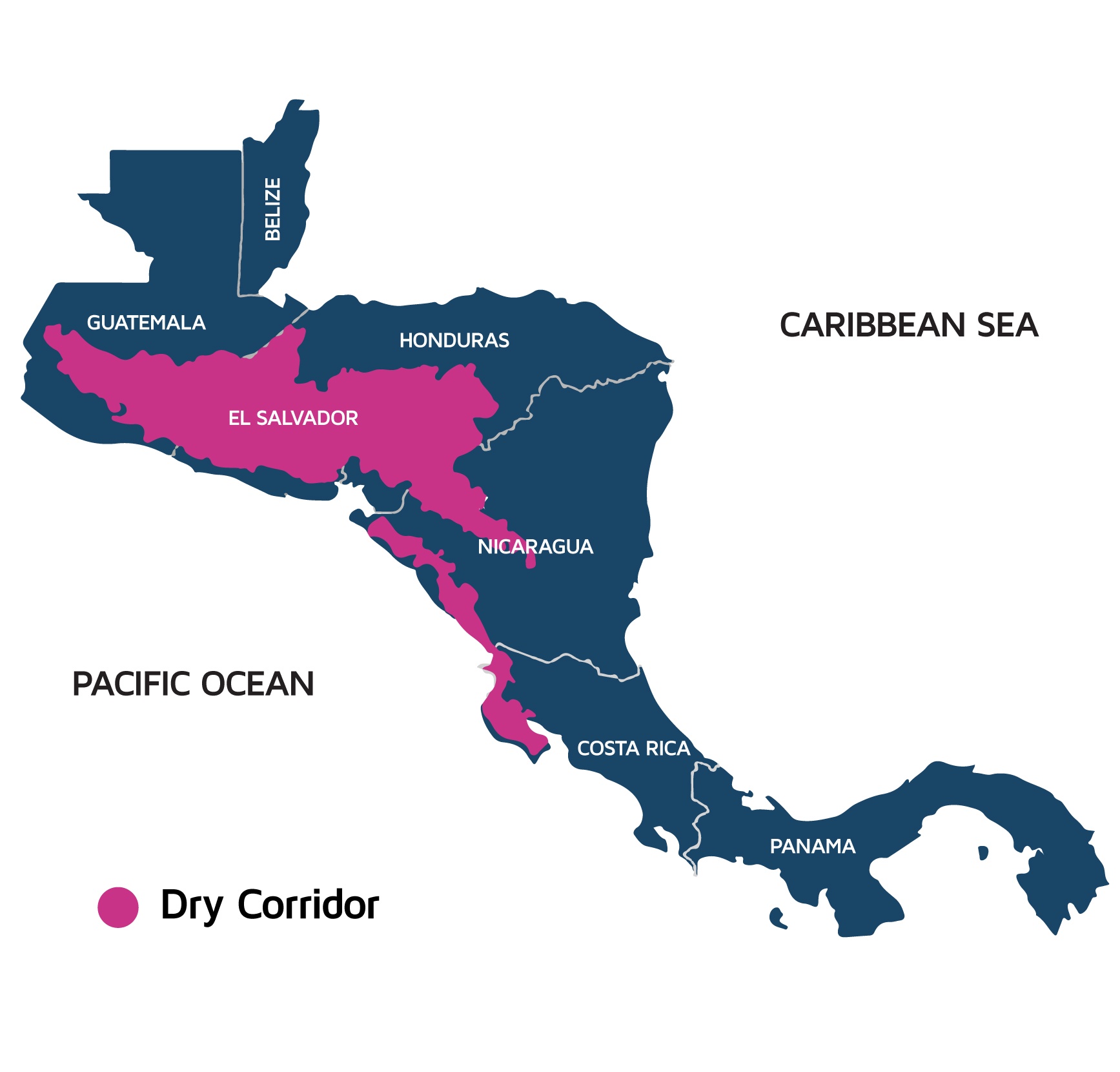
As the largest part of southern-western Guatemala is located in the so-called Dry Corridor (a tropical dry forest on the Pacific Coast of Central America, mostly covering Guatemala, El Salvador, Honduras, and Nicaragua), food security is a matter of serious concern there. The Dry Corridor is the region most vulnerable to climate change in Central America. Hit by severe drought or flooding, farmers living there very often simply waste their time trying to secure any harvest at all. While in the past those living in the Dry Corridor in Guatemala witnessed only seasonal hunger, crops and food supplies are currently disrupted on practically a permanent basis.
Moreover, in late 2020, most of Guatemala’s territory was badly hit by tropical storms Eta and Iota, causing floods and catastrophic landslides and mudflows. According to the National Disaster Reduction Coordination (CONRED), 16 of the country’s 22 departments, which were home to about 5 million people, were affected by both storms.
Food security
This situation has left its mark on the level of food security which was already alarming before the pandemic. Available data shows that Guatemala is the sixth most undernourished country in the world. As many as 47% of all children under five, 58% of indigenous children, and 66% of children from lowest-income families are suffering from malnutrition, the World Bank data shows. According to estimates by the World Food Program, 428,000 Guatemalans will reach ‘Phase 4’ of food-insecurity emergency which is the highest level before famine.
Desperate people are unable to feed not only themselves but also their children. According to information from the Guatemalan government, 75 children under five died in 2020 due to malnutrition but it is expected that this number may be higher especially when very often children do not die directly of starvation but malnutrition leads to infections that their weak immune systems cannot defeat. Sofia Letona who is a volunteer and a director of the aid group, Antigua Rescue Center, has been organizing food distribution amongst two Dry Corridor communities:
“These kids are walking around as if they’re dead, but they’re alive.”
Crime and violence
Guatemala’s crime rate has always been among the highest of all of Latin America but had witnessed a steady decline over the past few years. In 2019, the country’s government reported a crime rate of almost 20 per 100,000 inhabitants. The figure fell to 15.3 per 100,000 in 2020, partly due to the pandemic-triggered economic shutdown. Nevertheless, a 2020 report by the US Overseas Security Advisory Council described the crime situation in the country as “critical” noting that it affected all departments of Guatemala.
“Crime in Guatemala stems from many sources, and its impact is magnified by various issues such as corruption, an inadequate justice system, and the prevalence of both gang and narcotic activity across the country,” the report reads.
Migration
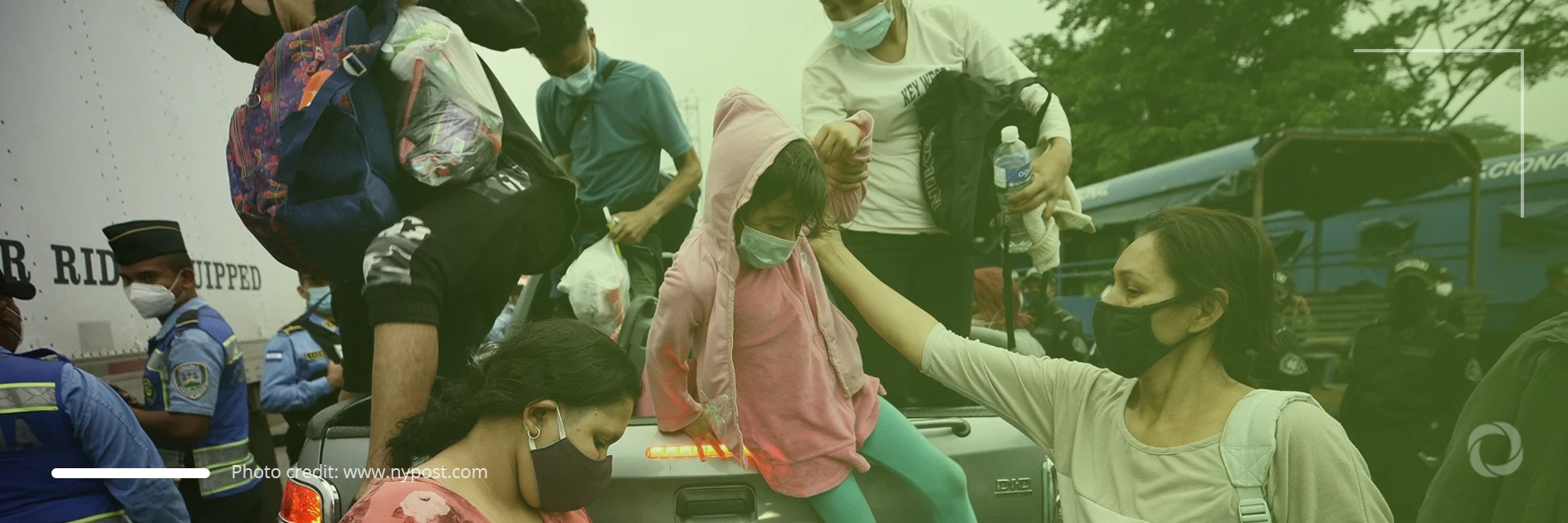
As of 2019, the U.S. has sheltered over 1 million Guatemalan migrants according to data from the U.S. Census Bureau. As the coronavirus pandemic further worsened the internal situation, an increasing number of people chose a path to the U.S. border looking for a way to survive. Although there is no available data on Guatemalan migrants specifically, the U.S. has reported a surge in the number of migrants reaching its southern borders in 2020-2021. The U.S. Customs and Border Protection reported catching 180,034 migrants in May 2021, 178,854 in April, and 172,000 in March. This is the largest number recorded since 2000 but most of them have been expelled.