
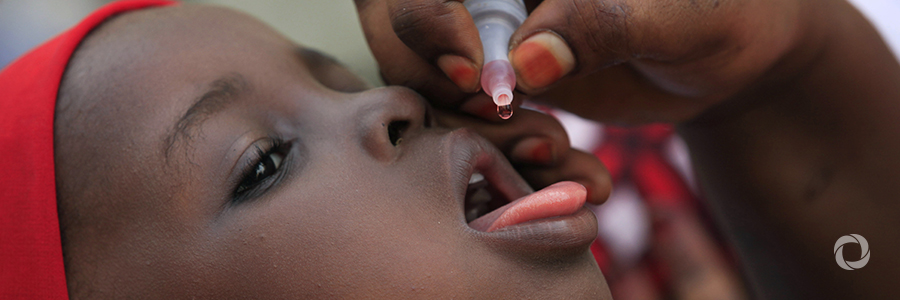

A new approach is helping to improve Sudan’s ability to identify the poliovirus and remain polio-free, despite challenges
It starts with a sick child, whose arms or legs have suddenly become weak and floppy. A trip to the local health centre, which could be many miles away, confirms that the child is showing classic signs of acute flaccid paralysis. This is one of the key indicators for poliovirus and kick starts the polio surveillance system into action.
Strong surveillance to identify every case of acute flaccid paralysis is the golden standard of the polio eradication programme. In countries like Sudan, where the last case of wild poliovirus was seen in March 2009, it remains critical. Even though Sudan is now polio-free, it remains at risk of reimporting the virus, so a high level of vigilance is needed while polio continues to circulate anywhere in the world.
The importance of strong surveillance in Sudan
Amid outbreaks of acute watery diarrhoea, severe malnutrition in children under 5, large scale internal population displacement and an influx of more than 1 million refugees from South Sudan due to conflict, Sudan has managed to maintain a strong surveillance system for polio. Despite these challenges, global surveillance standards – which tell a country whether their system is sensitive enough to catch polio circulating in communities – continue to be met.
But polio remains a threat to every child, everywhere, until it is stopped for good. Today, only three countries remain to be polio endemic – Pakistan, Afghanistan and Nigeria. Countries like Sudan that are close by, with low routine immunization rates, weak health infrastructure or facing conflict and population displacement, remain at a higher risk of polio finding its way back.
The role of the reverse cold chain for surveillance
When any case of acute flaccid paralysis is found anywhere in the world, stool samples from the affected child must be transported carefully to the laboratory so that they can be tested to identify whether the poliovirus was the cause.
Mr Jaouad Tilout, from WHO Eastern Mediterranean Office Polio Eradication Programme, explains that this journey undertaken by each sample is known as the ‘reverse cold chain’: