
Add us as your preferred source on Google to see more of our content in Search.
 Add to Preferred Sources
Over 100 leaders make landmark pledges to end deforestation at COP26, Multilateral development banks to step up protection of nature, UNICEF -34 percent of national climate policies are child-sensitive. Here is what you missed from last week’s headlines in the international development sector:
Over 100 leaders make landmark pledge to end deforestation at COP26
In the biggest step forward in protecting the world’s forests in a generation, more than 100 leaders will commit to halt and reverse forest loss and land degradation by 2030 at an event convened by the Prime Minister at COP26. The pledge is backed by almost £14 billion ($19.2 billion) in public and private funding.
Countries spanning from the northern forests of Canada and Russia to the tropical rainforests of Brazil, Colombia, Indonesia, and the Democratic Republic of the Congo will endorse the Glasgow Leaders’ Declaration on Forest and Land Use. Together, they contain 85% of the world’s forests, an area of over 13 million square miles.
The commitment will be supported by a pledge to provide £8.75bn ($12bn) of public finance from 12 countries, including the UK, from 2021 – 2025. This will support activities in developing countries, including restoring degraded land, tackling wildfires, and supporting the rights of indigenous communities. This will go alongside at least £5.3 billion ($7.2 billion) of newly-mobilized private sector funding. CEOs from more than 30 financial institutions with over $8.7 trillion of global assets – including Aviva, Schroders, and Axa – will also commit to eliminating investment in activities linked to deforestation.
Governments representing 75% of global trade in key commodities that can threaten forests – such as palm oil, cocoa, and soya – will also sign up to a new Forests, Agriculture, and Commodity Trade (FACT) Statement. The 28 governments are committing to a common set of actions to deliver sustainable trade and reduce pressure on forests, including support for smallholder farmers and improving the transparency of supply chains.
The event will see world leaders join with representatives of Indigenous Peoples and local communities, civil society, philanthropists, businesses, and the financial system.
Among those speaking alongside Prime Minister Boris Johnson are HRH The Prince of Wales, President Joko Widodo of Indonesia, President Ivan Duque of Colombia, President Joseph R. Biden Jr. of the United States, President Felix Tshisekedi of the Democratic Republic of the Congo, and EU Commission President Ursula von der Leyen.
Multilateral development banks to step up protection of nature
The multilateral development banks (MDBs), including the European Bank for Reconstruction and Development (EBRD), have agreed to step up their efforts towards the protection, restoration, and sustainable use of nature.
In a joint statement signed at the COP26 Climate Conference in Glasgow, the institutions state that “progress on global sustainable development, climate, and biodiversity goals cannot be achieved without addressing the direct and indirect drivers of nature loss and transforming the way in which we value, use, conserve and share the benefits from nature”.
To address this challenge, the MDBs commit to further mainstream nature considerations into their policies and operations. This will be reflected in five areas: (1) maintaining thought leadership in the development of safeguards for ecosystems, (2) fostering “nature-positive” investments, (3) creating regional synergies and setting out strategic approaches, (4) valuing nature to guide decision-making and (5) enhancing reporting on efforts and initiatives to mainstream nature.
The joint statement was signed by the Asian Development Bank, the African Development Bank, the Asian Infrastructure Investment Bank, the EBRD, the European Investment Bank, the Inter-American Development Bank (IDB), IDB Invest, the Islamic Development Bank, Caribbean Development Bank, and the World Bank Group.
UNICEF analysis finds just 34 percent of national climate policies are child-sensitive
2021 is expected to be one of the warmest years on record, according to WMO. And as the mercury in thermometers rises, so does the pressure on governments to take action on climate change at COP26.
UNICEF released a new analysis that reveals that two-thirds of countries’ climate plans don’t address the needs and priorities of children.
“We examined the Nationally Determined Contributions – or NDCs – that was updated ahead of COP26, where I am now. These documents are submitted by the countries which had signed the Paris Agreement and outline the actions they commit to taking to meet its goals”.
Of the 103 country plans, UNICEF considers just 35 of them – or about one-third – to be child-sensitive. Only 1 in 5 reference child rights or intergenerational justice and equity in a meaningful way. Only 12% report that children participated in the development of the plan.
Countries are saying the right things about considering and including children but their climate plans leave their promises hollow. Children and young people bring energy, leadership, and ideas to the table, and yet leaders continue to pay lip service to their demands.
DevelopmentAid Editorials
Water privatization: facts and statistics
Water is a fundamental element necessary to sustain life. In general, governments are responsible for the provision of safe and affordable water services to all. Nonetheless, recently some municipalities have allowed the privatization and outsourcing of water-related operations to the private sector. This article defines water privatization, discusses the rationale behind this approach, and provides some facts and statistics associated with it.
Report looks at interconnection between ecological threats and conflicts
Ecological threats place some 1.26 billion individuals around the world at high risk of conflicts and displacement, the Institute for Economics and Peace (IEP) notes in its latest report. In the meantime, the level of undernourishment has grown by 44% since 2014, increasing the risk of conflicts. Most importantly, the report states, there is a cyclical relationship between the state of ecology and peace.
Why is air pollution on the increase? | Experts’ Opinions
According to the World Health Organisation, 9 out of 10 people worldwide breathe polluted air and it estimates that 4.2 million deaths every year can be attributed to outdoor air pollution. Air pollution is a priority on the global agenda and is widely recognized as a threat to both public health and economic progress and more countries are now taking action. Let’s check why we haven’t made real progress regarding fighting air pollution according to several environmental experts.
Brief history of development aid on the European continent
Development aid, or foreign aid as we know it today, has been observed in Europe since the 18th century when the more powerful states provided assistance to their allies in an attempt to secure future loyalty. Today, aid represents the international flow of capital, goods, or services from a donor country or international organization to a recipient country with the goal of providing assistance and aiding development.
A dozen tips for good salary negotiation
We all know the thrill of starting a new job. With it comes new hopes, dreams, and… a new salary. Negotiating a pay package with a new employer is the most normal thing to do in the world but not everyone is an expert at this as it is not something that is frequently done. Don’t worry though, with these 12 tips from experienced HR professionals, you will learn how to get the very best out of salary negotiation.
Here’s what else has happened
IDB: The Inter-American Development Bank (IDB) announced that its loans and projects will be fully aligned with the Paris climate agreement by 2023. This move will help countries throughout Latin America and the Caribbean fight climate change while also advancing steps to help those people most vulnerable with a sustainable recovery for everyone.
USAID: President Biden announced an ambitious set of targets to advance the President’s Emergency Plan for Adaptation and Resilience (PREPARE). PREPARE will support developing countries and communities in vulnerable situations around the world in their efforts to adapt to and manage the impacts of climate change. These impacts are already being felt, and USAID brings significant experience to bear on supporting equitable, inclusive climate resilience in developing countries.
Reports
Climate change adaptation programme can help an additional 10 million vulnerable people in Asia and Pacific says new IFAD report
Climate-related hazards are intensifying in the Asia Pacific region, disproportionately affecting vulnerable rural communities. Policymakers must prioritize climate resilience and adaptation measures in order to protect rural communities from losing economic advancements according to a new report released by the UN’s International Fund for Agricultural Development (IFAD).
IOM launches institutional strategy on migration, environment and climate change for next decade
Ahead of the 26th UN Climate Change Conference of the Parties (COP26), the International Organization for Migration (IOM) has unveiled its new Institutional Strategy on Migration, Environment, and Climate Change 2021-2030. The Strategy outlines how IOM will support States in their efforts to assist and protect those affected by the adverse impacts of climate change, environmental degradation, and disasters due to natural hazards, including migrants and the internally displaced.
Commission report on forest fires: climate change is more noticeable every year
The Joint Research Centre (JRC) of the Commission presented the 21st edition of its Annual Report on Forest Fires in Europe, the Middle East, and North Africa, covering 2020. After the worst year to date in 2019, 2020 was another year in which fires burnt large areas of natural land in Europe. Despite the increased level of preparedness in EU countries, about 340,000 hectares (ha) were burnt in the EU in 2020 – an area 30% larger than Luxembourg.
Events
Doing Business with the World Bank: Procurement Guidelines and Best Practices | Webinar
📅 18 November 2021 🕒 4 PM (Brussels Time)/ 10 AM (Washington DC Time)
Virtual
The World Bank (WB) is the world’s largest multilateral institution with 189 member countries and offices in over 130 locations. The Bank works in every major area of development. It provides a wide array of financial products and technical assistance and is committed to developing sustainable solutions that will reduce poverty and build shared prosperity in developing countries.
During the webinar, attendees will learn about WB’s operations, portfolio, and procurement policy. Nancy will share several tips on how to find and prepare for business opportunities with World Bank-funded projects.
Speaker:
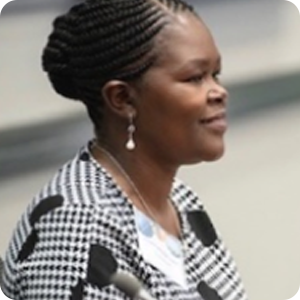 Nancy Bikondo-Omosa, Senior Procurement Specialist
Nancy Bikondo-Omosa is a Senior Procurement Specialist for the World Bank’s Operations Policy & Country Services unit. With 18 years of procurement experience in World Bank procurement policies and procedures, Nancy provides procurement training to World Bank staff and borrowers on the WB’s procurement framework which has been in effect since July 1, 2016. She also provides business outreach to the private sector regarding, among others topics, how to find business opportunities in World Bank-funded projects. Before joining the World Bank, she was a State Counsel at the Attorney General’s Chambers in Nairobi Kenya. She holds an LLB from the University of Nairobi and an LLM from the University of London.
Host:
Ion Ilasco , External Relations and Events at DevelopmentAid
2021 Global Conference on Health and Climate Change
📅 6 November 2021
Virtual/ Glasgow
The 2021 Global Conference on Health & Climate Change, with a special focus on Climate Justice and the Healthy and Green Recovery from COVID-19, will convene on the margins of the COP26 UN climate change conference. The aim of the conference is to call on governments, businesses, institutions, and financial actors to drive green, healthy, and resilient recovery from COVID-19.
The Global Conference on Health & Climate Change is organized by the World Health Organization (WHO) and the Global Climate and Health Alliance (GCHA), in close collaboration with the Glasgow Caledonian University and its Centre for Climate Justice, the UK Health Alliance on Climate Change, the Centre on Climate Change and Planetary Health of the London School of Hygiene and Tropical Medicine, and the Wellcome Trust.