

Add us as your preferred source on Google to see more of our content in Search.
 Add to Preferred Sources
Nearly 75,000 refugees and migrants, including an estimated 24,600 children, currently stranded in Greece, Bulgaria, Hungary and the Western Balkans are at risk of psychosocial distress caused by living in a protracted state of limbo, UNICEF warned today. Despite having a legitimate right to join families in destination countries in Western Europe, like Germany or Sweden, most stranded asylum seekers do not know whether or when they will be permitted to move forward.
UNICEF and its partners in Greece are monitoring mental health and general depression among single mothers and children waiting for family reunification and providing psychosocial support.
“Many single mothers are feeling stuck and seem to have lost motivation. Their emotional state affects their children,” Sofia Tzelepi a lawyer working with UNICEF.
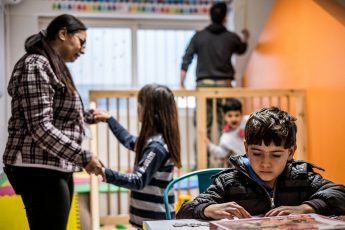
UNICEF continues to provide psychosocial support to refugee and migrant children and families in Greece and the Western Balkans, including:
- Greece: support for 11 Child and Family Support Hubs (blue dots) and offering psychological and mental health services in Athens and five open sites across the Attica region;
- Bulgaria: training on the protection of refugee and migrant children for the Border Police, Migration Directorate and child protection departments in the border areas with Turkey; and providing psychosocial support through newly established Child and Family Support Hubs.
- Serbia: support for child friendly spaces and state social services across the country;
- The former Yugoslav Republic of Macedonia: offering psychosocial support to children and mothers in Child and Family Support Hubs in Gevgelija and Tabanovce;
- Croatia: offering psychosocial support for children through child-friendly centre in Zagreb;
- Slovenia: providing technical support to the Government in addressing key gaps in the child protection system.
“Keeping families together is the best way to ensure that children are protected, which is why the family reunification process for refugee and migrant children is so important. With the number of those stranded continuing to rise, it is incumbent on member states to alleviate procedural bottlenecks so that families can get back together as quickly as possible,” Afshan Khan, UNICEF Regional Director and Special Coordinator