
Add us as your preferred source on Google to see more of our content in Search.
 Add to Preferred Sources
The $10 billion Green Climate Fund is one of the key funding mechanisms for the Paris climate agreement, charged with helping developing countries tackle a warming world.
Since coming online in late 2015, the board has allocated $1.2 billion for 27 projects across Asia, Africa, Latin America, Eastern Europe and the Pacific. It’s the start of what green finance experts hope will mark a radical shift in climate investment flows, with poorer nations empowered to access fast and effective funding.
And while the GCF’s first foray has been small compared to global climate finance flows – $367 billion in 2014 according to the Climate Policy Initiative – it is significant.
Below are detailed some of the GCF’s first projects exclusively targeted at climate resilience and adaptation, which the fund hopes to see delivered through 2017.
Wetlands protection and restoration in Peru
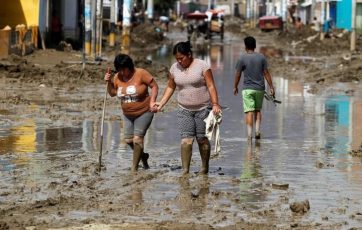
Tonnes of carbon dioxide (Co2e) avoided: 2.6 million
Investments: $9.1m, $6.2m from the GCF
Project manager: Peruvian Trust Fund for National Parks and Protected Areas
The swamps of Datem del Marañón hold a total carbon stock estimated at around 3.78 billion tonnes of carbon dioxide equivalent (CO2 eq.). The project will avoid deforestation of an estimated 4,861 hectares of palm swamp and terra firma forests over a 10-year period and enhance resilience and conservation of 343,000 ha of peatlands and forest.
The project will facilitate better land-use planning and management of the region’s wetlands, while strengthening sustainable, commercial bio-businesses of non-timber forest products. It will entrust indigenous communities with the management of resources, improve their livelihoods, and empower women in the decision-making processes.
Climate resilience and water management in Maldives
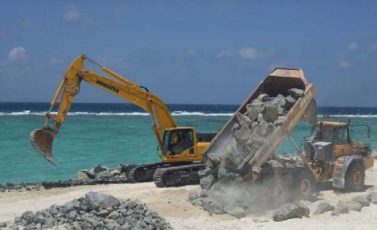
People impacted: 295,000
Investments: $28.2 m, $23.6m from the GCF
Project Manager: UN Development Programme (UNDP)
The project will scale up an integrated water supply system based on rainwater, groundwater, and desalinated water into a low-cost delivery system for vulnerable households. This will provide uninterrupted supply to 49 islands that currently rely on emergency water deliveries for three months of each year. Decentralised and cost-effective dry season water supply systems will also be introduced.
Water desalination production plants will be built on four larger islands that will contribute to this improved dry season water distribution network to outer atolls and local supply systems. Increased capacity of local and central government authorities will strengthen the management and efficiency of these systems.
Groundwater quality will be improved for long-term resilience. Groundwater recharge systems and improved water resource management capacity will contribute to improved groundwater quality.
Forest restoration in the Gambia
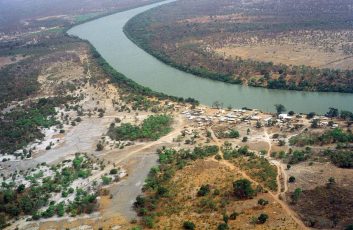
People impacted: 57,800
Investments: $25.5m, $20.5m from the GCF
Project manager: UN Environment Programme (UNEP)
Restoring degraded forests and agricultural landscapes in The Gambia with climate-resilient plants, establishing natural resource-based businesses, and strengthening capacity and policies to implement eco-based adaptation systems.
Restoring degraded forests and agricultural landscapes in The Gambia with climate-resilient plants, establishing natural resource-based businesses, and strengthening capacity and policies to implement eco-based adaptation systems.
Implementing Ecosystem-based Adaptation (EbA) is a significant part of this strategy, and its implementation will be enabled through the GCF investment. EbA will both protect the environment and facilitate the development of the sustainable, natural resource-based economy to the benefit of local communities.
Source: Climate Change news. Read full article here.
5 May, 2017