
Add us as your preferred source on Google to see more of our content in Search.
 Add to Preferred Sources
More than 40 years after the AIDS epidemic began, significant HIV-related, stigma, and discrimination persist, according to a new global survey, released ahead of World Aids Day.
Nearly four out of ten respondents said that people living with HIV should not be allowed to work directly with those who do not have HIV. As many as six in ten people, also supported mandatory HIV testing before people are allowed to work.
The study revealed how stigmatizing and discriminatory attitudes are fuelled by a lack of knowledge on HIV transmission. Only one in two people knew HIV cannot be transmitted by sharing a bathroom and only one in four people correctly answered questions about how HIV is transmitted. Myths and misconceptions persist and contribute to stigma and discrimination.
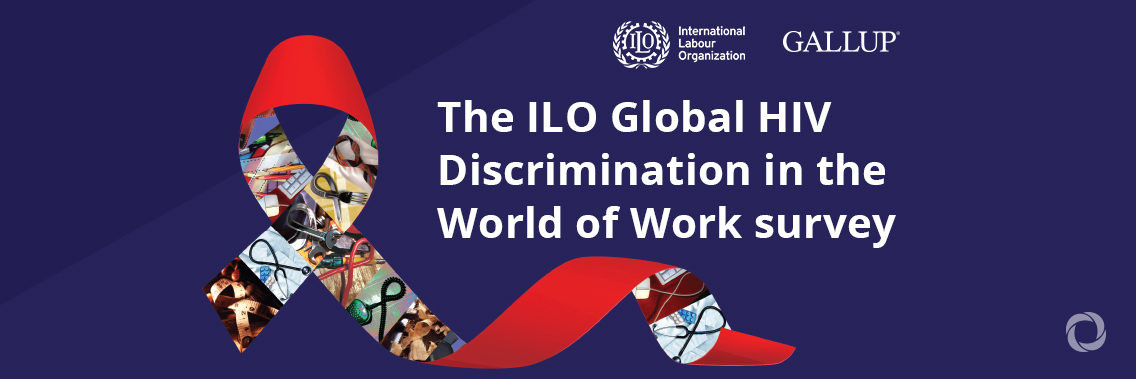
The report, The ILO Global HIV Discrimination in the World of Work Survey, is the product of a ground-breaking collaboration between the International Labour Organization (ILO) and the opinion poll company, Gallup International. It sheds light on the causes of the persistence of HIV-related stigma and discrimination in the world of work. Information was collected from more than 55,000 people in 50 countries, worldwide.
Views varied considerably between regions. The lowest tolerance for working directly with people with HIV was found in Asia and the Pacific (only 40 percent said people living with HIV should be allowed to work with people who do not have HIV) and in the Middle East and North Africa (where only 42 percent said people living with HIV should be allowed to work with people who do not have HIV).
The regions with the most positive attitudes were Eastern and Southern Africa, where almost 90 percent of respondents said that working directly with people with HIV should be allowed. Higher educational levels were also associated with positive attitudes towards working with those living with HIV. Globally 68 percent of those with tertiary education agreed that working directly with people living with HIV should be allowed, compared to 39.9 percent of those with only primary education.
The report offers a number of recommendations, including implementation of HIV programmes that increase workers’ knowledge of HIV transmission and dispel myths and misconceptions, improving the legal and policy environment around HIV to protect the rights of workers, abolishing mandatory HIV testing in line with the ILO Recommendation on HIV and AIDS (No. 200), enhancing access to social protection and addressing violence and harassment that can arise from stigma and discrimination, by ratifying and implementing the ILO Violence and Harassment Convention, 2019 (No. 190).