
Add us as your preferred source on Google to see more of our content in Search.
 Add to Preferred Sources
The International Rescue Committee (IRC) has announced the expansion of its programming in Bangladesh, launching a response to climate change in southern Bangladesh. IRC teams are providing essential healthcare to coastal communities that are at risk of being cut off from services.
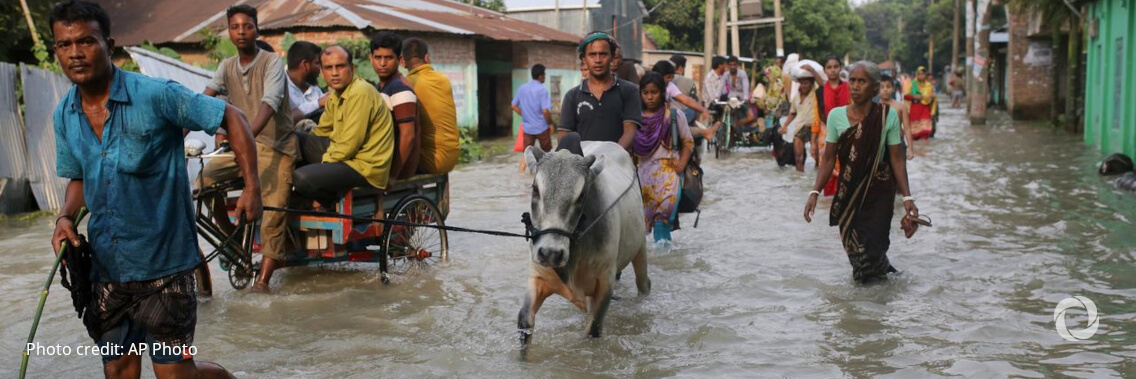
Climate change is having drastic consequences for the southern region of Bangladesh, where 40% of productive land is projected to be lost as sea levels rise. The Patuakhali district has become especially vulnerable, as disasters including flooding, riverbank erosion, cyclones, and tornadoes have gradually intensified during recent years. As a result, coastal communities are now experiencing difficulty accessing fundamental services such as healthcare.
Manish Agrawal, IRC Bangladesh Director, said, “The IRC’s response in Patuakhali marks the expansion of our programming in Bangladesh, where we have been operating since 2017. As the leading health actor in Cox’s Bazar, our teams are responsible for the COVID-19 vaccination program as well as providing reproductive and maternal healthcare to Rohingya refugees and the local community.
“We are excited to bring our experience and expertise to the southern part of Bangladesh, where we aim to reach around 26,000 people from remote areas that have become cut off from services as a result of climate change. As sea levels rise, Bangladesh could lose up to 15% of its land by 2080 and around 30 million people living in the coastal areas of the country could become displaced as a result. Bordered by the Bay of Bengal and several rivers, in some areas of Patuakhali the only way of reaching health facilities is by boat, as people live on islands that are exposed to extreme weather that can make for treacherous journeys.
The COVID-19 pandemic has created an additional risk for those communities, and the IRC is pleased to partner with the government health authority and local actors and work closely with local communities to identify ways to provide vaccination services to people living on the islands, as well as address misinformation about COVID-19 and the vaccine.