
Add us as your preferred source on Google to see more of our content in Search.
 Add to Preferred Sources
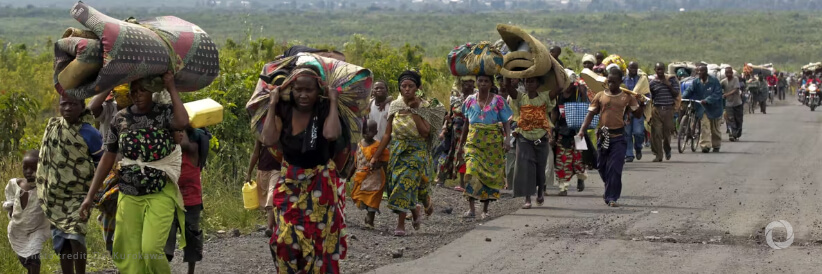
The international aid organization CARE International is highlighting the fact that financial support for millions of refugees worldwide has completely failed to materialize since the beginning of the year. African countries are particularly affected, where no or only very little support has been provided so far to cope with refugee crises.
According to the UN OCHA’s financial tracking system, countries such as Haiti, Burundi, the Rohingya, and Syrian refugee responses and Mali as well as the Venezuela crisis regional response plan have received less than fifteen percent of the funds required to cope with humanitarian crises, including supporting those displaced in the country and over borders.
Even before the recent Ukraine crisis, funding levels for humanitarian crises were worryingly low. Since the escalation of the conflict in Ukraine, a number of European governments are planning to re-direct their official development assistance to support Ukrainian refugees, including in their countries, which risks leaving highly vulnerable refugee populations behind, especially in the less high profile and already underfunded displacement crises around the world.
“International attention is currently focused on Ukraine. While we have a responsibility to step up to the challenge of facing humanitarian needs inside Ukraine and of vulnerable Ukrainian refugees, we must not forget about the many other global displacement crises,” Delphine Pinault, Humanitarian Policy Coordinator at CARE International.
“All over the world, people are forced to leave their homes because of conflict and natural disasters. Many displaced populations living in the Horn of Africa and the Sahel are also facing hunger at the moment. We are calling on political leaders to fulfill their obligations and to immediately increase the financial resources for the care and support of ALL refugees and displaced people – wherever they are coming from or running to,” concludes Pinault.
Central Sahel + Chad: less than 15% funded despite the growing crisis
Over 4.6 million people are currently displaced across Burkina Faso, Chad, Mali, and Niger. Despite the large numbers and soaring needs, humanitarian response plans across all countries are only 15% funded. Year on year, the Sahel region has faced a chronic lack of funding as conflict, displacement, climate change, hunger, and poverty increase. At the end of 2021, Central Sahel + Chad response plans were less than 45% funded. This is the lowest amount of funding received in the last 6 years, despite rising needs.
“On June 1st, the Government of Chad issued a decree declaring a food emergency, with 4 million people who need food assistance. The humanitarian situation is dramatic and worsens day by day. Water, food, medicine, shelter, and protection – everything is needed. Without sufficient funding, it is simply not possible for us as an aid organization to provide the people in Chad with the help they need, even though we have a strong team of aid workers there. We hope that the international donor countries will quickly increase their contributions”, said Huguette Sekpe, CARE’s program director in Chad.
Syria: Funding cuts affect three million people
Regional refugee assistance to the Syria crisis has currently received only 10.8% of the required funding – too little given the devastating humanitarian situation. According to the NGO Forum Northwest Syria, of which CARE is a member, aid organizations in northwest Syria are experiencing massive cuts of $21.5 million per month this year compared to last year. If more funds are not made available soon, devastating consequences loom: For example, it is feared that more than three million people are at risk of losing vital support.