
‘Unimaginable’ devastation: Islamic Relief calls for more aid for Pakistan amid unprecedented flooding
Add us as your preferred source on Google to see more of our content in Search.
 Add to Preferred Sources
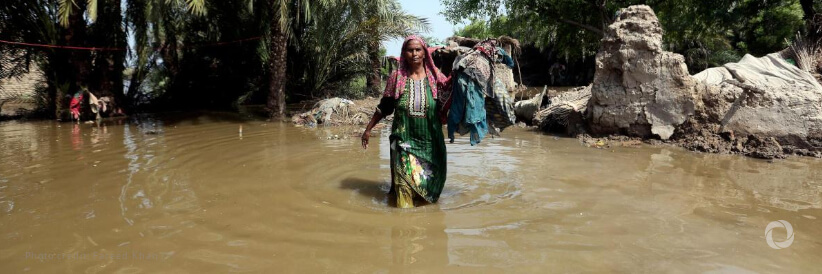
Islamic Relief is continuing efforts to support people affected by historic flooding in Pakistan, as it was announced that one-third of the country is now underwater.
Pakistan’s climate minister Sherry Rehman told AFP news agency that the situation had “exceeded every boundary, every norm we’ve seen in the past.” The floods have killed at least 1,136 people since the monsoon season began in June, but the number is expected to keep rising. Some 1 million homes have been destroyed, forcing some families to shelter in dangerous areas such as by the sides of major roads.
More than 33 million people – 1 in 7 of the population – are thought to have been affected by the unprecedented flooding, which has seen the heaviest recorded rainfall in a decade.
The situation is expected to worsen, with more rain expected and several outbreaks of waterborne diseases reported. Food is beginning to run out in local markets and, while aid is beginning to reach those in need, efforts have been complicated by the destruction of key infrastructure including thousands of kilometers of road and at least 162 bridges.
Pakistani officials have said they are still processing the full extent of the damage. However, the impact of the flooding is likely to be felt long after the waters recede.
Some 3.5 million acres of crops have been ruined and 800,000 livestock killed, effectively wiping out the livelihoods of countless families, while the country’s economic losses are expected to amount to billions of dollars.
‘Much more is needed’
Islamic Relief is on the ground, offering emergency assistance in the provinces of Sindh, Balochistan, and Khyber Pakhtunkhwa (KPK). IR has so far reached more than 20,000 people, distributing tents, food, cash, hygiene kits, and other vital aid.
But, while essential, this work is only scratching the surface of the desperate needs of those affected by the flooding. Islamic Relief has launched a global funding appeal for the emergency, with the aim of supporting more than 200,000 people.
“Whole villages have been swept away and submerged. I saw miles of nothing but water, were just a few days ago there were entire communities and people’s homes. I’ve met so many families who fled for their lives just minutes before the floods arrived and they have lost absolutely everything they owned – their homes are destroyed, their livestock is dead and their crops are ruined. They don’t know how they will feed themselves and their children”, says Waseem.
Islamic Relief is distributing lifesaving aid like food, tents, cash, and hygiene kits. But much more is needed.
‘Bearing the brunt of global climate change’
Pakistani officials have pointed to climate change as the likely cause of the flooding, which is the worst in living memory. Islamic Relief is calling on the international community to step up its response to help those suffering at the forefront of global climate change.
“People here are bearing the brunt of global climate change. Pakistan produces less than 1% of the world’s carbon footprint, but its people are suffering the biggest consequences. These are the worst floods that Pakistan has ever experienced and the scale of the devastation here is unimaginable, ” Waseem adds.
Emergency aid is desperately needed to save lives and livelihoods. But IRW also needs to see real global action on the climate emergency. These disasters are becoming more frequent and more severe – countries like Bangladesh and South Africa have also suffered their worst flooding in decades this year, while the Horn of Africa is right now suffering unprecedented drought. It’s time for the world to wake up and act on climate change.