

Add us as your preferred source on Google to see more of our content in Search.
 Add to Preferred Sources
More than 30 million people in urgent need after major floods devastate areas of Pakistan and Afghanistan, over one million tonnes of Ukrainian grain and food items exported under Black Sea deal and whole generation of Syrian children ‘might be lost’. Here is what you missed from last week’s headlines in the international development sector.
More than 30 million people in urgent need after major floods devastate areas of Pakistan and Afghanistan, IRC launches emergency response
The International Rescue Committee (IRC) is responding to devastating floods in Pakistan which have hit almost 33 million people and killed more than 1,000. Since mid-June, the monsoons have destroyed 3,000 kilometers of road, 130 bridges, and 495,000 homes. With more than 4 million acres of crops damaged and almost 800,000 livestock killed, the IRC is anticipating a sharp increase in food insecurity and a severe impact on the economy.
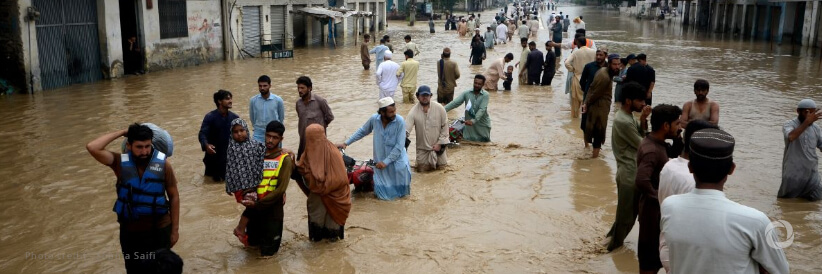
A rapid needs assessment conducted by IRC and Medical Emergency & Resilience Foundation (MERF) in Pakistan found that:
- 87% of respondents reported that women and girls don’t have safe latrine facilities and 84% don’t have access to necessary hygiene supplies
- 71% reported their community does not have access to sufficient and clean drinking water
- 63% reported that pregnant and lactating women were extremely vulnerable
- 60% of respondents said their community is not safe
- 30 to 40% of respondents said they do not have access to critical healthcare
The IRC is calling for quick mobilization of resources to help IRC and other aid organizations respond urgently to reach those most in need.
Ukraine: More than one million tonnes of grain and food items exported under Black Sea deal
Exports of Ukrainian grain and other foodstuffs under a landmark agreement amid the ongoing war, have surpassed one million metric tonnes, the UN Coordinator for the Black Sea Grain Initiative, Amir Abdulla, reported.
This “remarkable achievement” was made possible through the collective efforts and hard work of the Joint Coordination Centre (JCC), he said, referring to the Istanbul-based mechanism that monitors ships’ movements to ensure their compliance with the Initiative.
The JCC brings together representatives from Ukraine, Russia, Türkiye, and the UN – the signatories of the landmark agreement.
Whole generation of Syrian children ‘might be lost’, senior humanitarian warns Security Council
“Irreversible damage” is being caused to the lives of Syrian civilians due to chronic under-funding of the international effort said the UN’s Assistant Secretary-General for humanitarian affairs, who told the Security Council the future of a whole generation was at stake.
“Lack of funding comes with severe consequences”, Joyce Msuya told ambassadors, “including more drop-outs from school, higher malnutrition rates, and fewer protection interventions. If we do not act now, a generation of Syrian children might be lost”.

DevelopmentAid Editorials
Your CV for donor-funded projects: EuropeAid format
A well-tailored resume is an important prerequisite that could influence a consultant’s career in international development. So, how and what exactly helps your CV stand out, and which resume formats should be used in various circumstances? You are about to get closer to understanding these crucial points in a series of articles written by Development Recruitment Service about the different types of CVs for donor-funded projects.
Is the expanding gap between the rich and the poor a new-normal?
In economics, income and wealth disparities have long been a topic of discussion. In the 1970s and early 1980s, the growth of inequality sparked interest as to its origins and implications. Since then, economists have agreed that economic development and prosperity no longer significantly reduce economic disparity within a state.
So far, the trend of the rich getting richer and the poor falling deeper into poverty has not been reversed or even slowed down. Does this mean the expanding gap between the two groups is a new normal?
What are the solutions for stabilizing inflation? | Experts’ Opinions
For the past few months with every visit to the grocery store, each stop at the gas station, and every paid bill, our wallets became emptier at an alarming rate. Inflation is the word on everybody’s lips these days, currently being one of the biggest international development challenges. In May, the price index rose again mainly because of surging energy and food prices, partly due to the impact of the war in Ukraine. Russia’s invasion of its neighboring country continues to weigh on the world economy by disrupting trade leading to shortages of materials and contributing to high energy and commodity prices. The problem is clear but… what are the solutions?
Here’s what else has happened
WFP: The first tranche of food assistance pledged by the Government of Japan earlier this year has been provided through the United Nations World Food Programme (WFP) to Sri Lanka, where more than 6 million people – nearly 30% of the population, are facing a worsening food crisis.
Southern Mexico: As thousands of people in need of international protection continue to see Mexico as a potential safe destination—becoming the third highest receiver of asylum claims in 2021—the International Rescue Committee (IRC) warns about the increasing needs that they can find along the border with Guatemala.
Pakistan: A $160 million emergency plan to help Pakistan deal with devastating flooding has been launched by the United Nations, aiming to reach “5.2 million of the most vulnerable people in the country”.
Africa: The new estimates show that sub-Saharan Africa remains the region with the most children and youth out of school, with a total of 98 million children. It is also the only region where this number is increasing: out-of-school rates are falling more slowly than the rate at which the school-age population is growing. The region with the second highest out-of-school population is Central and Southern Asia, with 85 million.

FAO: The Food and Agriculture Organization of the United Nations (FAO) welcomed an $83 million contribution from the United States of America designed to bolster the agency’s emergency and resilience programs in Ethiopia, Afghanistan, and Sudan, as well as in Haiti, the Dominican Republic, Burkina Faso, the Sahel, and the West Africa region.
Reports
Deprived of the basics, robbed of their dreams, children in Lebanon lose trust in their parents
Three years of devastating crisis in Lebanon have plunged children into poverty, affecting their health, welfare, and education, shattering their hopes, and breaking down family relationships.
A UNICEF report shows that much of the progress towards achieving children’s basic rights – including the right to health, education, protection, play and recreation – has been eroded by the economic crisis and the impact of the COVID-19 pandemic.
Half of health care facilities globally lack basic hygiene services – WHO, UNICEF
The latest report, “Progress on WASH in health care facilities 2000–2021: special focus on WASH and infection prevention and control”, has for the first time established this global baseline on hygiene services – which assessed access at points of care as well as toilets – as more countries than ever report on critical elements of WASH services in their hospitals and other health centers. For hygiene, data are available for 40 countries, representing 35% of the world’s population, up from 21 countries in 2020 and 14 in 2019.
New report recognizes Global Fund as vital for strong global health results
One of the most rigorous reviews for multilateral organizations released an assessment, announcing that the performance of the Global Fund to Fight AIDS, Tuberculosis, and Malaria against 12 key performance indicators is satisfactory overall. It identified several indicators as highly satisfactory but also recommended areas for more attention. The Global Fund partnership, which has saved an estimated 44 million lives in the last 20 years, welcomes the review and feedback to ensure its work remains as effective as possible.
Events
Global Infrastructure Conference 2022
📅 11- 13 September 2022
Geneva, Switzerland
This year’s FIDIC annual Global Infrastructure Conference has a decidedly forward-looking theme. The conference will bring together the world’s premier engineers and infrastructure stakeholders from across the globe. After two years of online conferences, this 2022 event will be held face-to-face and be an important international gathering for the industry.
Development2030 | Beyond Aid
📅 16-17 November 2022
Brussels Expo
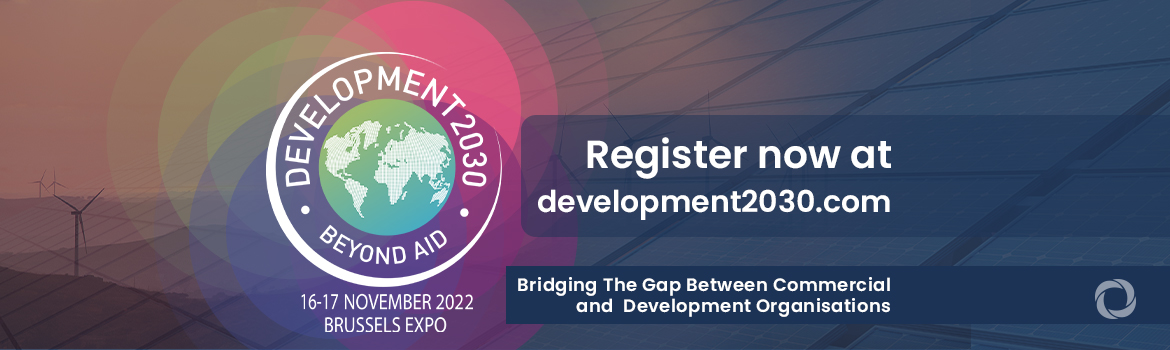
With an ever-increasing pressure to ensure the global public and governments worldwide continue to support overseas development assistance, it is imperative for the international community to adapt to the changing landscape if we are to achieve the Sustainable Development Goals.
The Development2030 event will consider how best we can do this, through identifying the key existing and emerging players, and analysing their role in creating long-term impact for low- and middle income countries. It is THE place for the overseas development community to build meaningful relationships, get inspired and meet like-minded individuals committed to achieving the 2030 goals.
United Nations General Assembly (UNGA 77)
📅 13-27 September 2022
New York, USA
UNGA 77 will present an opportunity for world leaders to consider and debate how the world can collectively solve the shared problems of the time—and create a more sustainable, more just future for all.
As the diplomatic community gathers in New York, the UN Foundation will put the spotlight on key moments while convening leaders, experts, and influencers across countries and sectors to share helpful insight and analysis.