
Add us as your preferred source on Google to see more of our content in Search.
 Add to Preferred Sources
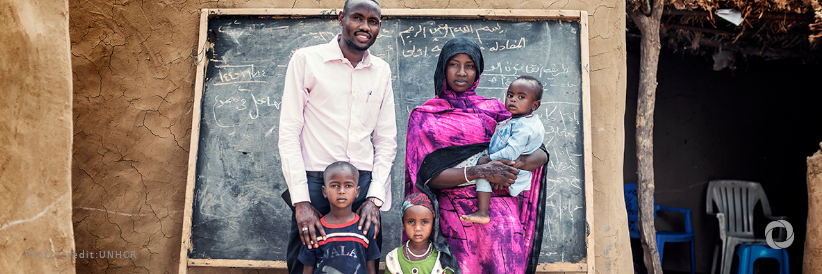
Kouchagine-Moura camp hosts around 14,000 Sudanese refugees who have fled clashes in Darfur since February 2020. In addition to welcoming and protecting the refugees, UNHCR, the UN Refugee Agency, and its partners ensure children’s access to education through their inclusion in the Chadian national education system, and by providing infrastructure and materials.
The agency has overseen the construction of two schools accommodating 2,500 pupils, with 24 latrines, two solar-powered boreholes, and four staff rooms. Together with the Jesuit Refugee Service, UNHCR trained a staff of 39 teachers drawn from the refugee and host community.
The camp also offers an accelerated education and literacy programme for young people between the ages of 12 and 23, which currently includes 108 refugee girls and 61 boys who have never attended school.
But despite these investments, as the camp continues to grow – with nearly 4,000 new arrivals since the start of the year – staff highlight the stark challenges they still face. The average primary school class size is 163 students, and 10 of the 17 classrooms in the two schools are held in the open air due to a lack of available space.
Over the past few years Chad has become one of the most inclusive countries in the world when it comes to educating refugees. In the 2020-21 academic year, over 100,000 young refugees were in formal schooling – more than ever before.
With renewed conflict across the border in Sudan forcing more people to seek safety in Chad, however, the pressure on an already overstretched system is set to increase. The main factor preventing UNHCR and other UN and NGO partners from scaling up their response is a critical lack of funding, with the US$510 million 2022 Humanitarian Response Plan for Chad only 22 percent funded. The education component of that plan has received only $2 million of the $34 million needed to address the needs of refugee children.
Beyond the capacity constraints, teachers are also alert to the risks of absenteeism due to the precarious living conditions faced by many families in the camp, as Brahim Tahir Arabi, a Chadian teacher from the host community, points out.