


Add us as your preferred source on Google to see more of our content in Search.
 Add to Preferred Sources
Last updated: August 2026
Of the 8.2 billion people currently living on planet Earth, a significant percentage is homeless. This is why in almost every city on the planet, people can be observed sleeping on the streets, on park benches or elsewhere they possibly can. Homelessness is not a personal choice, and it affects people of all ages, sexes, races, and backgrounds. It is among the most obvious examples of poverty, prejudice, and inequality.
Although hard to track, the number of homeless people increases every year, with few countries being an exception.
Homelessness statistics at a glance
- An astounding number of 2.8 billion people—nearly 34% of the world’s population—lack access to decent housing, safe land, and basic water and sanitation services, according to the United Nations Human Settlements Programme (UN-Habitat).
- More than 1.1 billion people reside in slums and unauthorized settlements, which is an increase of around 130 million compared to 2015.
- 318 million people face absolute homelessness – the situation when a person lacks any type of shelter, according to UN-Habitat.
- In 2024, over 60% of people facing homelessness were men, and around 30% were women.
- According to the Ruff Institute of Global Homelessness, official government statistics on homelessness are available in just 78 of 195 countries. Moreover, since 2018, only 57 nations have released official government data about homelessness.
Surprisingly, living in a rich country or healthy economy is no guarantee to being “homelessness immune”. This article presents homelessness statistics around the globe, describing countries where most homeless people live, and the nations with the highest and lowest homelessness rates. But first, let’s explore the causes of homelessness.
Major causes of homelessness
Although the world has millions of homeless people, it is challenging to quantify homelessness with any degree of accuracy due to the lack of reliable statistics. Numerous factors contribute to the phenomenon, many of which are interconnected.
- Conflicts cause people to lose their homes and look for a place to stay, but not everyone is lucky enough to find adequate shelter
- Natural disasters destroy homes, leaving families without a roof over their heads
- The absence of affordable housing is another major cause. Some people are unable to pay their rent or mortgage due to unemployment, which can be caused by a crisis or by physical or mental health issues.
- Despite having a job, some homeless people do not earn enough to be able to cover their rent, sometimes as a result of an increase in local housing costs.
Virtually every country around the globe has a homeless population. From this perspective, nations can be divided into two categories: those with the highest homeless population, and those with the highest homeless rate.
- Homeless population is the number of homeless individuals on a given night in a specific nation
- Rate of homelessness is the rate of homeless people in relation to a country’s total population
Countries with the highest number of homeless people
While some nations have limited definitions of homelessness that only apply to particular groups, others lack geographically comprehensive approaches to track this social phenomenon. This is why it is impossible to accurately publish a list of those countries with the highest number of homeless people or the highest rate of homelessness per 10,000 inhabitants.
Despite this fact and based on data collected from various sources, including United Hands Relief and the Borgen Project, the most homeless people were in Nigeria, while Syria had the greatest rate of homelessness worldwide.
Homelessness in Nigeria
- Nigeria population: 250.2 million (as of July 2026)
- Homeless population: 24.4 million (as of 2020, but there’re no official sources)
Nigeria has the world’s highest number of homeless people, and although there appears to be a precise number of homeless people, it is impossible to track and quantify those who change their state of “homelessness”.
Nigerians frequently migrate from rural areas to large cities in search of shelter, money and opportunity. Many, however, have trouble adjusting to city life due to:
- High cost of living
- Lack of social support
- Challenges in getting a job (since newcomers lack the required education and communication skills)
- Abuse that some people face
- Hazardous jobs performed for meagre remuneration
In Nigeria, homeless people represent about 13% of the total population of the country. In addition, 70% of Nigerians are living in “informal settlements,” and the most severe problem is in the country’s biggest city, Lagos, where around two-thirds of the population live below the poverty line of US$1 a day.
Homelessness is made worse by forced eviction, which happens when the government provides land to private developers. In the past 15 years alone, about 1 million individuals have had to abandon their homes.
Suggested reading: World food insecurity: Exploring its causes, effects, and mitigation
Homelessness in Syria
- Population: 24.7 million (as of July 2026)
- Homeless: 6.56 million (as of 2020, official data is missing)
Syria – the country with the highest percentage of homeless people.
According to the UN Refugees, over 16.5 million Syrians were in need of humanitarian assistance in June 2025 after being forced to leave their homes in search of safety since 2011.
Additionally, as of June 2025, 4.4 million Syrian refugees remain registered in countries bordering their homeland, including Türkiye, Lebanon, Jordan, Iraq and Egypt.
Furthermore, over 7.4 million Syrians are still internally displaced, around 90% of people live below the poverty line and 70% of people require humanitarian aid, according to the latest data from the United Nations Relief and Works Agency for Palestine Refugees in the Near East.
Syria continues to have the worst displacement situation in the world. After 11 years of the ongoing war, the Syrian refugee issue is the greatest global refugee and resettlement disaster of our time.
Another major cause of homelessness in Syria is the lack of water infrastructure, destroyed during wars, and food insecurity.
Prior to 2010, 92% of Syrians living in rural areas and 98% of those living in urban areas had consistent access to clean water. However, according to current UN estimates, the war in Syria has caused damage to 30% of water towers, around 50% of all pumping stations, and almost two-thirds of water treatment plants. Furthermore, according to the UN, 70% of Syrians currently lack access to potable water because of infrastructural failure.
The latest data indicates that 7.2 million Syrians are acutely food insecure (World Food Programme, May 2026). Moreover, 1.6 million people are on the brink of facing hunger.
Put together, these conditions point towards an increase in homeless people in Syria.
- The main reason behind the huge number of homeless people is war, which has left 90% of the population in poverty.
- The war has left 90% of the population in poverty
- Infrastructure has collapsed. This includes hospitals, clinics, schools, and water and sewage systems.
Suggested reading: Top 10 world problems and their solutions
Homelessness statistics in the United States
A single-night point-in-time count in January 2025 recorded 745,652 people experiencing homelessness in the United States, according to the 2025 Annual Homelessness Assessment Report published by the U.S. Department of Housing and Urban Development.
Over 266,000 of them lived unsheltered, which represents a 3% decrease compared to the previous period but still a 27% increase compared to 2013.
The report outlines several key figures:
- In 2025, the number of people who were either homeless or who had to reside in shelters for the homeless subsidized by taxpayers reached 1,456,923.
- From 2013 to 2025, there was an increase in the rate of:
-
- Homelessness (by 27%).
- Unsheltered homelessness (by 36%).
- Chronic homelessness (by 81%).
-
The major factors causing homelessness in the U.S. include:
- Dramatic situation of the nation’s affordable housing
- Increasing inflation
- Declining incomes of middle- and lower-income households
- Lasting effects of systemic racism
- Public health crisis
- Natural disasters that forced people to flee their homes
These causes, which in many cases can intersect, have led to an increase in homelessness in the U.S.
Share of homelessness by household type and sleeping location (2025)
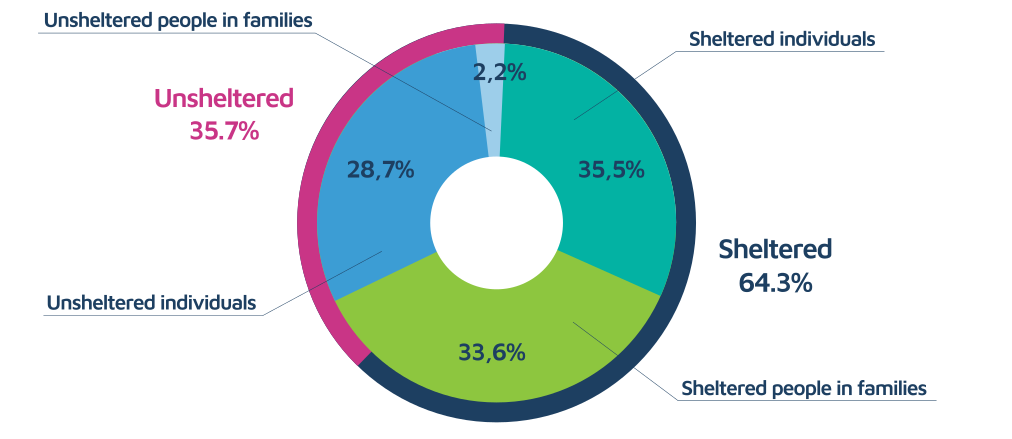
Source: The 2025 Annual Homelessness Assessment Report (AHAR) to Congress
Note: The term “Sheltered” implies people in emergency shelters (ES), transitional housing (TH) programs, and safe havens (SH) on the night of the count.
Homelessness by state in the U.S.
Data from the U.S. Department of Housing and Urban Development (HUD) indicates that California and New York were the two states that encountered the biggest numbers of homeless people in 2025:
- California: 181,934 people
- New York: 145,560 people
Moreover, these two states, along with the District of Columbia and Hawaii, had a rate of homelessness much higher than the average of 23 homeless people per 10,000 inhabitants across the United States.
- California: 46 homeless per 10,000 people
- New York: 73 homeless per 10,000 people
- District of Columbia: 73 homeless per 10,000 people
- Hawaii: 47 homeless per 10,000 people
The graph below shows in which states the rate of homelessness underwent the greatest changes.
Top 10 U.S. states by homelessness population per 10,000 people
Source: USAFacts
Statistics offered by HUD show that out of 10,000 people, 22 have experienced homelessness in the United States. However, it’s worth noting that the rate varies drastically by state, and thus, while Mississippi registered the lowest rate (4.2 people per 10,000), New York showed a figure of 72.8 per 10,000.
Some states that did not show a high homelessness rate nonetheless registered an alarming growth of homeless people. That being said, the top three states that had the most drastic changes in terms of homelessness rate between 2020 and 2025 were Vermont (from 17.3 people per 10,000 to 52.5), Oregon, and New York (each of them showed an increase by over 25 people per 10,000).
Population experiencing homelessness in Europe
In 2024, the 9th Overview on Housing Exclusion report prepared and published by the European Federation of National Organisations Working with the Homeless (FEANTSA) outlined that in the European Union, around 1,287,000 individuals were living in temporary housing, night shelters, or on the streets.
The level of homelessness in the European Union (EU) has registered a dramatic increase over the past decade, with the figures being particularly alarming in France, Germany, and the Czech Republic.
- France: 350,000 homeless people (minimum estimate), according to FEANTSA’s 10th Overview of Housing Exclusion in Europe, published in October 2025.
- Germany: 531,600 people do not benefit from a permanent shelter, which is nearly twice as many as the 2022 estimates, when the number was 263,000.
- Czech Republic: out of the 10 million people in the country, 232,204 are either homeless or live in an alternative type of housing, which puts Czechia at the top of the list of EU countries with the highest number of homeless persons as measured by population.
The FEANTSA report also provides homelessness figures in other EU countries, with some of the most notable being those that show rising rates in Finland, Denmark, and Ireland.
For instance, in 2024, for the first time in more than ten years of decline, Finland saw an increase in the number of homeless people, and compared to 2023, this number reached 3,806 – an 11% increase.
The trend continued in 2025, when the country registered 4,579 homeless people living alone – a 20% increase compared to 2024, according to Finland’s Centre for State-Subsidised Housing Construction.
Important notice: The numbers may not be entirely accurate, and this is because countries with higher homelessness numbers often just count more accurately (due to better services, broader definitions, etc.). A good example is France: there has been no national count since 2012, and yet by applying broad definitions, foundations calculated at least 350,000 homeless people.
- As for the United Kingdom, data from the UK housing and homeless charity Shelter shows that about 382,000 are homeless in the country.
- In Wales, 13,287 households required assistance from councils because of homelessness. It has been estimated that 10,876 people found shelter in temporary accommodation (as of September 2025).
- Data for Scotland for the 2024-2025 period shows 34,067 households being classed as homeless (these encompass 38,674 adults and 15,046 children).
- For Northern Ireland, the 2025 picture illustrates that between April and September there were 8,217 households marked as homeless.
According to Ruth Owen, Deputy Director of the European Federation of National Organisations working with the Homeless (FEANTSA), for decades there has been a continuous rise in housing costs across the entire European Union.
Rate of homelessness per 10,000 people (2023)
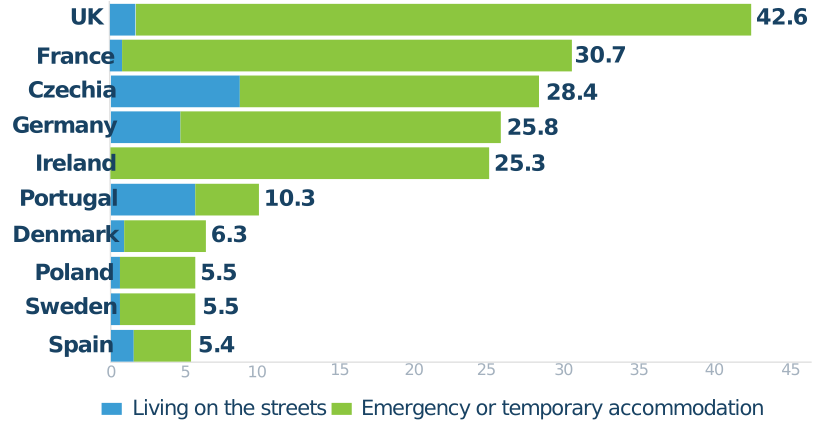
Source: Euronews
The statistics presented above offer an overview of homelessness at a specific moment in time; homelessness is typically a dynamic and changing issue.
Flow counts, on the other hand, provide a slightly different perspective by gathering statistics over a specific period of time, such as the number of people who were housed in a shelter over the course of a year.
That said, in 2023, Latvia documented 31.9 homeless individuals per 10,000 in the flow category, while Austria recorded 21.7 and were the first and second nations in this aspect, respectively.
Source: Euronews
Which country has no homeless population?
With only two homeless people per 100,000, Japan is said to have the lowest rate of homelessness among developed nations who are members of the Organisation for Economic Co-operation and Development (OECD).
Data presented by the Ministry of Health, Labor, and Welfare of Japan showed that in 2025 the country had 2,591 homeless people, which is down 229, or 8.1%, year on year.
Japan continues to register a record low number of homeless people, continuing to be the lowest-rate country among OECD nations in this regard. In 2023, for instance, homelessness in Japan was 2,820 people, as reported by the Japan Times, with the authorities explaining this drop was due to efficient social assistance policies. Japan has a population of around 124 million.
However, in Japan, the statistical definition of homelessness is very narrow and includes only “people who live their daily life in a park, a riverbed, at a road, a station or other institutions”.
Japan’s diverse strategy to reduce homelessness involves giving those who lack housing access to resources, permanent shelter, and community assistance.
Frequently Asked Questions (FAQ)
1. How many homeless people are there in the world?
UN-Habitat’s latest estimate shows there are 318 million people without any home at all (also known as “absolute homelessness”), and if we zoom out further, we may find that 2.8 billion people lack adequate housing, and 1.1 billion found shelter in slums or informal settlements. The number of homeless people may differ based on the source, which comes down to one problem: each nation has its own definition of the term “homeless,” so, for example, some may not define people living in their vehicles as homeless.
2. Which country has the most homeless people?
By the number of homeless people, Nigeria tops the list with 24.4 million (as of 2020), having a population of 250 million. If we rank countries by the rate of homeless people by total population, Syria has the worst situation, with 6.56 million out of a population of 24.7 million (around 26%, though again there are no official numbers).
3. What U.S. state has the most homeless people?
California, by a wide margin, with around 181,934 homeless people registered in 2025. New York comes second with 145,560 people. Nationally, the U.S. Department of Housing and Urban Development’s January 2025 count recorded 745,652 people experiencing homelessness on a single night in 2025, actually a slight drop from 2024’s record high.
4. What are the main causes of homelessness?
Among the main causes are conflicts, natural disasters, unaffordable housing, and wages that haven’t kept pace with rent. Add to that mental illness, addiction, domestic violence, job loss, and people falling through the cracks after leaving foster care or hospital care, with no place to go. In reality, there’s not one cause, most of the time, but a combination of two, three, or more hitting the same person simultaneously.
5. Which country has the lowest rate of homelessness?
Japan regularly hits the top spot of countries with the lowest number of homeless people. Latest available data (2025) shows there are 2,591 homeless people within the nation’s borders. Finland can also often be found on the list, thanks to its Housing First approach, which offers people permanent rental apartments and voluntary support services. But it’s worth noting that the country’s number of homeless people in 2025 actually rose by 20% (the second in a row increase in over a decade of decline).
Final word
Although it is difficult to analyze the countries with the highest and lowest number of homeless people because very few surveys have been carried out and some were done a while ago, we can still get a glimpse of what’s going on. Obviously, the nations that face ongoing conflicts and suffer serious issues register an increasing number of homeless people. At the same time, developed countries like Iceland (which is also among the world’s happiest) and Japan not only have a very low homeless population but continue to invest in tackling the issue of homelessness.