
Add us as your preferred source on Google to see more of our content in Search.
 Add to Preferred Sources
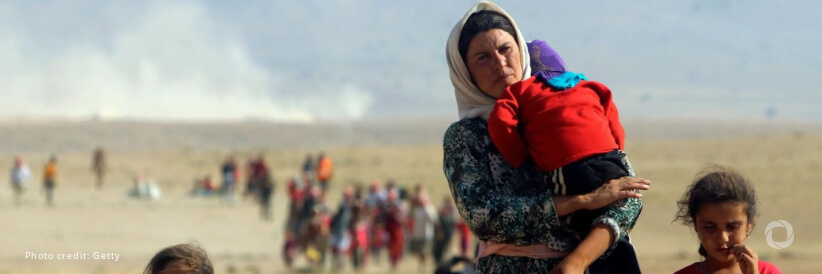
The country is continuing to feel the effects of decades of violent conflict with an estimated 4.1 million Iraqis in need of humanitarian assistance. Nearly 5 million formerly internally displaced persons (IDPs) have returned to their homes in recent years. More often than not these returnees live in substandard conditions and require assistance to meet basic needs.
On top of this, there are still around 1.2 million Iraqis who remain internally displaced. Approximately half of all people displaced inside Iraq are children. The winter months are the most difficult for displaced families, as many live in makeshift shelters or temporary settlements that offer little protection from the harsh winter conditions.
The winter months in Iraq can be brutal, with temperatures in the country often dropping below zero leaving millions at an increased risk of contracting conditions such as respiratory diseases, frostbite, and hypothermia.
A precarious situation
Baridya struggles to cover the costs of feeding her 6 children. Based in eastern Al Anbar Governate, she lives and works on a farm and receives alimony from her ex-husband. However, with the spiraling costs of products and medical bills to cover treatment for one of her daughters who suffers from a congenital disease, Baridya can barely afford to make ends meet.
Although Baridya lives on the farm where she works and has access to toilet facilities on site, conditions are still tough, with herself and her family relying on a nearby river for drinking water.
Bardiya is unable to afford health services so her daughter can get the treatment she needs. The family’s precarious financial situation has also forced several of Bardiya’s children to drop out of school. As last winter approached, Baridya was increasingly concerned with how she would keep her family warm.
Providing winter necessities
Islamic Relief’s winterization project was operating in Al Anbar Governate and Baridya’s family was among those that received a life-saving kit comprising mattresses, blankets, a Kerosene heater, and fuel for the heater.
“I was worried that I would not be able to provide winter necessities because of the inflated prices and the difficulty of finding a job that would meet my family’s needs. However, this material completely satisfied my needs. It also provided me with an income that enabled me to buy clothes for my children,” Bardiya says.
Through the seasonal Winterisation project, Islamic Relief has been able to reach over 2,200 families in Iraq alone and provide them with the basic materials they need during the cold season.
Over 10,000 individuals have benefitted from this project, including families in the highly vulnerable Halabja Governorate, where a limited number of humanitarian agencies, including International Non-Governmental Organisations (INGOs), are implementing their programs to deliver aid to the people most in need, with support from Islamic Relief.
Significant hurdles
Despite Islamic Relief’s support, the Iraqi people continue to face significant hurdles. Among displaced people, the lack of access to civil documentation is a huge challenge. With the huge levels of migration and displacement in Iraq over the past 20 years, many individuals lack the necessary documentation to access basic public services such as education, healthcare, and social security benefits.
Missing civil documentation, a concerningly common problem in Iraq, provides roadblocks for displaced Iraqi’s when accessing the already brittle infrastructure, lack of basic health services, and scarcity of economic opportunities. These are major obstacles for families trying to make ends meet and can so often lead to secondary or tertiary displacements, exacerbating the problems faced by IDPs.
This has had a significant knock-on effect with hundreds of thousands of displaced Iraqis unable to return home. Islamic Relief has been operating in Iraq since 1997 and was one of the few international aid agencies that continued supporting communities throughout military incursions and conflict.
Over 2 decades Islamic Relief have provided emergency aid, as well as longer-term support, helping people to get back on their feet.