
Add us as your preferred source on Google to see more of our content in Search.
 Add to Preferred Sources
The Australian Council For International Development – ACFID – has warmly welcomed the Albanese Government’s decision to allocate a further $29 million towards famine alleviation in the Horn of Africa and the Middle East.
The amount brings to a total of $69 million that the Australian Government has set aside for food insecurity in far-flung places in the past financial year. Earlier, it contributed $25 million and $15 million in two separate tranches.
“The Government has saved the best for last with this end-of-financial-year surprise. Contributing $29 million to where it is needed most in the world is the result of dedicated campaigning on the part of the aid sector, and a move that we welcome wholeheartedly,” said Mr Purcell.
The funds have come from the $150 million DFAT-administered Humanitarian Emergency Fund (HEF), which is a pot of money set aside specifically to provide emergency funding in the event of natural disasters.
The group that had mounted a campaign to promote the needs of hunger-stricken populations in the Horn of Africa, Afghanistan, Yemen, and Syria, Help Fight Famine, is convened by ACFID. Help Fight Famine has involved ACFID member organizations pooling their funds to campaign collectively on needs-based issues.
Help Fight Famine was launched in August 2022 and since then has regularly lobbied parliamentarians on the issue. What is unique about the campaign group is that it promotes a cause that is geographically far from Australian shores, at a time when Australia has, for many years, preferred to focus its attention and efforts on the Indo-Pacific neighborhood.
“One of the key messages of the Help Fight Famine campaign was that there is a need for the Government to look beyond our neighbors, and particularly to places like Africa and the Middle East, where the need is greatest yet has little in the way of political capital. This decision to send an additional $29 million shows that the government agrees with us – that this is an opportunity to show that Australia is back open to the wor It sends a strong message about our country’s direction and lens, and we applaud the government for this,” said Mr. Purcell.
The additional funds will be divided up between regions:
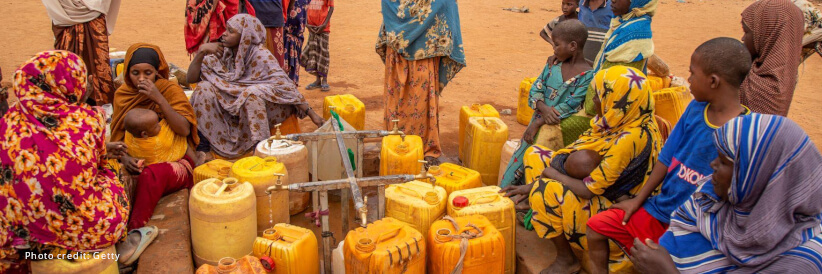
- $15 million to address increased humanitarian, displacement, and protection needs of people in drought-affected areas in Ethiopia, Kenya, and Somalia;
- $10 million for food and monetary help for refugees and vulnerable populations in Lebanon and Jordan; and
- $4 million for food and nutrition support to people in Yemen.
The recent Global Report on Food Crises, led by the Food Security Information Network, reported that 258 million people across 58 countries are now experiencing acute hunger.
The Help Fight Famine campaign conducted polling earlier this year via YouGov, which found that 60 percent of surveyed Australians feel that our government should contribute overseas aid to developing countries, up three percentage points from 2021.