
Add us as your preferred source on Google to see more of our content in Search.
 Add to Preferred Sources
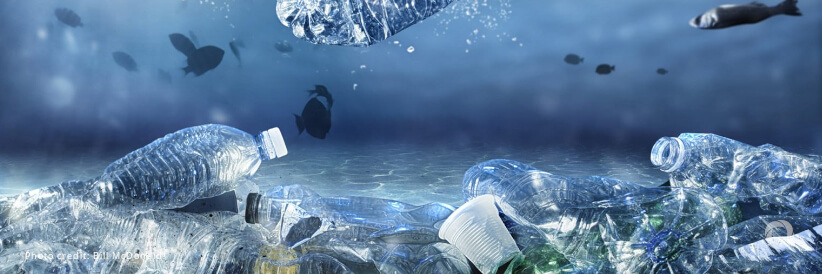
As the world celebrates Environment Day on the 5th of June, the UfM calls for urgent action from all stakeholders to safeguard the delicate ecosystem of the Mediterranean. The Mediterranean, a sea that holds 1% of the world’s waters but concentrates 7% of all global microplastics, is estimated to be polluted by 570,000 tonnes of plastic waste a year. This is equivalent to over 50 Eiffel Towers’ weight of plastic debris being thrown into the sea each year. The annual leakage of plastic is projected to quadruple by 2050, under a business-as-usual scenario.
The scale of the problem requires urgent commitments and actions at a regional level, and from source to sea, to achieve the necessary long-term reduction of waste produced on land. In recent days, the UfM has endorsed the project, TouMaLi, which contributes to the reduction of waste flows into the sea caused by tourism while promoting circular economy solutions such as the reduction and reuse of unavoidable waste in Morocco, Tunisia, and Egypt.
The UfM-supported project, Plastic Busters, has been active since 2013 and aims to enhance the knowledge about the origins of marine plastics to provide policy recommendations to UfM countries while raising awareness among civil society. The project emphasizes the need to urgently tackle single-use plastics, which represent 8 out of 10 plastic debris found in the Mediterranean.
The project has analyzed 4 protected marine areas in the Mediterranean and 40 species, finding traces of this debris not only on the surface and seabed but also in the digestive systems of many aquatic organisms, from marine turtle species to whales and mollusks. Additionally, the project has created a digital platform for sharing data on marine litter across the Mediterranean. It has trained 250 professionals and individuals in marine litter management, involving 30 municipalities in a network of coastal cities against marine litter. It has also published reports with policy recommendations and good practices to improve marine litter management and governance. Currently, 50 civil society organizations are involved in beach clean-up campaigns.
UfM Secretary General, Nasser Kamel, highlights that fighting plastic pollution shall be at the center of the political agenda in the region as “it kills aquatic wildlife, damages natural systems, and contaminates marine food chains. Since the Mediterranean is a closed sea, any environmental impact in the North has consequences for the South, and vice versa. The UfM firmly believes that effective reduction of marine litter in the Mediterranean can only be achieved through collective efforts and cooperation among all Mediterranean countries and civil society.”
UfM Deputy Secretary General for Water, Environment and Blue Economy, Almotaz Abadi, states: “The UfM operates on three levels to combat plastic litter and protect the Mediterranean. Firstly, as a political platform through its member states, which adopted two ambitious ministerial declarations on environment and climate action and on sustainable Blue Economy in 2021. Secondly, by promoting a Mediterranean policy dialogue to harmonize and strengthen environmental regulations and actions. And thirdly, by establishing operational partnerships as well as supporting and providing technical assistance to regional projects such as the Plastic Busters initiative or the TouMali project”.
UfM Policy Framework
The UfM Member States adopted an ambitious Ministerial Declaration on Environment and Climate Action in October 2021, calling for a specific, structured coordination and monitoring mechanism among initiatives, programs, and projects run at the regional level. The objective is to create political and operational convergence and maximize results through the UfM Agenda 2030 towards a Greener Mediterranean and the UfM Climate Action Road Map.
The UfM, through its observer status at the United Nations, actively participated in the second session of the Intergovernmental Negotiating Committee (INC-2), mandated by the February 2022 United Nations Environment Assembly to develop an international legally binding instrument on plastic pollution, including in the marine environment. The session took place from 29 May to 2 June 2023 in Paris, France.
The UfM, together with partner countries such as Egypt, Jordan, Morocco, and International Financial Institutions (IFIs) including EIB and EBRD, with the support of Spain, Sweden, AFD, KFW, and DG Mare, is establishing the Blue Med Partnership as a strategic financial vehicle to enhance investments in priority areas of the blue economy. This includes tackling marine litter, solid waste, and other sub-sectors within the blue economy.