
Add us as your preferred source on Google to see more of our content in Search.
 Add to Preferred Sources
As the conflict in Sudan fuels a humanitarian catastrophe in the country and a refugee crisis beyond its borders, donors at a United Nations-backed event announced about US$1.5 billion to fund life-saving relief efforts in Sudan and the region and called on parties in Sudan to immediately end the fighting.
The ministerial-level pledging event in Geneva was organized by the United Nations and the Arab Republic of Egypt, the Federal Republic of Germany, the State of Qatar, the Kingdom of Saudi Arabia, the African Union and the European Union.
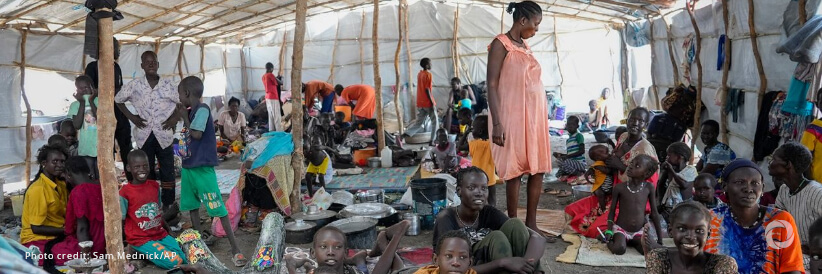
Inside Sudan, roughly half of the population – 24.7 million people, more than half of them children – need humanitarian aid and protection. Nearly 1.7 million people have been uprooted within Sudan, while about half a million refugees, asylum-seekers and refugee returnees have sought safety in neighbouring countries amid the violence, which includes worrying reports of ethnic killings in West Darfur.
Aid operations are ramping up across Sudan, but they remain hampered by looting, violence and bureaucratic impediments. In the face of the insecurity, humanitarians are staying and delivering.
The organizers of theevent stressed the need for all parties in Sudan to adhere to the “Declaration of Commitment to protect civilians and facilitate and respect humanitarian action in Sudan,” signed in Jeddah on 11 May, including to prioritize discussions to achieve a durable ceasefire and permanent cessation of hostilities, ensure safe and unimpeded humanitarian access, and abide by their obligations under international humanitarian law (IHL).
The organizers also reaffirmed their commitment to scaling up principled and needs-based humanitarian assistance to address the most critical needs of people in Sudan and those forced to flee to neighbouring countries.
To ensure the swift and effective delivery of aid, participants at the conference emphasized the importance of removing bureaucratic impediments in Sudan – including visa and movement restrictions – without delay. The parties in Sudan should also ensure the movement of humanitarian supplies and personnel from other parts of Sudan and from neighbouring countries to all parts of Sudan – including Darfur, where nearly 9 million people need assistance – and allow people to move freely to seek safety.
The funds announced will support the provision of principled and needs-based humanitarian assistance to the people of Sudan and the countries hosting those fleeing the fighting. More than 80 Governments and other donors, international humanitarian organizations and aid officials took part in today’s event, which also underscored the need for long-term support to build the resilience of Sudanese communities and host communities in neighbouring countries.
To ensure the swift and effective delivery of aid, participants to the conference emphasized the importance of removing bureaucratic impediments in Sudan – including visa and movement restrictions – without delay.
The parties in Sudan should also ensure the movement of humanitarian supplies and personnel from other parts of Sudan and from neighbouring countries to all parts of Sudan – including Darfur, where nearly 9 million people need assistance – and allow people to move freely to seek safety.
The funds announced today will support the provision of principled and needs-based humanitarian assistance to the people of Sudan and the countries hosting those fleeing the fighting. More than 80 Governments and other donors, international humanitarian organizations and aid officials took part in today’s event, which also underscored the need for long-term support to build the resilience of Sudanese communities and hosting communities in neighbouring countries.
The UN Under-Secretary-General for Humanitarian Affairs and Emergency Relief Coordinator, Martin Griffiths, said:
“Each day the crisis in Sudan continues, the humanitarian situation grows ever more desperate. Despite the raging violence, humanitarian workers – including our heroic local partners operating on the front lines – are pressing ahead with their efforts to deliver aid to people in need. The funding announced today – including an additional $22 million from the Central Emergency Response Fund, bringing total funding through CERF and the Sudan Humanitarian Fund to $102 million – will be a lifeline for millions of people living in the world’s most dangerous and difficult conditions.”
The UN High Commissioner for Refugees, Filippo Grandi, said:
“Since mid-April, we have seen senseless, brutal fighting and attacks in Sudan, forcing millions to flee for their lives to wherever they can find safety. The commitment shown today by donors to those affected comes just in time, as our resources for the situation are dwindling. The pledges will save lives and help alleviate some hardship. Ultimately, of course, only a durable peace will allow the Sudanese to restart their lives.”
It is essential that donors continue to contribute to the revised Humanitarian Response Plan and the Refugee Response Plan, which together require more than $3 billion this year to provide life-saving multisectoral assistance and protection services to more than 18 million people inside Sudan, and to more than 1 million refugees, returnees, third-country nationals and host communities in the Central African Republic, Chad, Egypt, Ethiopia and South Sudan.
Given the ongoing fighting, growing humanitarian needs and the rising cost of operations, funds announced at today’s conference should be made available without delay.