
The EU's migration agreement with Tunisia “risks driving migrants and refugees onto even more dangerous routes"
Add us as your preferred source on Google to see more of our content in Search.
 Add to Preferred Sources
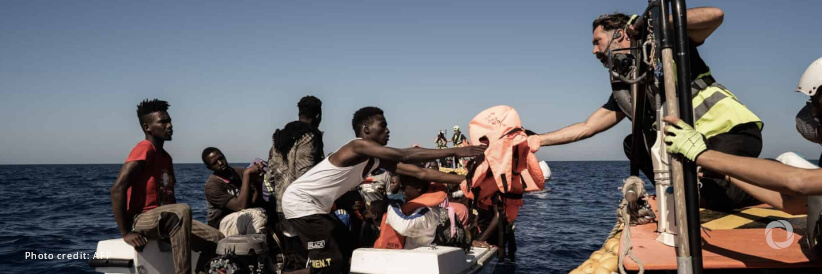
The European Union finalized an agreement with Tunisia to cooperate on curbing migration from the country. In recent months, Tunisia has overtaken Libya as the primary departure point in North Africa for people seeking protection in Europe.
The situation for refugees and other migrants in Tunisia has become increasingly precarious in recent months, with hostilities towards people from sub-Saharan Africa frequently bubbling over into violence. Hundreds of people from sub-Saharan African countries were forced from the coastal city of Sfax by Tunisian security forces and left stranded in a desolate desert area, without food, water, or shelter.
Under the new agreement, the EU will partner with Tunisia on border management, including providing radars and other equipment to the Tunisian Coast Guard and countering people smuggling. They also plan to cooperate on protection activities, and on expanding legal pathways to Europe – despite most EU states’ failure to fulfill their pledges to bring people to safety through existing routes.
The International Rescue Committee (IRC) is calling on the EU to make sure that any migration partnerships with third countries are conditional on upholding fundamental rights. With the first quarter of 2023 the deadliest for migrants in the Central Mediterranean since 2017, it is also critical that the EU works to expand safe routes to protection, bolster search and rescue operations in the Mediterranean, and puts people – not borders – at the heart of continued negotiations as part of the EU Pact on Migration and Asylum.
Harlem Desir, IRC Senior Vice President, Europe, says: “The latest agreement with Tunisia entails great risk of abuse, violence, and exploitation, driving migrants and refugees onto even more dangerous routes in search of safety. The protection of vulnerable people must not be sacrificed in the name of deterrence. This has been shown both ineffective and contrary to the most basic humanitarian principles.