

Add us as your preferred source on Google to see more of our content in Search.
 Add to Preferred Sources
The people of Afghanistan need sustainable solutions to avoid catastrophe, Colombia, Jamaica and Panamá unite to combat urban plastic pollution and the deadliest place for humanitarian aid workers. Here is what you missed from last week’s headlines in the international development sector.
The people of Afghanistan need sustainable solutions to avoid catastrophe
Two years since the change of authorities in Afghanistan a humanitarian tragedy is unfolding. The situation is driven by a devastating mix of food insecurity and climate change, funding cuts, operational restrictions, and the absence of effective diplomatic engagement.
An estimated 15.3 million Afghans are food insecure with acute malnutrition recorded above the emergency threshold in 25 out of 34 provinces. More than halfway through the year, the humanitarian response plan targeting more than 21 million people is less than 25 percent funded.
The Afghan people need long-term sustainable solutions to end the humanitarian crisis. This must include efforts to promote greater economic stability including a functioning banking sector and connection to the international financial system. Without progress in the economy, including the resumption of long-term development assistance, sustainable solutions will never be achieved.
Colombia, Jamaica and Panamá unite to combat urban plastic pollution
The Governments of Colombia, Jamaica, and Panamá launched a $42-million project to jointly combat plastic pollution by mainstreaming circularity at the city level.
Plastic is one of the most ubiquitous materials ever produced, used in everything from products to packaging. However, nearly one-third of all plastic is single-use, 32 per cent contaminates soil and freshwater ecosystems and as much as 10 million tonnes are released into the ocean annually, worsening the triple planetary crisis – climate change, nature and biodiversity loss, and pollution and waste.
Without decisive action, this is expected to triple by 2060. Circularity aims to keep materials such as plastics at their highest value throughout the value chain for as long as possible by transforming the way we design, make, use and discard products.
The global economy is only 8.6 per cent circular – a figure slightly increased in Latin America and the Caribbean at 10%; the environmental impacts of the “take, make, waste” economy are particularly pronounced in cities, with urban centers responsible for around 60 per cent of marine plastics.
In the crossfire: South Sudan is the deadliest place for humanitarian aid workers
Ahead of World Humanitarian Day, South Sudan continues to be the deadliest place for humanitarian aid workers, followed by Sudan, Somalia, and Ukraine, according to the Aid Worker Security Data Base. While 44 humanitarian workers were killed worldwide from January to August 2022, this number has reached 62 since January of this year.
“This sharp rise constitutes an alarming trend”, said Sally Austin, CARE International Head of Emergency Operations. “Let us be clear: most of the time, these women and men were deliberately targeted as they were carrying out their mission to save lives. This is a gross violation of international humanitarian law and shows a blatant disregard for millions of vulnerable people, for whom the delivery of aid can make the difference between life and death.”
Since the beginning of this year, 22 aid workers were killed in South Sudan, 19 in Sudan, 4 in Somalia, and 3 in Ukraine. The citizens of these four countries are suffering from conflict, hunger, economic instability, diseases, and the climate crisis, with almost 60 million people in need of humanitarian aid.
DevelopmentAid Editorials
Humans faced the warmest month on record
July 2023 was the hottest month on record. While in many parts of the world temperatures were higher than average, other regions faced extreme heatwaves, highlighting the urgency of addressing climate change. However, according to The Conversation, global warming is not the only factor driving the rise in temperature.
Trends and innovations in acquisition tools
The term “acquisition tools” refers to a diverse range of techniques, technologies, and strategies that businesses use to acquire new customers or clients. They encompass both traditional and digital methods, including cold calling, advertising, marketing, and engaging Artificial Intelligence and Machine Learning to run personalized chatbots and virtual assistants. The primary objective of acquisition tools is to attract, engage, and convert potential leads into customers or clients, thus contributing to business growth and success.
How does your diet impact the environment? | Experts’ Opinions
When it comes to food diets, people choose various methods to maintain a healthy lifestyle. Counting calories, fasting, or following a nutritious diet are among the most popular options. But, have you ever considered that what you put on your plate not only affects your own body but the entire planet’s environment too? Researchers have discovered that what a person eats in a day has a tremendous impact on the environment, an even bigger impact compared to the type of vehicle a person drives. How does this work exactly? Check out some opinions below.
Here’s what else has happened
Somalia: In Somalia, the situation caused by drought remains critical with at least 8 million people still in need of lifesaving assistance, and facing water insecurity. According to the Office for the Coordination of Humanitarian Affairs (OCHA), the trend is set to worsen throughout 2023.
Nigeria: Armed conflict and other violence are continuing to ravage the lives of millions in Niger, with nearly one person in five already in need of humanitarian aid. The International Committee of the Red Cross (ICRC), in partnership with the Red Cross Society of Niger, is continuing to provide assistance to the most vulnerable populations, in particular displaced people, who are struggling to meet their own needs.
Women’s organizations: In Rakhine State, Myanmar, the productive fields are left unharvested. Normally teeming with agricultural workers—the majority of whom are women and girls from the local villages—the fertile landscape has become another deadly battlefield.
World Humanitarian Day: Conflict and insecurity in countries such as South Sudan and its neighbor to the north are set to make 2023 another year of high death tolls and injuries for aid workers in the field, the UN warned.
European Citizens’ Initiative: The European Commission decided to register a European Citizens’ Initiative (ECI) entitled ‘Preservation and Development of Ukrainian ulture, education, language, and Traditions in EU states.
Reports
Employing effective financing mechanisms for skills development can tackle inequality woes, says a new ILO report
Governments, policymakers, and social partners should consider reviewing and adopting the use of financial mechanisms – existing at home or implemented elsewhere – for skills development and lifelong learning to enhance participation of disadvantaged groups of people, a new global report of the International Labour Organization (ILO) finds.
The report, entitled Financing Mechanisms for promoting social inclusion in skills and lifelong learning: Global overview of current practices and policy options , is the first global study that analyses the effectiveness of existing financing instruments targeting individuals, training providers and enterprises. It also recommends how these instruments should be contextualized and better applied in developed and developing countries to ensure that training reaches those who need it the most.
Africa’s rise as a global supply chain force: UNCTAD report
African economies can become major participants in global supply chains by harnessing their vast resources of materials needed by high-technology sectors and their own growing consumer markets, the United Nations Conference on Trade and Development (UNCTAD) said in its Economic Development in Africa Report 2023 launched in Nairobi.
Events
Training Program on Contract Management & Arbitration
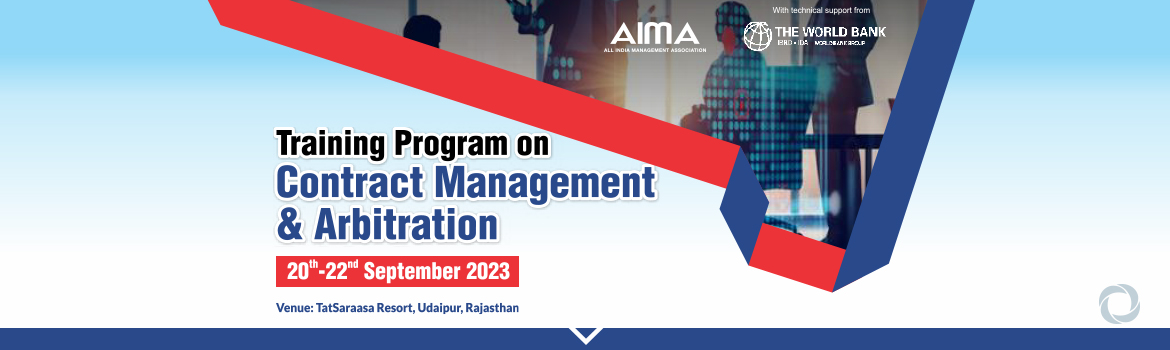
📅 20-22 September 2023
TatSaraasa Resort, Udaipur, Rajasthan
Irrespective of the type of business one deals with, contracts happen to be the backbone of all the relationships that an organization develops with important stakeholders like partners, suppliers, customers, etc. Even though, Contracts are the most central aspect in organization’s functioning, they are the neglected element of the Procurement Cycle and hence lead to delays, disputes and disagreements.
Africa Climate Week (ACW 2023)
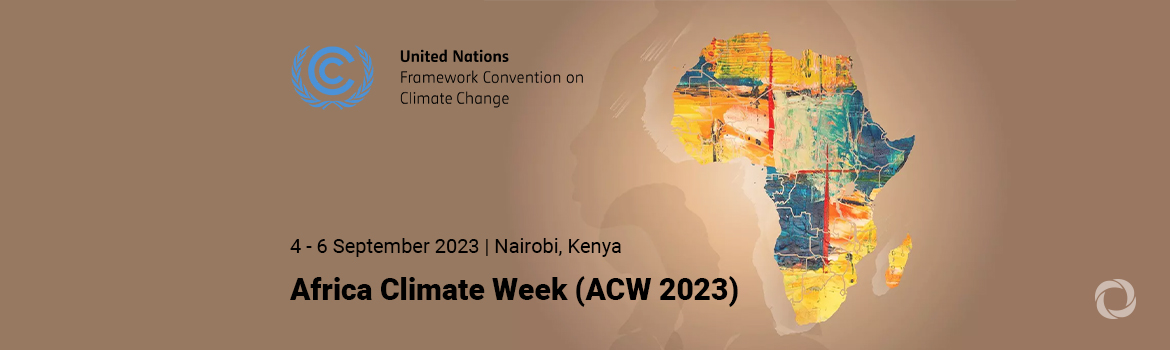
📅 4-8 September 2023
Nairobi, Kenya
The first global stocktake will conclude at COP28 in UAE in December of this year. The stocktake offers a unique opportunity to call for decisive change. It is an opportunity to urgently respond to the need to accelerate progress by collectively embarking on a swift and profound transformation of the economic and social systems.