
Add us as your preferred source on Google to see more of our content in Search.
 Add to Preferred Sources
With thousands of families affected by the recent earthquake in the High Atlas mountains sleeping in the open and winter around the corner, dignified shelter is an urgent priority, CARE Morocco said.
Statement by Hlima Razkaoui, CARE Morocco National Director: “The first phase of the emergency focused on saving lives and feeding the survivors, but it is now also imperative to provide them with shelter. Homes have either collapsed or display cracks that make them dangerous. Families with small children sleep in the open, with hardly a blanket to protect them as the nights are already chilly. Women, girls, and people with disabilities are particularly vulnerable at such times. With rains starting and winter nearing, we simply don’t have the luxury to wait.”
The magnitude 6.8 earthquake that struck on the night of September 8 was the most powerful in Morocco in over a century and the deadliest since 1960. With its epicenter in the High Atlas mountains, it directly affected 380,000 people in isolated mountain villages and millions more in the Al-Haouz province, including the regional capital Marrakech. The death toll currently stands at nearly 3,000 with over 5,500 wounded, including many in critical condition.
“Even when our house was standing, we would struggle to feel warm during the long winter, I simply can’t imagine what it will be like now,” Fatiha el Bahi is a 36-year-old tailor and mother of three.
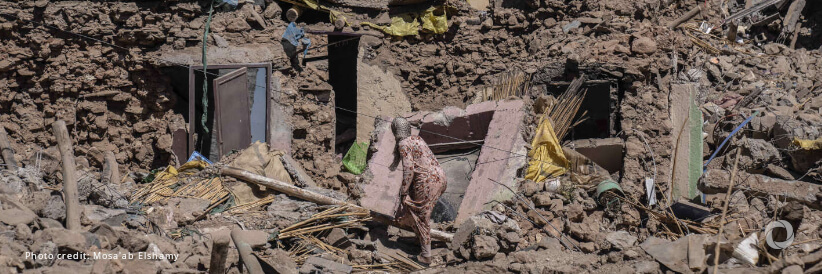
The impact on shelter has been devastating. In Tamgounssi hamlet, 52 km from Marrakech, many of the houses made of clay and wood collapsed. Entire families spend the night without a roof over their heads, like Fatiha el Bahi, a 36-year-old tailor and mother of three.
“Even when our house was standing, we would struggle to feel warm during the long winter,” she says. “I simply can’t imagine what it will be like now. The weather forecast says heavy rains are coming, and I’m so worried I can’t sleep at all.”
An aftershock with a 4.6 magnitude was felt throughout the region, further terrifying the population.
“With rains starting and winter nearing, we simply don’t have the luxury to wait,”says Hlima Razkaoui, National Director of CARE Maroc.
Winter starts in November in the Atlas and can last until April, with temperatures that can drop below zero degrees Celsius at night and snow a regular occurrence.
CARE Morocco, which already has a presence in the earthquake-affected areas, is starting a relief operation in support of the Moroccan authorities, focusing on hot meals, safe water supply, and emergency shelter, with particular attention given to women, girls, and people with disabilities. It is also preparing a psychosocial response given the huge mental health impact of the disaster.