
New ADB grants to support food security and health services for the Afghan people through United Nations
Add us as your preferred source on Google to see more of our content in Search.
 Add to Preferred Sources
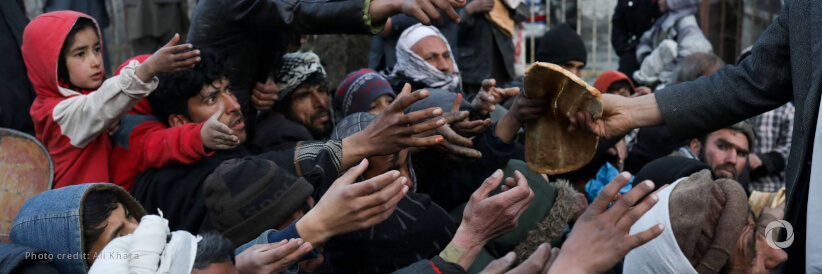
The Asian Development Bank (ADB) approved $400 million in grants to protect the welfare and livelihoods of vulnerable Afghan people, particularly women, and girls, and ease the adverse impact of the ongoing humanitarian crisis. The support, delivered through the United Nations (UN), will address emergency food needs, enhance domestic food production for medium-term food security, and provide core health services for the Afghan people.
The Expanding Essential Food Security and Health Services Project (Support for Afghan People) will provide off-budget direct financing to three UN agencies, helping to bridge the financing gap for immediate support.
Afghanistan has faced an unprecedented humanitarian crisis compounded by climate change and intense droughts, floods, and earthquakes. An estimated 85% of its population lives below the poverty line. Women and children are disproportionately affected with many women-led households suffering a lack of food and reduced access to services given women’s restrictions on movement outside their homes.
To address food security, a $100 million grant will enable the World Food Programme (WFP) to provide critical food assistance to more than 1.32 million acutely food-insecure people, prioritizing women-headed households and highly vulnerable groups. The WFP will also implement Food Assistance for Training initiatives to help equip mainly women with employable and entrepreneurial skills, and alternative livelihoods along the agricultural value chain, such as fruit and vegetable processing. This will support women’s potential for more sustainable livelihoods and income.
A $100 million grant will enable the Food and Agriculture Organization of the United Nations (FAO) to provide agricultural production support to more than 309,000 farm households for the cultivation of wheat, summer crops, vegetables, and livestock protection. Smallholders including women-headed households will receive high-quality agricultural inputs such as climate-resilient seeds. More than 2.1 million people are expected to benefit from the FAO support.
Through a $200 million grant, the United Nations Children’s Fund (UNICEF) will expand existing support and provide core health services in 10 provinces across the country covering about 7.5 million people. This includes basic health services such as newborn and maternal care, and essential hospital services, including nutrition and surgical care. The World Bank will support the same health services in Afghanistan’s 24 other provinces.
Implemented in close coordination with the UN, World Bank, and other partners, the project will contribute to the international community’s ongoing efforts to support the people of Afghanistan and prevent the country from falling into universal poverty. The grants are financed by the Asian Development Fund which supports ADB’s poorest and most vulnerable developing member countries.
The project will be implemented outside of the de facto government’s systems and in line with ADB’s approach to fragile and conflict-affected situations. Third-party monitoring firms will be engaged by the UN agencies to monitor implementation and verify the delivery of support to target beneficiaries.
The project builds on ADB’s existing $405 million grant project, approved in January 2022, to support food security and essential health and education services for the Afghan people via the UN. More than 75% of this funding has been disbursed.