
Heads of UN aid agencies, partners underline 10 requirements to avoid an even worse catastrophe in Gaza
Add us as your preferred source on Google to see more of our content in Search.
 Add to Preferred Sources
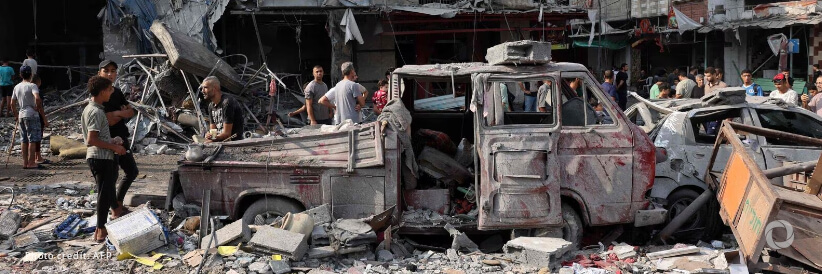
In the less than five months that followed the brutal 7 October attacks and the ensuing escalation, tens of thousands of Palestinians – mostly women and children – have been killed and injured in the Gaza Strip. More than three-quarters of the population have been forced from their homes, many multiple times, and face severe shortages of food, water, sanitation, and healthcare – the necessities to survive.
The health system continues to be systematically degraded, with catastrophic consequences. As of 19 February, only 12 out of 36 hospitals with inpatient capacity are still functioning, and only partially. There have been more than 370 attacks on health care in Gaza since 7 October.
Diseases are rampant. Famine is looming. Water is at a trickle. Basic infrastructure has been decimated. Food production has come to a halt. Hospitals have turned into battlefields. One million children face daily traumas.
Rafah, the latest destination for well over 1 million displaced, hungry, and traumatized people crammed into a small sliver of land, has become another battleground in this brutal conflict. Further escalation of violence in this densely populated area would cause mass casualties. It could also deal a death blow to a humanitarian response that is already on its knees. There is no safe place in Gaza.
Humanitarian workers, themselves displaced and facing shelling, death, movement restrictions, and a breakdown of civil order, continue efforts to deliver to those in need. But faced with so many obstacles – including safety and movement restrictions – they can only do so much.
No amount of humanitarian response will make up for the months of deprivation that families in Gaza have endured. This is the effort to salvage the humanitarian operation so that the organizations can provide, at the very least, the bare essentials: medicine, drinking water, food, and shelter as temperatures plummet.
For this, they need:
- An immediate ceasefire.
- Civilians and the infrastructure they rely on to be protected.
- The hostages are to be released immediately.
- Reliable entry points that would allow us to bring aid in from all possible crossings, including to northern Gaza.
- Security assurances and unimpeded passage to distribute aid, at scale, across Gaza, with no denials, delays, or access impediments.
- A functioning humanitarian notification system that allows all humanitarian staff and supplies to move within Gaza and deliver aid safely.
- Roads to be passable and neighborhoods to be cleared of explosive ordnance.
- A stable communication network that allows humanitarians to move safely and securely.
- UNRWA, the backbone of the humanitarian operations in Gaza, to receive the resources it needs to provide life-saving assistance.
- A halt to campaigns that seek to discredit the United Nations and non-governmental organizations doing their best to save lives.
Humanitarian agencies remain committed, despite the risks. But they cannot be left to pick up the pieces.
The organizations are calling on Israel to fulfill its legal obligation, under international humanitarian and human rights law, to provide food and medical supplies and facilitate aid operations, and on the world’s leaders to prevent an even worse catastrophe from happening.