
Bill Gates meets with Pakistan Prime Minister, government leaders, and health workers to discuss polio, health systems, and economic advancement
Add us as your preferred source on Google to see more of our content in Search.
 Add to Preferred Sources
Bill Gates, co-chair of the Bill & Melinda Gates Foundation, met with Pakistan Prime Minister Shehbaz Sharif, Deputy Prime Minister Ishaq Dar, federal cabinet ministers, provincial ministers of health and chief secretaries and Chief of Army Staff General Asim Munir to discuss their joint commitments to improving the lives of vulnerable people—especially women and girls—and advancing their shared goals in health, nutrition, climate adaptation, technology, and financial inclusion.
“Pakistan remains steadfast in its commitment to ending polio. Any case where a child is paralyzed by polio is one too many, and recent detections underscore the urgent need to stay committed to a world free of polio,” said Prime Minister Shehbaz Sharif. “At all levels, we are working to build on this momentum to ensure children and families can lead healthy and productive lives, protected from preventable disease. We are grateful for the continued partnership and collaboration with the Gates Foundation and our global polio partners. Our partners need to know that we will leave no stone unturned to eliminate polio, to ensure universal financial inclusion through technology, to ensure that we bridge the gender gap, and to take advantage of the opportunities offered by climate adaptation.”
Gates also met with nongovernmental organizations (NGOs) working in the health sector and female frontline workers in polio and routine immunization programs to learn from their experiences. He engaged with innovators and leaders in a roundtable discussion on climate adaptation, attended by Prime Minister Sharif and hosted by Romina Khurshid Alam, coordinator to the Prime Minister on climate change and Chairman NDMA Lieutenant General Inam Haider Malim following a visit to the National Emergency Control Room of the National Disaster Management Authority.
“I am inspired by Pakistan’s continued commitment to improving health, gender equity, and financial inclusion for vulnerable populations,” said Bill Gates, co-chair of the Gates Foundation. “The country’s efforts to eradicate polio in the face of complex challenges is one example of the hard work and dedication of everyone involved in improving health for all from female frontline workers to government leaders. I am confident that by continuing to work together, implementing innovative approaches, and staying vigilant, Pakistan will make great strides toward ending polio.”
Alongside Prime Minister Sharif, Gates met with the National Taskforce on Polio attended by Dr. Mukhtar Ahmed Bharath, coordinator to the Prime Minister on Health, along with Ministers of Health of Khyber Pakhtunkhwa, Punjab and Sindh and partners of the Global Polio Eradication Initiative. The meeting focused on the country’s ongoing response to the recent surge in wild poliovirus detections throughout Pakistan, including in areas where the virus had not been seen for more than two years.
Discussions throughout the visit focused on the use of data science and digital technology tools to improve the lives of Pakistanis, especially women. Conversations with government leaders, NGOs, and private-sector partners highlighted financial and health initiatives like the RAAST payment system, which is helping provide Pakistani women with direct access to capital to increase their ability to participate in the formal economy and access vital public and private services. In their meetings with Gates, Pakistani innovators and leaders highlighted their efforts to build resilience against future health emergencies resulting from climate change, and the various systems being built to deliver lifesaving vaccines to children, among many other Gates Foundation-supported collaborations in the country.
High on the agenda were the country’s efforts to drive progress against wild poliovirus and the next steps to respond to the recent surge in environmental detections of the virus. Pakistan is one of two remaining countries where the wild virus continues to circulate, along with Afghanistan. So far this year, Pakistan has reported five cases of wild poliovirus.
“Healthcare workers, community mobilizers, and Rotary members who participate in the national polio program remain steadfastly committed to tackling challenges including insecurity, inconsistent access to populations on the move, and pockets of vaccine refusal that allow the last traces of the virus to persist. Together, we will end polio,” said Aziz Memon, chair of Rotary’s National PolioPlus Committee, in Pakistan, and trustee, of Rotary International.
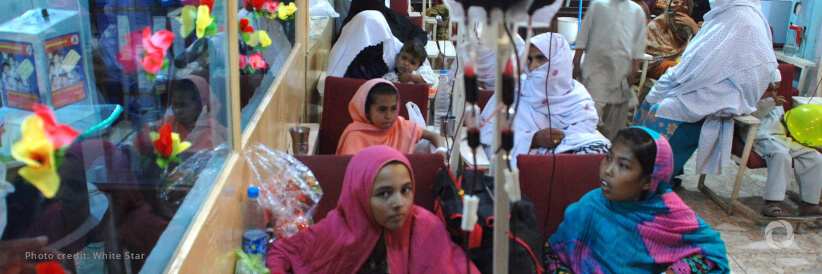
During his trip, Gates also learned about efforts underway by local NGOs to strengthen health and nutrition in Pakistan—particularly among women and children—in order to improve overall health and reduce preventable deaths. Pakistan’s efforts to augment the routine immunization system and launch primary healthcare system improvements also featured in discussions with senior health officials.
A financial services roundtable emphasized ongoing commitments to bolster women’s income-generating capacities and develop a related ecosystem of inclusive financial resources, including the rollout of an interoperable payment system.
The discussion included participation from Muhammad Aurangzeb, Minister of Finance; Shaza Fatima, Minister of Information & Technology; Saleem Ullah, Deputy Governor of the State Bank of Pakistan; as well as other government leaders and financial services partners.