
One third of children worldwide exposed to extreme heatwaves as temperatures hit record highs, new report reveals
Add us as your preferred source on Google to see more of our content in Search.
 Add to Preferred Sources
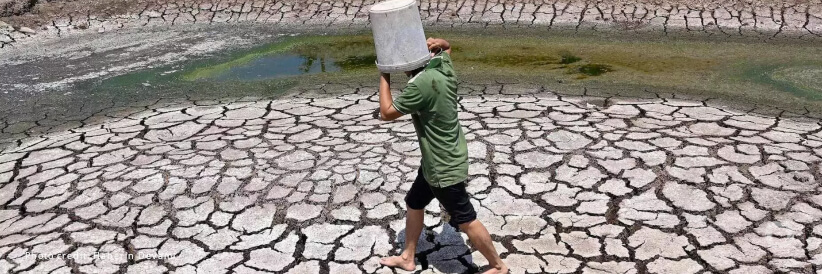
One-third of the total global child population—or 766 million children – were exposed to extreme heatwaves in the year between July 2023 and June 2024 as temperatures hit new record highs, according to a new analysis by Save the Children.
In the same period, 344 million children – 15% of the world’s total – experienced the highest temperature recorded in their location since at least 1980.
Children around the world are experiencing more intense and frequent heatwaves because of the climate crisis, putting their physical and mental health as well as rights such as education at significant risk, the child rights organization said.
Save the Children analysed satellite imagery of surface temperatures covering every part of the world. The child rights organization defined an “extreme heatwave” as three consecutive days experiencing a temperature in the top 1% of all those recorded in that location in the previous 30 years.
The data showed that the number of children affected by extreme heatwaves almost doubled from 2022/23 to 2023/24. The new data showed that in July 2024 alone, 170 million children experienced heatwaves. The same month also saw unprecedented heat globally, including the hottest day ever on record.
Children’s bodies are less able to regulate their temperature compared to adults, making them more vulnerable to heat-related illnesses such as heat exhaustion and heat stroke, Save the Children said. Their respiratory and immune systems are also still developing, making them more susceptible to the negative health impacts of poor air quality that often accompanies heat waves.
Save the Children said that extreme heat is leading to an increase in child hospitalizations, and the prevalence of respiratory conditions like asthma, in addition to impacting children’s mental health and overall development. Heatwaves are also worsening existing inequalities and food insecurity.
Heatwaves also disrupt education through school closures and decreased learning. In April and May 2024, more than 210 million children missed out on school days due to extreme heat. In Pakistan’s most populous province, Punjab, in May at least 26 million children, or 52% of all the country’s pupils in pre-primary, primary, and secondary education missed classes due to extreme heat.
In conflict zones, the compounding effects of heatwaves and humanitarian crises further endanger children already facing precarious circumstances.
Sameer, 13, from Sindh province in Pakistan, which recorded 52°C in May 2024 – close to the country’s record high of 54C – said the sweltering heatwaves led to him and his classmates becoming unwell:
“We get heat strokes and the children faint. One of my friends, Yasir, collapsed. He got a sudden fever and began to vomit. Then he was quickly taken to the hospital. Because of the intense heat, children get bouts of vomiting, fevers, and dizziness. I have become dizzy several times while sitting at my desk.”
Shruti Agarwal, Senior Adviser on Climate Change and Sustainable Economies at Save the Children, said: “The scale of this crisis is staggering. When nearly a third of the world’s children are exposed to heatwaves, it’s not just a record, but a catastrophe. This is no longer about discomfort, we’re talking about a threat to children’s survival, their education, their future. What we are seeing is an alarming trend where heatwaves are becoming more frequent, more severe and longer lasting, hitting children most impacted by inequality and discrimination the hardest. These heatwaves are not just a weather phenomenon – they’re a bleak indicator of our planet’s health and pose a grave and disproportionate risk to the health and wellbeing of children and future generations. The climate crisis is no longer a distant threat. For children, it means growing up on an increasingly uninhabitable planet. And while they are the least responsible for the mess we’re in, they have the most to lose. Children and young people have been speaking up for years now, and it’s high time world leaders show they are listening by taking bold action to save their lives and their futures.”
Save the Children is calling for national governments to rapidly phase out the use and subsidy of fossil fuels and ensure a just and equitable transition to limit warming temperatures to 1.5 degrees C above pre-industrial levels.
Governments must recognize children as key agents of change in the climate crisis, and ensure children have platforms to speak out, the child rights organization said. Leaders must also include and center these voices – and the needs and rights of children, particularly those affected by inequality and discrimination – in the global response to climate change, including in climate finance from higher-income countries to lower-income countries. At a practical level, this includes ensuring buildings like schools are more resilient to rising temperatures so that children can learn safely.
Around the world, Save the Children works to create lasting change with and for children by supporting communities to strengthen their resilience to the climate crisis and calling on world leaders to tackle its root causes.