

Add us as your preferred source on Google to see more of our content in Search.
 Add to Preferred Sources
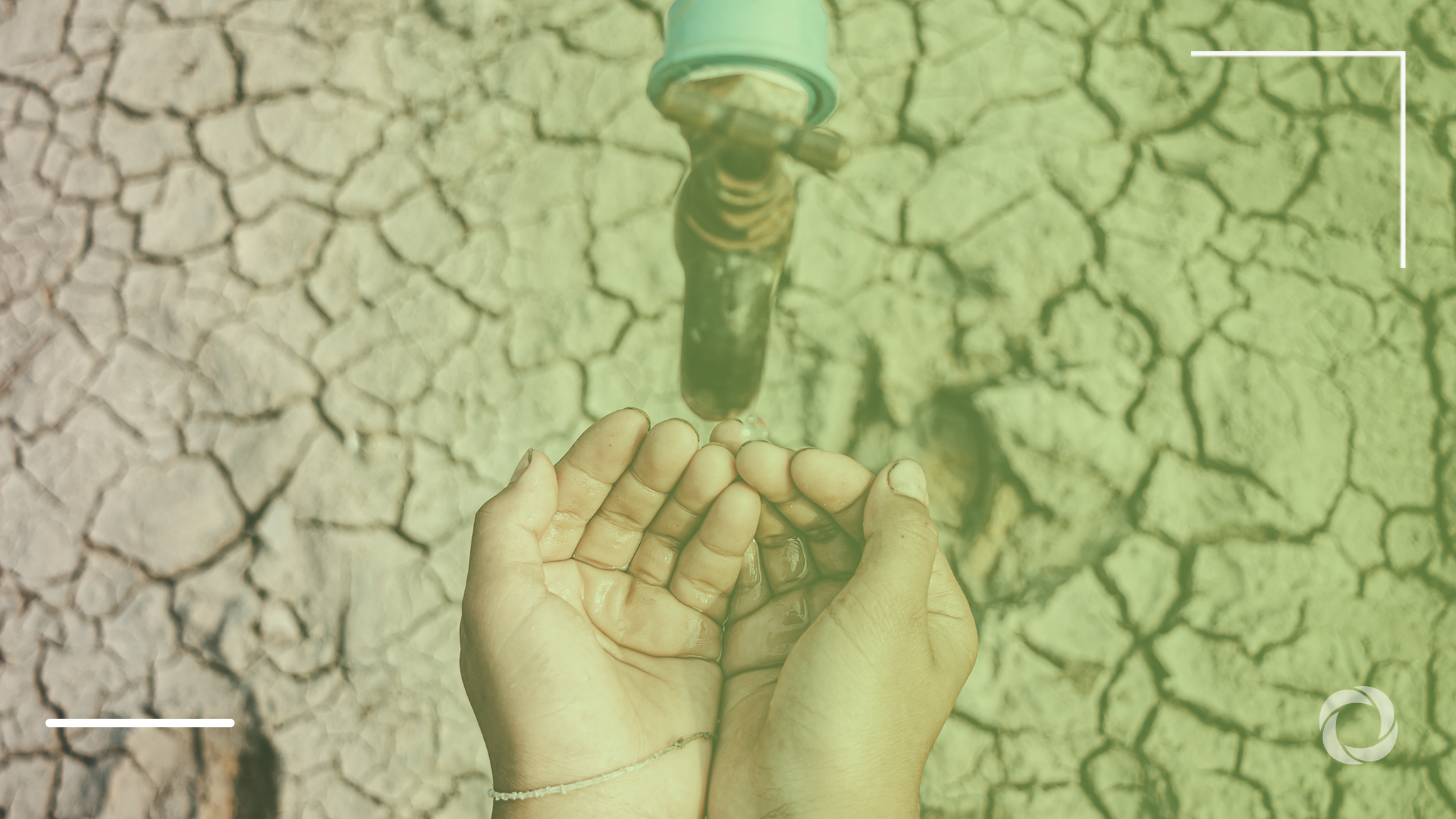
One out of four people living on this planet struggles to have permanent access to clean water.
Around 2.1 billion people still lack safely managed drinking water, and nearly two-thirds of humanity face severe water scarcity for at least one month a year, according to the JMP progress report, a global database managed by the World Health Organization (WHO) and the United Nations Children’s Fund (UNICEF).
The same report outlined that in 2024, out of 287 million people who could not fully benefit from water services, more than half were in sub-Saharan Africa.
The bad news is that the situation is not expected to improve.
In this article, you will discover the key statistics about water scarcity, who suffers the most from this global issue, which countries face the biggest water stress, what is needed to close the gap, at what cost, and future predictions for access to water for Earth’s population.
Water scarcity by the numbers (2026)
Here are some water scarcity facts:
- 2.1 billion people don’t have access to safely managed drinking water. Moreover, among them, 106 million drink untreated surface water (WHO/UNICEF JMP, 2025).
- 3.4 billion cannot benefit from safely managed sanitation services.
- 89 nations out of 193 (as of 2024) had already reached universal access (>99%) to at least basic drinking water services.
- 75% of the global population lives in either water-insecure or seriously water-insecure nations (SDG 6 progress is well behind schedule), according to the Global Water Bankruptcy report (UNU-INWEH, 2026)
- 436 million children reside in high or extremely high water vulnerability regions, according to UNICEF.
In some countries in sub-Saharan Africa, women and children suffer from water scarcity as they frequently have to walk long distances to access it.
Did you know that agriculture is responsible for 70% of freshwater withdrawals around the world?
What is water scarcity?
Water scarcity is when freshwater demand surpasses supply in a specific region and time frame, and there’s not enough freshwater to meet a variety of demands, including human consumption, irrigation, or electricity production, according to the Food and Agriculture Organization (FAO).
Listen to our podcast covering this topic: Water shortage isn’t the problem – we are. Navigating the water crisis with David Shackleton
Physical scarcity and economic scarcity are two key types of water scarcity.
Physical scarcity vs. economic scarcity (and infrastructure scarcity)
There’s also infrastructural scarcity – a subset of economic scarcity – occurs when there are enough water resources, but due to poor infrastructure, people cannot gain access to them for various purposes.
Physical scarcity is largely a climate and engineering issue (desalination, aquifer management), while economic scarcity is a financing and governance issue (new pipes, utility reform, investment).
The differences between water scarcity, water stress, and water insecurity (risk)
What does each term mean? Here are the definitions according to CEO Water Mandate, a special initiative established in 2007 by the UN Secretary-General and the UN Global Compact (UNGC) in partnership with the Pacific Institute:
Water scarcity is the physical lack of freshwater resources to meet people’s daily demands, usually measured against a per-capita threshold.
Water stress is a situation in which the demand for freshwater surpasses the availability in a certain location or period, resulting in environmental, social, and economic impacts. “Water stress” is a broader term than scarcity. It takes into account a number of physical factors of water resources, such as accessibility, water quality, and shortage.
Water risk refers to the likelihood of encountering a bad water-related event like excess flooding or poor water quality (these can impact not just people, but ecosystems, and business operations).
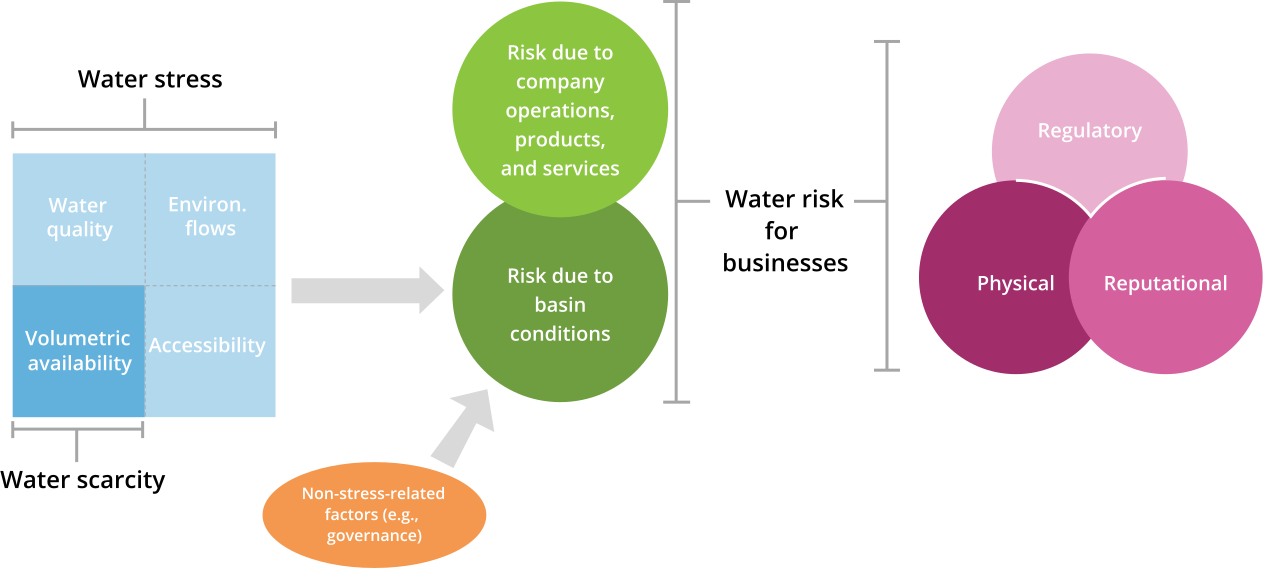
Source: Pacific Institute
What causes water scarcity?
1️⃣ Agriculture
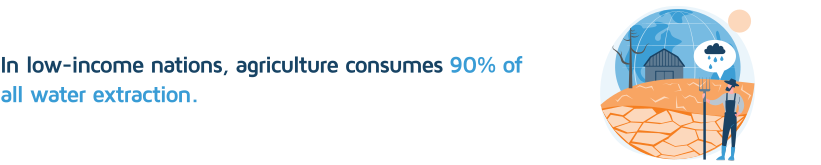
Agriculture is a significant water-consuming sector of the economy and the major factor causing water scarcity, accounting for around 70% of global freshwater withdrawals for crop irrigation and livestock consumption.
In low-income countries, agriculture’s water consumption share is even higher since there’s little industrial demand competing for the same water resources.
This is why using water for irrigation in environments with little monitoring or a weak legal base creates serious competition for water availability to the population.
2️⃣ Climate change and natural disasters
Climate change shifts weather patterns, intensifying rainfall and evaporation and increasing the frequency of droughts in regions that were already tight on water, turning a dry region under strain into a dry region in crisis.
For instance, in 2022, Yemen was hit by a severe drought followed by heavy rainfall and subsequent flooding. This damaged water and sewage systems and raised the risk of waterborne illnesses. There was insufficient safe drinking water, and people therefore had to drink tainted water from the same sources from which their animals were drinking.
3️⃣ Population growth and urbanization
Cities that were initially intended for smaller populations are showing rapid population growth, which in turn puts pressure on water systems that either cannot expand or do so very slowly. According to projections, by 2050, there will be 2.5 billion additional people living in cities, which would worsen water stress, especially in developing nations.
Besides, as incomes rise, the volume of water used per person increases as well, especially for industrial and domestic use, thus adding new demand on top of agriculture’s existing 70% share.
4️⃣ Industrial operations
Numerous industrial development operations harm water security. These include:
- Overusing groundwater
- Diverting surface water
- Building dams
- Mining and extraction activities
- Developing urban areas without proper sanitation
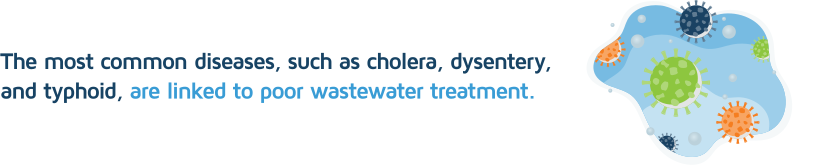
Around 80% of industrial and municipal wastewater returns to the ecosystem untreated. In addition, over 44% of household wastewater worldwide is improperly managed, endangering both human health and the environment, according to UN Water.
5️⃣ Poor management and aging infrastructure
Outdated irrigation practices and the lack of sustainable field management lead to increased water use to sustain yields. Severe water stress is expected to hit roughly 40% of all irrigated farmland by 2040 if no action is taken. By 2050, agriculture is expected to see a 19% rise in water demand compared to current levels.
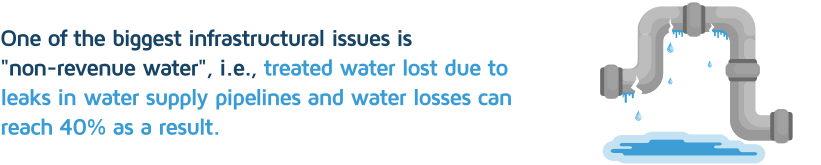
6️⃣ Poor infrastructure
To allow clean water to reach populations, governments should develop appropriate networks and infrastructure. Countries with rapid population growth that have historically depended on infrastructure that has not been renewed for many years may experience water scarcity.
7️⃣ Conflicts
Conflicts impact infrastructure, which, in turn, causes water crises. This has occurred in numerous countries across the globe, including Syria and the Central African Republic.
Water infrastructure damaged or deliberately targeted in these countries has turned physical or economic scarcity into severe humanitarian crises.
Which countries and regions are most water-stressed?
There are nations that use 10 to 30 times more water than their natural supply is able to sustain. The world’s highest water stress is registered in Kuwait, according to the United Nations Food and Agriculture Organization (FAO).
The table below illustrates the top 25 countries ranked by SDG indicator 6.4.2 (freshwater withdrawal as a % of total renewable freshwater resources) using the most recent data published by FAO’s AQUASTAT Dissemination System (2023):
For context, the world average for the level of water stress is 17.6%. If this figure exceeds 100%, it means that annually the country consumes more water than its renewable freshwater source can replenish each year. When that happens, the country must rely on other sources, including groundwater that is not quickly renewed, and/or water transfers.
World Resources Institute (WRI) alternative data
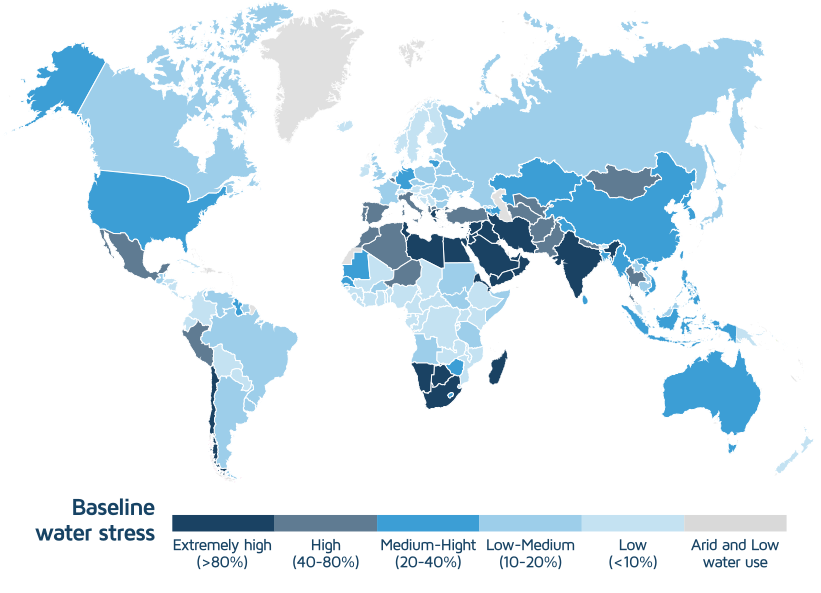
An alternative, widely used ranking comes from WRI’s Aqueduct 4.0 tool, which evaluates stress at the river-basin level rather than the national level.
Source: www.wri.org
Top 10 most water-stressed countries according to WRI (as of 2023)
An insufficient supply of water can not only have a physical impact but can also lead to economic disruptions and even affect the energy sector. Thus, it can be the cause of:
- Electricity outages
- Industrial disruptions
- Declines in agricultural productivity
For example, from 2017 to 2021, a shortage of water for cooling thermal power plants in India led to 8.2 TWh of power being lost, which is equivalent to five years’ worth of energy for 1.5 million households.
MENA region in focus
Most of the countries from the list are from the Middle East and North Africa region. 83% of MENA’s population is already exposed to extremely high water stress, according to Water Footprint Implementation.
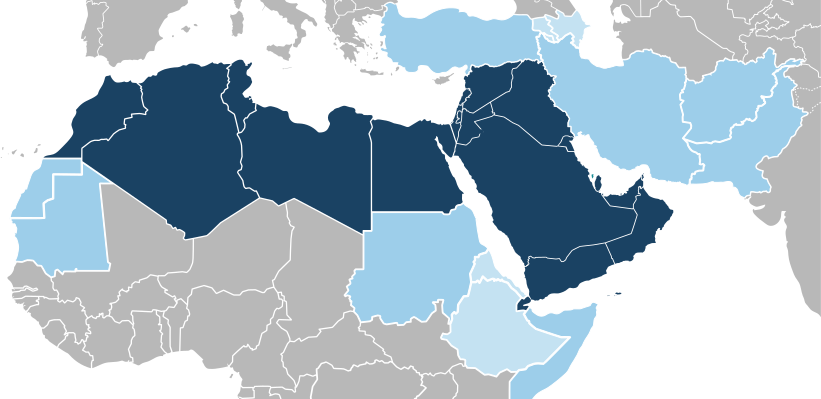
Experts believe that countries in the Middle East and North Africa (MENA) face the most critical physical water stress in the world.
The MENA region has considerably less rainfall compared to other parts of the world, and its rapid expansion, leading to subsequent residential, agricultural, and industrial water usage, has resulted in a significant increase in water demand.
For instance, Iraq, which has a serious shortage of water, faces difficulties due to limited resources, extreme heat, and growing desertification. Climate change mainly affects people who live in informal settlements.
Future water projections
By 2050, global water demand is predicted to increase by between 20% and 25%, driven by population growth, urbanization, and economic development.
- It is anticipated that a further 1 billion people will face extremely high levels of water stress by 2050. This means that in just over two decades, everyone in the MENA region could experience significant water stress.
- Over the same period, it is expected that sub-Saharan Africa’s requirement for water will skyrocket by 103%, according to the Center for Strategic and International Studies.
- Furthermore, up to 700 million people could be displaced due to water scarcity in some arid and semi-arid regions.
The water scarcity financing gap
The cost of meeting SDG 6
According to the Climate Policy Initiative, the water sector requires more funding if the world aims to meet SDG 6 (Ensure availability and sustainable management of water and sanitation for all).
Based on data from the World Bank, additional US$140.8 billion of yearly investments are required just to meet SDGs 6.1 and 6.2.
The classic water finance methods—tariffs, taxes, and transfers—that have traditionally supported water funding around the world are being weakened by:
- Tight public budgets (taxes).
- Shrinking ODA (transfers).
- Rising household affordability issues (tariffs).
Who funds water security
Development finance for water flows through three main channels:
1. Multilateral development banks (the World Bank, the African Development Bank, the Asian Development Bank and others).
Case study: Based on the Joint MDB Water Security Financing Report 2024 (from 10 MDBs including the WB, AfDB, ADB), in 2024 alone, the banks approved US$19.6 billion in water-related financing. Of them, US$14.4 billion was allocated for low- and middle-income countries.
For the most part, MDBs fund large-scale infrastructure such as water supply, sanitation, irrigation, and flood management, and they do so via loans, grants, and technical assistance.
2. Official development assistance (ODA) from bilateral donors
Bilateral ODA remains highly significant for funding water security, with donors including Japan, the United States, the United Kingdom, Australia, and others.
Still, domestic public spending continues to dominate overall water sector funding, with ODA serving as a crucial foreign supplement.
3. Blended finance (public + private capital to de-risk investments)
Still a small but growing share of blended finance, which combines public and private funds (from donors or philanthropies) to decrease risks and encourage private investment in water infrastructure, particularly in low-income or high-risk regions where commercial capital is limited.
Check out our “Ask the Expert Live Session”: Aid Budgets Are Tightening. Where Will Development Funding Come From Next?
Solutions to water scarcity: What works and where
Managed aquifer recharge and solar water
Managed aquifer recharge is a process that involves storing treated water or captured stormwater underground during wet periods so it can be used later during dry seasons or droughts. It is used in numerous countries, including Somalia, Iraq, Afghanistan, and India.
Solar-powered pumping is rapidly gaining popularity in off-grid rural areas, reducing small-scale water reliance on diesel and running expenses.
Wastewater reuse and desalination
During droughts, wastewater reuse and desalination can help increase water resources. Although they use similar membrane technology (reverse osmosis), they differ.
- Desalinated water is regarded as purer and more widely accepted, whereas reused wastewater typically brings up health concerns about water quality.
- Wastewater reuse is a cost-effective, energy-efficient, and ecologically beneficial alternative to desalination.
Case study: Through its NEWater initiative, Singapore treats and reuses wastewater to meet a large portion of the country’s needs, with wafer fabrication facilities being NEWater’s key users.
Nature-based solutions and smarter irrigation
A UNU-INWEH-led 2024 report argued that investing in: 1. Watershed restoration (fixing damaged natural systems by getting rid of pollutants, recovering native vegetation, and administering stormwater) and 2. Reforestation could bring in up to US$10.1 trillion yearly and reduce the increasing cost of drought.
Check out a day in the life of an environmental expert in watershed assessment and planning:
Water scarcity in 2026: The emerging pressures
In 2026, the term “water bankruptcy” was introduced – it appeared in a report published by the United Nations University Institute for Water, Environment and Health. The term is used to describe river basins and aquifers that have been depleted beyond their capacity for recovery.
Here are some facts mentioned in the report:
- Around 50% of Earth’s large lakes have lost water since the 1990s.
- 70% of major aquifers are in long-term decline.
- 410 million hectares of wetlands (nearly the land area of the EU) have vanished in half a century.
- US$5.1 trillion is the cost of the disappearance of ecosystem services from these wetlands (the figure is close to the total yearly GDP of 135 of the world’s poorest nations).
- 2 billion people currently live on ground that is sinking because groundwater is being drained from beneath it.
Frequently asked questions (FAQ)
What is water scarcity?
The difference between the amount of fresh water that people require and the amount that’s consistently accessible to them is known as water scarcity. This occurs either because the resource itself is limited (physical scarcity) or because access to it is (economic scarcity).
What’s the difference between physical and economic water scarcity?
Physical scarcity means there genuinely isn’t enough water in the region, even if it’s used efficiently – common across the Middle East and North Africa.
Economic scarcity means that there’s enough water in the region, but weak infrastructure or underinvestment doesn’t allow people to reach it – this is more common across Sub-Saharan Africa.
How many people are affected by water scarcity, and is it getting worse?
2.1 billion people lack safe drinking water, while approximately 4 billion experience severe scarcity for at least one month each year. According to WRI estimates, around 1 billion more people will face extremely high water stress by 2050, so the current trend line goes upward.
Which countries are most water-stressed?
By the official UN measure (SDG 6.4.2), Kuwait, the UAE, and Saudi Arabia top the list, withdrawing many times more freshwater than they naturally renew.
WRI’s broader ranking of 25 “extremely high stress” countries puts Bahrain, Cyprus, and Kuwait at the top, using a different, river-basin-level methodology. Either way, the Middle East and North Africa (MENA) region is the most impacted in this regard.
What is the main cause of water scarcity?
Agriculture, which accounts for 70% of freshwater withdrawals, is the single most powerful driver of high water demand. The situation is aggravated by climate change, population growth, and old infrastructure that loses water before reaching people.
How much would it cost to solve water scarcity?
The World Bank estimates that an additional US$140.8 billion in annual investments is needed just to meet SDGs 6.1 and 6.2 (by 2030, reach universal access to safe and affordable drinking water for all and ensure that everyone has access to sufficient and equitable sanitation and hygiene, with a focus on the needs of women, girls, and those in disadvantaged situations).
Final word
Water scarcity is a growing global concern. Forecasts suggest that the situation will worsen in the following decades, mainly due to unsustainable farming methods, industrial waste, poor infrastructure, and natural disasters. Water scarcity jeopardizes public health, food security, and financial stability. Coordinated actions are required to improve water management, create infrastructure, and safeguard vulnerable people against future water crises.