

Add us as your preferred source on Google to see more of our content in Search.
 Add to Preferred Sources
Rare earth elements boast some irreplaceable properties, which makes them very expensive and extremely valuable for many industries, especially in terms of the manufacture of cutting-edge technology. This is why the 17 chemical elements of the rare earth group have seen significant growth in value over the last few decades. However, not all the countries with reserves of rare earth elements are rich, and only one country in the world can purify and extract rare earths from ore.
Did you know that the 10 rare earths are fairly abundant within the Earth’s crust, and yet minable concentrations are not as common compared to the majority of other mineral commodities?
Of the total 90 million tons of rare earth reserves in the world, around 390,000 tons were mined and processed in 2025 (up 10 tons from 2024), according to the U.S. Geological Survey.
How many rare earth elements do you know, and what are they used for? This article will answer these questions.
What are rare earths? What are they used for?
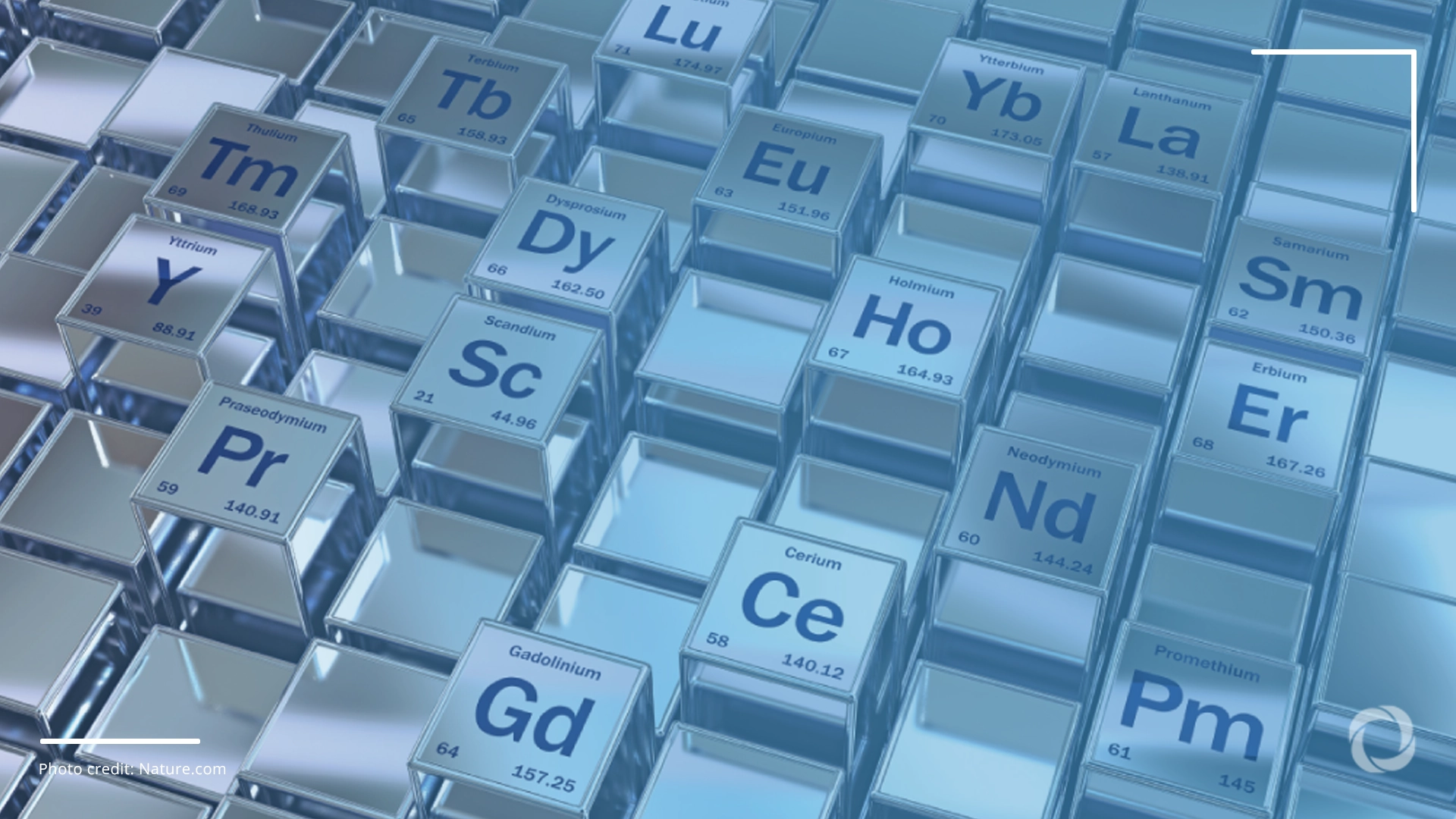
The rare earth elements (REEs) are the 17 metallic elements that are found in the Earth’s crust.
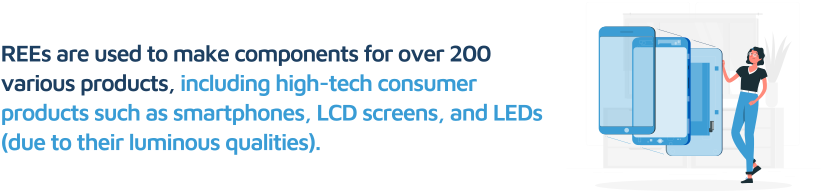
Demand outlook
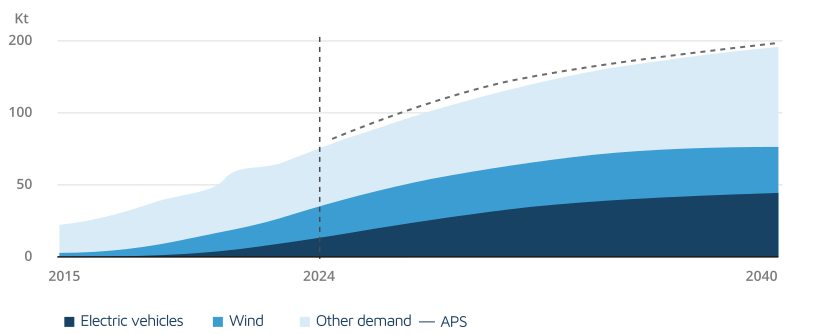
REEs are also essential components of glass, magnets, batteries, and catalytic converters.
Here’s a list showing each rare earth element and some of its applications.
Source: USGS
Rare earth elements are also useful in defense applications
Source: Geology
Rare earth production by country
With the largest production volumes globally – 270,000 tons – China tops the list of countries that mine and process rare earth oxide equivalent (REO), a term used to express the total rare earth content in a material or ore. The USA, Australia, and Myanmar (Burma) follow China with the total volume of REO in 2025 reaching 102,000 tons.
The U.S. Geological Survey made considerable revisions to the 2024 data regarding the production volume of rare earths in Australia, Brazil, Burma, Madagascar, Nigeria, and Vietnam. These revisions were made in accordance with government and industry reports.
Top 10 rare earth element producing countries (by production volume, in metric tons, REO equivalent)
Other countries and regions
Source: Mineral Commodity Summaries 2026
*Even though Canada is currently not a commercial producer of REEs, the country does have a number of advanced exploration projects and also boasts some of the largest reserves and resources of REEs on a global scale.
What is the difference between REE reserves and production?
Reserves refer to the quantity of the elements in the earth’s crust that can be mined, whereas production means that which is actually extracted.
To be considered a reserve, it has to be economically and technologically viable to recover. If the extraction of a mineral resource would result in a net loss, it is not considered to be a reserve.
On the other hand, when experts talk about production, they are referring to the actual annual amount of minerals mined and processed. This is the reason why a country may have large reserves but show low production (and vice versa).
Example: Check out where Brazil stands in the stats – it is the second-largest country by REE reserves but has a relatively low production because having reserves doesn’t mean they are extracted.
Let’s take a closer look at the top three REEs-producing nations.
 China
China
Because the Chinese government controls rare earths operations in the country, the market features only a few larger foreign companies, including Lynas Corporation, Iluka Resources, and Avonlea Minerals, all of which are based in Australia.
China relies heavily on two towns in Kachin state, close to Yunnan province, as a source of rare earth oxides.
Today, China boasts a monopoly on the whole rare earths value chain.
The reason? Once rare earth ores are mined, they must then undergo a complex process to separate, refine, and purify each individual element and so far, China is the only country capable of handling all the stages of this intricate process. Mathieu Xémard of the Polytechnic Institute of Paris Centre explained that China has managed to gradually progress over the years from extraction to separation, through metallurgy and refinement, to magnet manufacturing.
European Union reliance: 95% of rare earth minerals come from China (mostly), Malaysia, and Russia.
A striking 95% of the rare-earth elements imported by the EU come from China, Malaysia, and Russia, according to Eurostat data (as of 2024).
China is also among the countries on which the U.S. depend for rare earth elements. Based on data from the Congressional Research Service, in 2025, the U.S. relied on 67% net imports of REEs from China, Malaysia, Estonia, and Japan.
China’s 2025 rare earth elements export restrictions
China implemented two rounds of export restrictions for REEs in April and October 2025 in a reaction to the U.S. tariff increases on products originating from China, claiming national security concerns.
- In April 2025, China imposed the first restrictions on rare earths, including samarium, gadolinium, terbium, dysprosium, lutetium, scandium, and yttrium. The Ministry of Commerce ordered national security-based licenses, and almost overnight, exporters stopped shipping as they awaited approval.
- October 2025: The list of rare earths export controls was extended to europium, holmium, erbium, thulium, and ytterbium.
- November 2025: China lifted the October export restrictions for a year. Although the April export limitations remained in effect, China began to issue general export licenses to certain exporters.
The impact of these restrictions was felt immediately and was harsh:
- In the two months that followed, exports of Chinese rare earth magnets dropped by around 75%.
- The car-making industry and renewable energy market were forced to search for alternatives.
- A number of European suppliers had to temporarily halt production processes. Japanese car makers had to slow the speed of their assembly lines.
- Other manufacturers, including those involved in defense and wind turbines, also had to endure serious shortages, according to the Observer Research Foundation America.
According to Reuters, the exports of rare earths from China in January and February of 2026 increased by 23% compared to 2025.
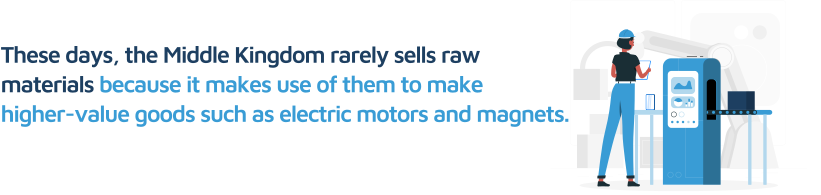
At the moment, the U.S. and Australia export some of their semi-processed ores to China in order for the refining process to be completed.
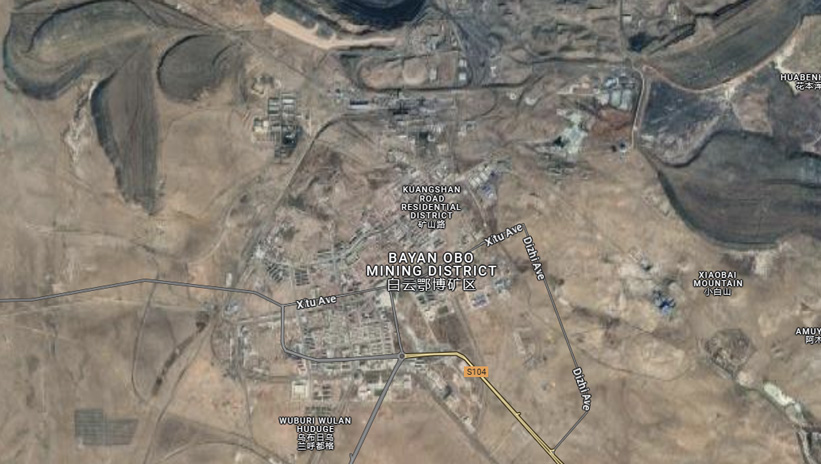
Today, China is home to the world’s largest rare earths mine, the Bayan Obo mine, which is located in Inner Mongolia.
 The United States of America
Based on estimates from the U.S. Geological Survey, in 2025 the United States produced around 51,000 tons of REO in mineral concentrates, estimated to be worth US$240 million.
The majority of rare earths in the U.S. come from the Mountain Pass mine in California which is a key domestic source for these materials, but at the same time, the country still relies heavily on imports to meet growing demand.
In 2025, experts calculated that the overall value of rare earths imports into the U.S. saw a slight decrease from US$168 million in 2024 to US$165 million despite imports of rare-earth compounds and metals showing a 169% increase.
The U.S. is making significant investments to create a domestic supply chain for rare earths that includes mining, processing, and recycling, according to the U.S. Department of Defense.
Can the U.S. supply its own rare earth minerals?
The short answer is not yet. The U.S. still relies on imports for the majority of its rare earth supply. The bigger challenge has always been processing, not mining. Although the country has large REE reserves (1.9 million metric tons), it has historically shipped much of its mined material to China for separation and refining. Currently, the U.S. has one active large-scale rare earth mine, Mountain Pass in California, and in April 2025, its operator, MP Materials, announced it had halted shipments to China and would process a significant share of its output domestically.
Several new mining sites in Alaska, Wyoming, and Texas are also progressing toward production.
 Australia
Australia is home to one of the world’s largest rare earth deposits. The country also ranks third in REEs production, with an annual volume of 29,000 tons.
The largest mine on the continent is the Lynas Rare Earths’ Mount Weld mine, which is also the largest REE supplier apart from China, and produced around 10,462 tons of REO in 2025.
 Myanmar (Burma)
With 22,000 tons of rare earths produced in 2025, Myanmar ranks fourth on the list of the top 10 rare earth-producing countries.
The area in northeast Kachin State that is centered on Chipwe and the nearby town of Pangwa are the locations where the majority of rare earth mining occurs.
Two significant China border crossings at Pangwa and Kan Paik Ti are used to transport all the rare earths produced in this region to China.
 Thailand
According to Chulalongkorn University in Thailand, several developed nations have expressed great interest in the Southeast Asia region, including Thailand, which is home to large deposits of rare earths in the Northeast, from Korat to the Buriram regions. This is why it is considered to be ASEAN’s new hub.
With an annual production of 4,800 tons, the country easily makes it into the top ten.
 India
India
The country boasts vast reserves of rare-earth minerals and a production of 2,900 tons a year in 2025. According to the Geological Survey of India, 482.6 million tons of rare-earth ore resources are available in 34 exploration projects, although this number could not be confirmed from other sources.
India aims to build self-reliance in the most important materials, but faces a number of problems. Although the country is one of the largest rare-earth producers, it generates less than 1% of the global supply. The main issues are poor infrastructure, outdated technology, and regulatory issues, among others, explained Al Jazeera.
At the same time, the government has recognized rare earths to be strategic assets and has launched initiatives to work on the sector’s development, including focusing on legislative reforms, funding incentives, and infrastructure investment.
 Madagascar
This African nation boasts an annual production volume of 2,700 tons of rare earth elements.
The Ampasindava project is one of the largest known ionic clay deposits outside of China, containing 606,000 tonnes of total rare earth oxides, according to Harena Rare Earths, the company that owns the project.
Another important development project is the Vara Mada (formerly Toliara) site located in southwest Madagascar. Operated by U.S.-based Energy Fuels, a study undertaken at the beginning of 2026 confirmed the mine had a projected 38-year lifespan.
 Russia
With an annual production of 2,600 tons in 2025, Russia continues to focus on the rare earths industry. The government has supported the industry since 2013, when it launched a state program.
Currently, the country mines and refines around just 2% of its own consumption, while 98% of materials come from foreign sources, mostly from China.
 Brazil
Today, the production volume of rare earths in Brazil is around 2,000 tons. As previously mentioned, Brazil has some of the largest rare earth reserves on the planet, but has issues with their extraction.
However, investment into the research of rare earth elements has increased dramatically, from US$0 in 2019 to US$13.3 million in 2024.
Although production remains in the initial phase, experts believe that with the new projects currently underway, this may can change.
 Nigeria
Nigeria is the world’s tenth-largest REEs producer with 1,500 tons extracted in 2025. This should be of no surprise since this country features significant REE deposits (around 9 million tons) spread across nine states, some of the largest on the continent, along with Tanzania and South Africa.
According to Business Insider Africa, the country boasts numerous unexplored areas, and it intends to focus more on production capacity by the end of the decade.
Rare earth elements FAQs
1. Which country produces the most rare earth elements?
China, which accounted for roughly 69% of global mine production in 2025, according to Mining Technology (270,000 tons of REO).
2. How many rare earth elements are there on planet Earth?
There are 17 rare earth elements.
3. Which country controls 97% of the rare earth elements?
China, which today handles around 90% of global processing, according to the Center for Strategic and International Studies. However, in 2010, this figure stood at 97%.
4. Why doesn’t the U.S. produce more rare earth minerals?
A mix of high environmental costs in the country led to the production being sent to China due to the lower costs involved. Until the mid-1980s, the U.S. was the leading player in the global source of REEs.
5. What would happen if China stopped exporting rare earth minerals?
This would lead to significant disruptions to the global supply chains for electronics, EVs, wind turbines, and defense systems. This, in turn, would lead to a drastic increase in prices and serious production delays that would affect manufacturers.
6. Which country has the largest rare earth reserves?
China, which boasts around 44 million metric tons of reserves, roughly half the world’s total, according to the latest USGS data.
Final word
Used in cutting-edge technology, rare earth elements are vital for technological development. China currently holds a monopoly over rare earth ore purification and separation, and dominates the market. It is expected that no significant changes will occur, and the near future will be marked by tensions among the largest REEs producers, as the demand for these elements increases due to their critical role in many industries, including defense.