
Add us as your preferred source on Google to see more of our content in Search.
 Add to Preferred Sources
Labour has promised to cut inequality as a key plank of its plans for Britain’s aid policy. The party’s green paper says that a Labour government would introduce Britain’s first explicitly feminist international development policy, with a tripling of funding for grassroots women’s groups.
The plans, launched after the recent revelations of abuses of power within the aid sector, commits the party to favour civil society and grassroots groups and communities over large aid organisations. In the foreword, Jeremy Corbyn accused the Conservative party government of “reducing aid to a matter of charity, rather than one of power and social justice”.
“This sets out our vision to build a world for the many, not the few, and to make sure everything we do tackles inequality,” he said.
In 2018, the Department for International Development (DfID) spent 13.88% of its budget on disaster relief, the largest amount for any single issue. But it spent 11.39% on health, an additional 5.9% on government and civil society, 5.04% on education and 3.97% on banking and financial services in developing countries.
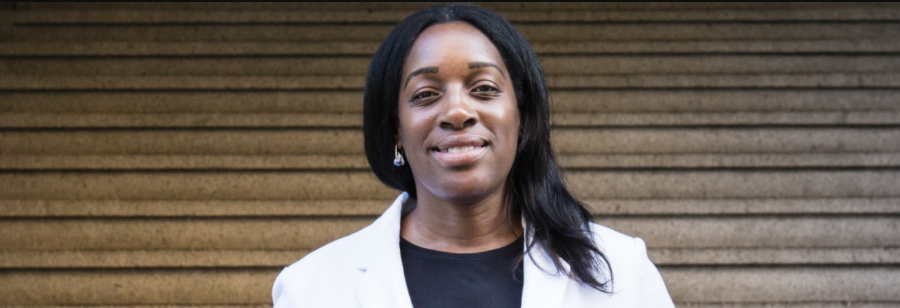
Speaking to the Guardian before the launch, Kate Osamor, Labour’s shadow minister for international development, said Britain needed to get its “moral compass back” in terms of aid spending. And she said the UK needed to be “a bit more honest” about who it was leaving behind.
“We are looking at a feminist policy, because women are often the people who bear the brunt, who get paid the least amount, especially in developing countries. They are bearing the brunt of wars. We’ve seen this in the #MeToo campaign, this is happening more so in developing countries.”
Entitled “A world for the many, not the few”, the paper will be launched on Monday in parliament, when Osamor will say:
“We cannot rely any longer on the myth that trickle-down economics will somehow solve poverty. That bubble has finally burst. Equal societies fare better on social indicators, are happier and more harmonious, and enable more sustainable economies. Yet we forge ahead with channelling wealth into the hands of an elite few. It is little surprise that in almost every city in the world extreme wealth and poverty now coexist side by side.”
Reducing inequality is enshrined in the global goals, which UN member states, including Britain, signed up to in 2015, but is not currently an explicit aim of aid funding by DfID.
Labour announced 34 specific actions, including helping countries that receive UK aid halve the income gap between the top-earning 10% and the poorest 40% by 2030, and step up support for climate change and end DfID’s investment in fossil fuels. It also proposes an end to the “opaque and controversial” Conflict, Stability and Security Fund, and to support for privatisation of public services overseas.
In the paper, Labour accuses the government of undermining positive work, through “incoherent policies” such as selling arms to the Saudi-led coalition while sending aid to Yemen.
Alex Their, of the Overseas Development Institute (ODI), welcomed Labour’s green paper. He said:
“Inequality has risen up the global agenda as a fundamental factor in terms of poverty reduction. What we have increasingly realised is that adding inequality is fundamental to long term transformation and that is why we think it’s so important to call it out explicitly as a goal. That is true in the UK as well as across the world.”
However, campaign group the TaxPayers’ Alliance described the proposals as “pernicious” and badly thought out. Its research director Alex Wild said:
“There are legitimate criticisms of the government’s approach to aid spending, not least the fact that they appear more motivated by inputs rather than outcomes. But aiming for arbitrary inequality targets isn’t going to do much to help the poorest people in the world. If aid spending is based around inequality, taxpayers are going to end up seeing their money heading to places like Singapore and the US.”
Original source: The Guardian
Published on 26 March 2018