
Add us as your preferred source on Google to see more of our content in Search.
 Add to Preferred Sources
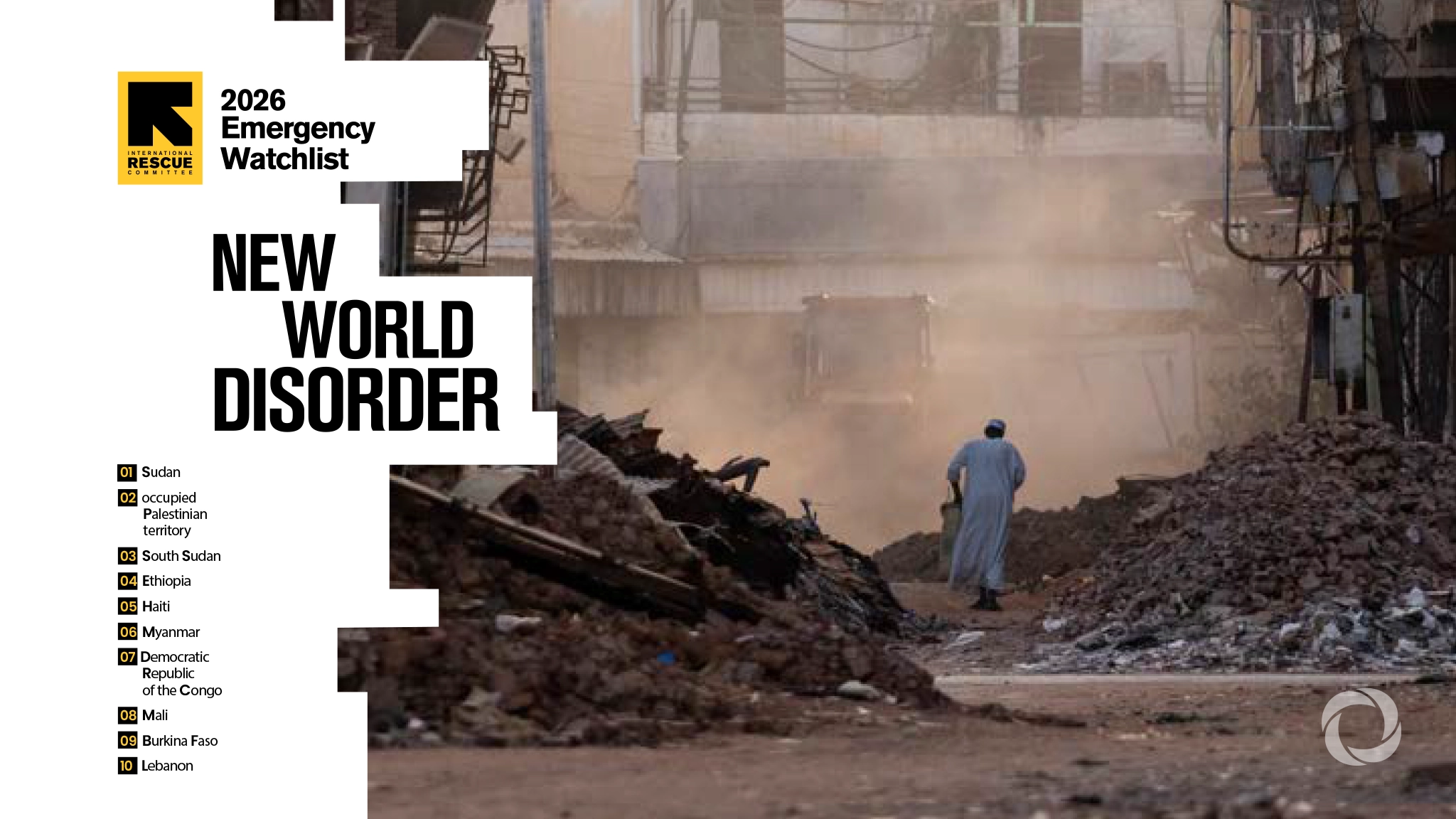
The International Rescue Committee (IRC) has released its annual Emergency Watchlist 2026, identifying the 20 countries facing the greatest risk of deepening humanitarian crises in 2026, the agency announced. Sudan tops the list for the third consecutive year, followed by the occupied Palestinian territory and South Sudan. The IRC warns that what it calls a “New World Disorder”—marked by intensifying geopolitical rivalries, transactional deal-making, and collapsing international cooperation—is driving these crises while global support shrinks dramatically.
The Watchlist countries, home to just 12% of the world’s population, account for 89% of all people in humanitarian need and are projected to host more than half of the world’s extreme poor by 2029. Around 117 million people are forcibly displaced, and nearly 40 million face such severe hunger that urgent action is needed to save lives. Yet global humanitarian funding has been cut in half, leaving the aid system underfunded and unprepared to meet the scale of need.
The IRC says this emerging disorder is replacing the post-World War II international system once grounded in rules and rights. Conflict is increasingly used as a tool for power and profit—in Sudan, warring parties and their backers are profiting from gold trade while deepening violence against civilians. Impunity is enabled on a dangerous scale: 2025 is on track to be the deadliest year for aid workers, attacks on schools have risen nearly 50%, and in Gaza, hospitals, shelters, and essential infrastructure have been bombed or cut off from aid. The UN Security Council has seen a surge in vetoes, stalling responses to atrocities in Sudan, Syria, and the occupied Palestinian territory.
“What the IRC is seeing on the ground is not a tragic accident. The world is not simply failing to respond to crisis; actions and words are producing, prolonging, and rewarding it,” said David Miliband, IRC President and CEO.
The report warns that what begins in crisis-affected states will not stay there, and without urgent action, 2026 risks becoming the most dangerous year yet. Miliband added that “disorder begets disorder” and questioned whether global leaders will respond with vision and reinvention or with further retreat.
Despite these devastating trends, the IRC insists that practical solutions exist and are already working. In Sudan, Ethiopia, and South Sudan, the agency is delivering life-saving immunization services in conflict-affected areas otherwise unreachable. In Somalia and Nigeria, the IRC and its partners are anticipating needs and preparing communities for predictable climate threats like drought and flooding.