
Add us as your preferred source on Google to see more of our content in Search.
 Add to Preferred Sources
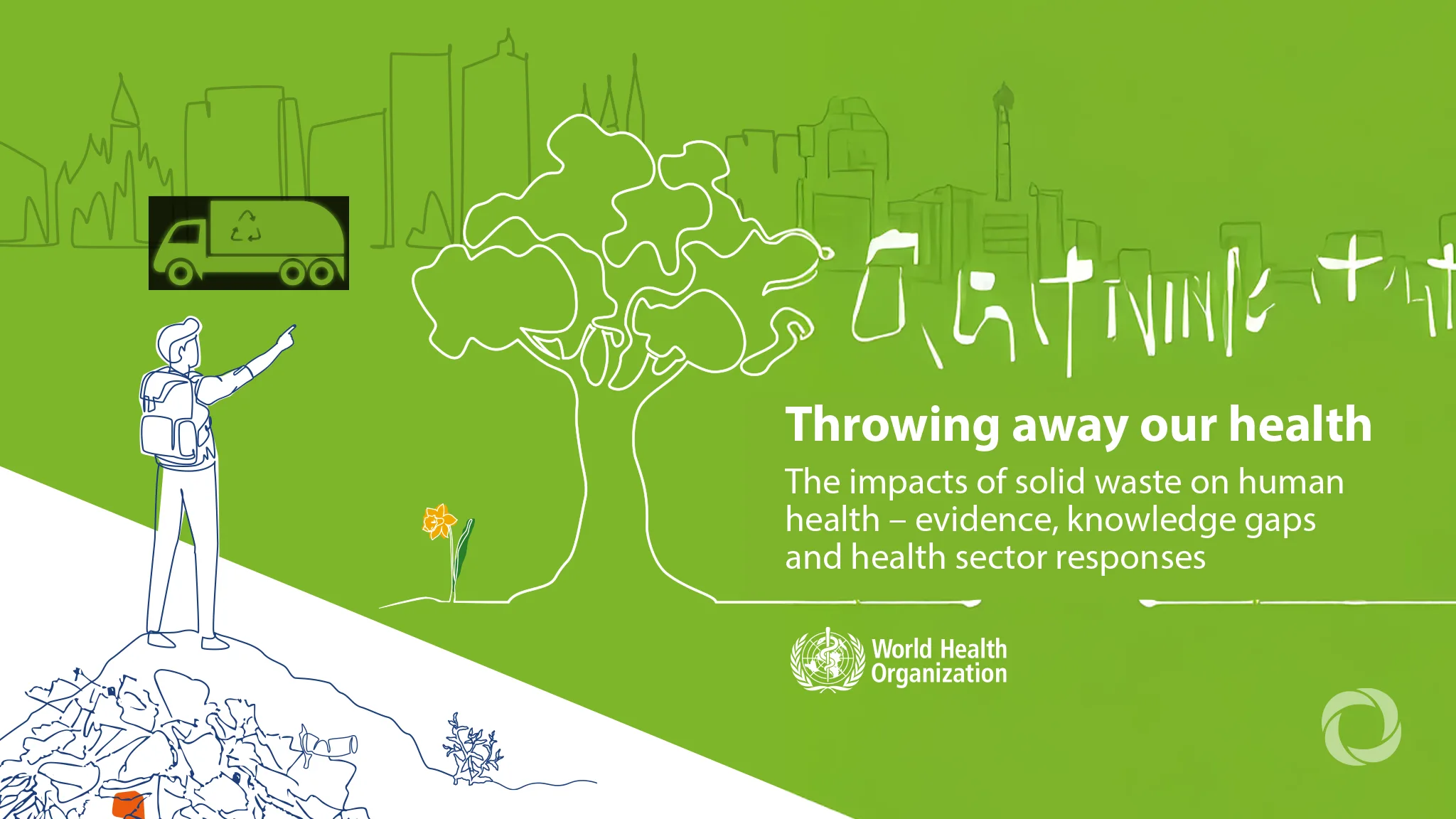
Poorly managed solid waste is driving a public health crisis, and urgent action is needed to protect people and the environments they live in, the World Health Organization (WHO) warns in a new report released this week. According to WHO, the volume of municipal solid waste is growing at an unprecedented rate, yet many countries still lack the systems and resources to handle it safely. The report, titled “Throwing away our health: the impacts of solid waste on human health – evidence, knowledge gaps and health sector responses,” summarizes evidence on how solid waste affects health through polluted air, water, soil, and food.
“Solid waste reflects how our societies produce and consume, and how we treat people and the environment in the process,” said Dr. Ruediger Krech, Director a.i. of WHO’s Department of Environment, Climate Change, One Health & Migration. “If we continue to treat waste as an afterthought, we will lock in avoidable disease, climate pollution and deep social inequities.” When waste is not collected, or is dumped, burned, or poorly treated, it can release hazardous chemicals, contaminate drinking water sources, and create breeding grounds for insects and rodents. Communities without proper waste services, those living near dumpsites and poorly managed landfills and incinerators, children, pregnant women, and waste workers—especially informal workers—face the greatest risks.
A large share of municipal solid waste is still not collected or is disposed of in uncontrolled conditions, including open dumpsites and open burning. These practices damage ecosystems, contribute to climate change, and undermine efforts to build healthy cities. For the water, sanitation, and hygiene community, the report underlines that safe management of municipal and health care waste is essential to climate-resilient systems.
When waste is properly managed, however, it can become a resource—generating energy and creating green jobs. The report calls for a coordinated, multisectoral response based on the waste hierarchy: preventing waste where possible, then reducing, reusing, and recycling, with safe recovery and disposal. Key actions for governments and partners include cutting waste generation at the source, expanding affordable and reliable waste collection services especially in underserved communities, improving control at recovery and disposal facilities, and eliminating open dumping and burning, including hazardous waste.
The report identifies a central role for the health sector in addressing solid waste as a public health threat. Health systems can prevent and minimize health care waste at the source, improve segregation and safe treatment, invest in cleaner climate-resilient technologies, and advocate for health-protective policies and standards. It also encourages more surveillance, research, and biomonitoring to strengthen the evidence base and promotes social protection and inclusion of informal waste workers. “Health ministries can start now by ensuring safe management of health-care waste, developing strong occupational health programmes for waste workers, and working with municipalities to reduce health risks from solid waste by closing open dumps and burn sites and gradually improving towards safe services,” said Bruce Gordon, Head of WHO’s Water, Sanitation, Hygiene and Health Unit. “These concrete steps save lives today and will make cities cleaner and healthier in the future.”