
Add us as your preferred source on Google to see more of our content in Search.
 Add to Preferred Sources
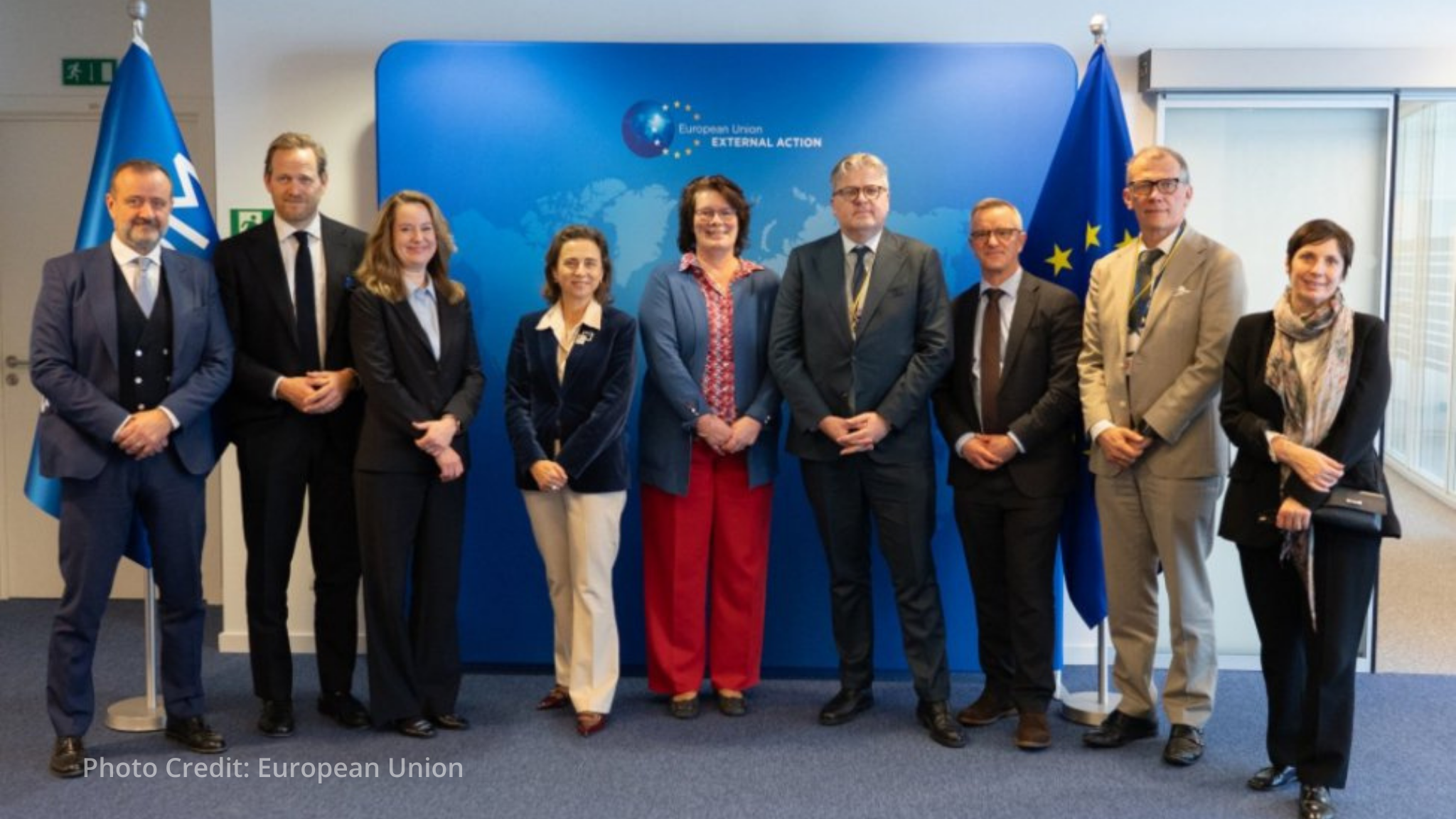
The European Union and the International Organization for Migration (IOM) held their 12th Senior Officials Meeting in Brussels this week, walking away with a renewed pledge to work more closely on migration and humanitarian response in 2026 — at a moment when crises are multiplying, routes are shifting and resources are thinning, the organisation said. The meeting was co-chaired by IOM Director General Amy Pope and EEAS Managing Director Olivier Bailly.
The two sides have been holding this annual forum for over a decade, using it to take stock of what’s working and agree on where to push harder. This year, the agenda was dense: the EU Pact on Migration and Asylum, nationally owned reintegration systems, and coordinated action on some of the world’s most volatile situations — Syria, Libya and Ukraine among them. A route-based approach to migration governance was a recurring theme, built on the idea that managing migration effectively means engaging along the entire journey, not just at the point of crisis.
“As routes evolve and needs grow, deepening our cooperation in 2026 will be essential to delivering practical, people-centred solutions that save lives, strengthen protection, and respond to changing realities on the ground,” said Director General Pope.
EEAS Secretary General Belén Martínez Carbonell added that this kind of structured, high-level dialogue matters even more when multilateralism itself is under strain globally.
Both sides agreed that one of the hardest challenges ahead is rebuilding political trust in migration governance — and that doing so requires visible, tangible results on the ground, not just policy commitments on paper. The upcoming International Migration Review Forum, set for 5–8 May in New York, was flagged as a key moment to restate those commitments and show progress on the Global Compact on Migration.
With budgets tight and needs growing, the message from Brussels was straightforward: the EU and IOM will need to be more strategic, more coordinated and more results-driven than ever if they are to make a credible case for humane, well-managed migration at a time when the political winds are blowing in the opposite direction.