
Add us as your preferred source on Google to see more of our content in Search.
 Add to Preferred Sources
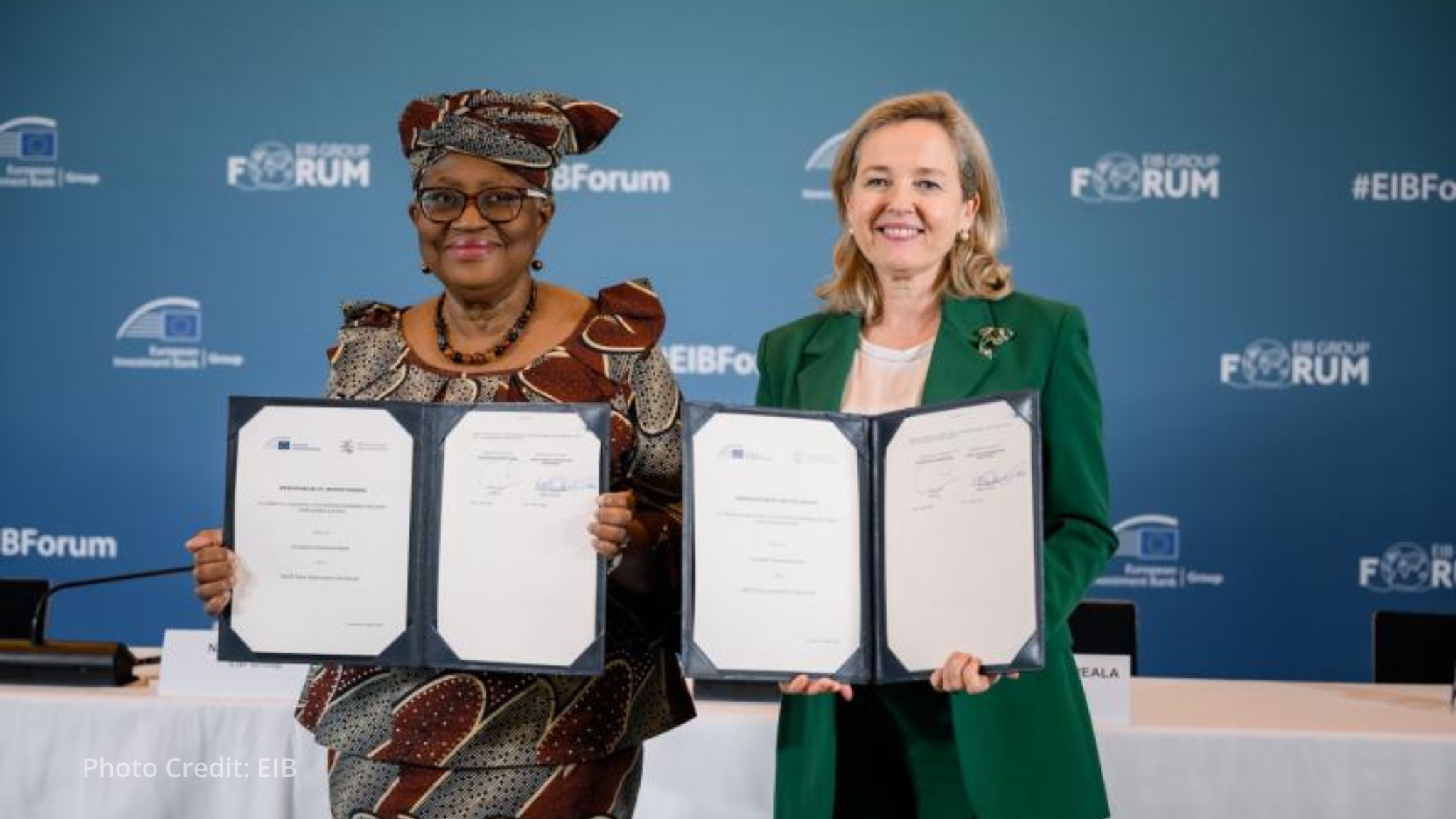
The European Investment Bank (EIB) Group and the World Trade Organization (WTO) Secretariat have signed their first-ever cooperation agreement, marking a significant step toward linking trade policy reform with on-the-ground investment financing, as announced in an official statement published by the EIB. Signed at the EIB Group Forum in Luxembourg, the Memorandum of Understanding pairs EIB Global — the Bank’s international development finance arm — with the WTO Secretariat to promote investment, facilitate trade, and build regulatory capacity in partner countries. The agreement also launches a concrete joint initiative, with Sub-Saharan Africa as its first focus.
Global foreign direct investment flows have been running well below what developing economies need, and the regulatory and financing barriers that deter private capital remain stubbornly in place. This partnership is designed to tackle both problems at once — combining the WTO’s rule-setting leverage with the EIB’s financial muscle to make partner countries more attractive to investors.
EIB Group President Nadia Calviño described the agreement as turning “trade policy dialogue into concrete, high-impact investments,” adding that it would help partner countries attract better-quality investment while creating new trading opportunities for EU businesses. WTO Director-General Ngozi Okonjo-Iweala was equally direct, pointing to the WTO’s Investment Facilitation for Development Agreement — backed by more than three-quarters of WTO members — as a practical framework for reducing risk, enhancing transparency, and reinforcing regulatory predictability. “This partnership aligns policy reform efforts with catalytic financing,” she said, promising to unlock private investment in critical minerals, digital technologies, and the bioeconomy.
The initiative will roll out in phases, starting with selected African countries and priority sectors including green and digital transition, health, education, and decent job creation. The EIB and WTO will help governments assess their investment needs, develop action plans identifying specific regulatory reforms, and prepare projects for financing. From there, EIB funding and blended finance instruments can be deployed to attract additional private capital — closing the loop from policy to bankable project.
The agreement was developed in consultation with the European Commission and aligns with the EU’s Global Gateway priorities, reinforcing the bloc’s broader push to build mutually beneficial partnerships with developing economies. Beyond Africa, the EIB is already working on complementary initiatives to scale up EU exports and investments globally — a signal that this first agreement with the WTO is the beginning of a much larger strategic shift.