

Add us as your preferred source on Google to see more of our content in Search.
 Add to Preferred Sources
Despite the fact that safe and nutritious food is a basic human need, our planet is home to millions of people who are food insecure, lacking safe and reliable access to sufficient nutrients.
This issue is known as food insecurity which emerged as a term in the mid-1970s, although it has always affected humanity with hunger and famines striking communities across the globe. Today, it is considered to be a global crisis that carries catastrophic consequences, particularly for children.
Defining food security: A comprehensive overview
What is food security?
The World Bank defines food security as the situation when everyone has both physical and financial access to sufficient safe, nutritious food that satisfies their dietary requirements and meets their food choices, allowing them to live a healthy and active life.
The concept of food security first emerged in policy forums and publications in the 1970s, primarily being identified as a challenge for developing nations.
How many people face food insecurity?
According to the most recent data from the State of Food Security and Nutrition in the World report by the UN, 673 million people faced hunger in 2024 which means that food security in the world remains a serious challenge.
In addition, based on the 2025 report from the World Food Programme (WFP), in the 67 nations with access to data where this UN agency operates, 318 million people were suffering from acute food insecurity.
This map from the UN Food and Agriculture Organization depicts food insecurity around the world:
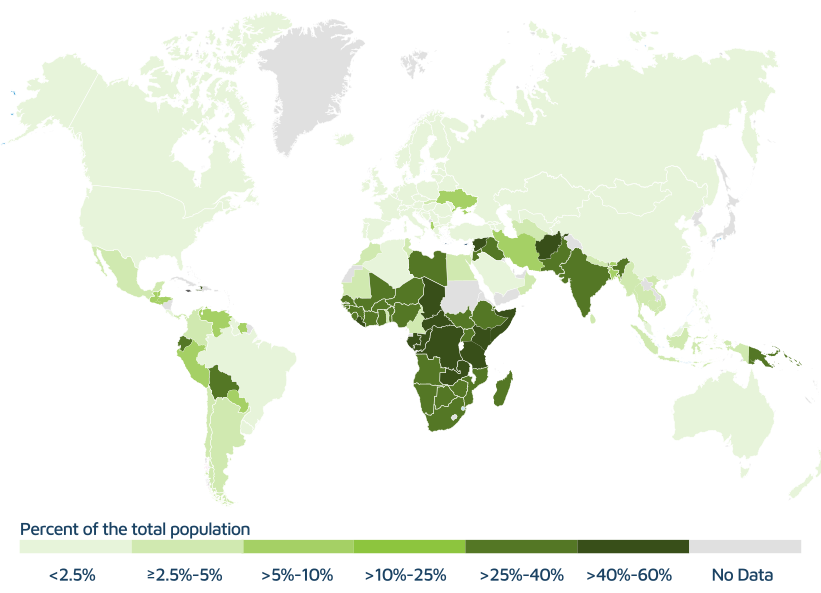
Source: FAO
According to another study, published in Scientific Reports, by 2100, more than 1.1 billion people, including over 600 million children, primarily in Africa and Asia, could face catastrophic food insecurity crises due to conflict and inequality-driven situations.
The core dimensions of food security
To fully understand food security, it is important to consider its four primary dimensions, each involving an important variable, with all of them together shaping the overall food security situation.
At the same time, it is important to understand that the lack of at least one component of the four determines the level of food insecurity.
According to the World Bank, the four dimensions of food security are:
1️⃣ Physical availability of food
Food availability relies on the “supply side” of food security and depends on food production, reserves, and net trade.
2️⃣ Economic and physical access to food
Concerns about limited economic and physical access to food have encouraged policymakers to prioritize household incomes, purchasing power, market functioning, and food pricing as significant determinants of food security.
3️⃣ Food utilization
This is usually regarded as the process by which the body makes the best use of the nutrients provided by meals.

4️⃣ Stability of all three dimensions over time
Let’s put it this way: you can eat healthy food, you can have enough of it, but you can still be food insecure if there isn’t regular adequate access to this.
People may lack access to food due to harsh weather conditions, political unrest, or economic factors such as unemployment and high prices.
Understanding food insecurity: causes and impacts
Most of the time, food insecurity arises for several reasons rather than just one. Moreover, a combination of causes leads to the situation where families lack access to normal food or are simply unable to afford it.
Let’s examine the key factors of food insecurity:
According to the Save the Children organization, there are five main factors that affect food security: conflict and war, poverty, climate disasters (climate change), economic instability, and poor infrastructure.
1️⃣ Conflict and War
Conflict continues to be the main cause of food insecurity around the world. Based on data from the WFP, today around 70% of the people who suffered from severe hunger in 2025 were in regions impacted by war and violence.
Conflicts lead to:
- Families fleeing their homes and leaving their farmland
- Roads, markets, and other key infrastructure being destroyed
- Limited or no access to humanitarian aid, which also involves lack of access to daily rations of food.
Today we are also witnessing cases when starvation is intentionally used as a weapon of warfare.
2️⃣ Poverty
The lack of income in a household pushes families to compromise on food consumption. And even if one of several family members is employed, they may still struggle due to rising living costs.
Did you know that in 2025, according to the UN estimates, over 800 million people faced extreme poverty, earning less than US$3 per person per day?
3️⃣ Climate change
Drought, flooding, cyclones, and heatwaves are examples of extreme weather phenomena that are damaging crops, wiping out livestock, and forcing people to leave their homes.
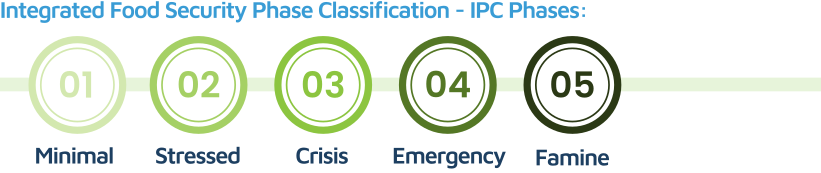
One study from the library catalogue of the WFP found that with an increase in local temperature of just 1°C, the number of people suffering from food insecurity (IPC Phase 3 or worse) also increases.
It is worth noting that:
- A 1°C increase in temperature leads to considerable yield losses, especially for key cereals such as rice, maize, and wheat, according to a report published in the journal Plant Growth Regulation.
- Higher temperatures tend to decrease soil moisture even with constant precipitation because evapotranspiration (the total amount of water evaporation from soil and water transpired by plants) increases more quickly than rainfall can restore it.
4️⃣ Economic instability
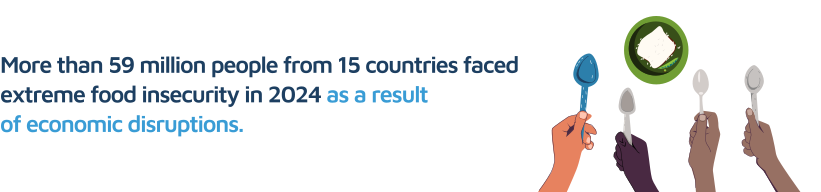
Increases in fuel prices and transport costs, as well as market disruptions (lockdowns, trade restrictions), trigger rising food prices, resulting in low food availability and shortages for many people.
According to the World Economic Forum, millions of families simply cannot afford nutritious food due to currency depreciation, high import costs, and disrupted trade.
5️⃣ Poor infrastructure
It becomes extremely difficult to transport and preserve food when there are no adequate roads, when there is a lack of cold storage, and when the power supply is limited or nonexistent.
In the absence of developed infrastructure, the food that reaches markets may already be rotten, prices increase, and millions of people become isolated from supply chains.
Poor healthcare and underdeveloped water systems exacerbate the issue, increasing the prevalence of food insecurity.
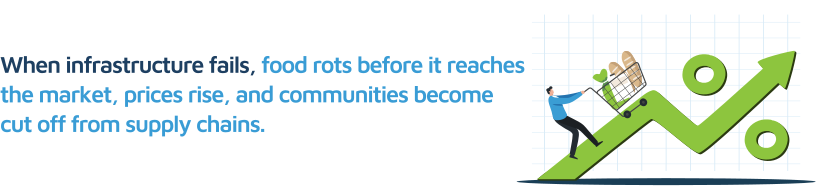
For example, according to the World Bank, some regions in Africa are highly impacted by transport inefficiencies, with 37% of locally produced food being lost in transit due to a number of serious issues, one of which is poor infrastructure.
Exploring the four pillars of food security
According to the Food Security Cluster Handbook, one of the key resources for managing food insecurity crises responses, the four pillars of food security are food availability, food access, food utilization, and food stability.
- Availability: Is there enough food imported or produced to satisfy demand?
- Access: Do people have physical access to that food, and can they afford it?
- Utilization: Is the food safe to eat, is it nutritious, and is it suitable for good health?
- Stability: Will the access to and availability of food be consistent over time?
The effects of food insecurity on societies
People who experience food insecurity miss meals or shift to less nutritious foods, both of which can lead to health problems, according to experts.
- Type 2 diabetes, obesity, and hypertension are all influenced by food insecurity.
- Food insecurity is associated with poor mental health, low educational achievement, and low productivity at work, according to the University of Toronto.
Economic effects of food insecurity
Economies suffer greatly when people find themselves unable to buy sufficient good-quality food, which in turn greatly impacts the health of workers.
It can be difficult for workers to participate effectively in the workforce if they fail to have enough food.
There is a certain chain reaction here in that long-term food insecurity can increase the prevalence of chronic sickness, which can result in high healthcare costs and lost economic activity because people with serious health conditions are often unable to work effectively.
Children facing food insecurity need their parents near them.
When a child is unable to attend school because of sickness that has been caused by unhealthy or missing nutrients, parents need to be with them, which means they are unable to dedicate enough time to work, and thus they do not contribute to the economy.
Childless people can also affect the economy if they suffer from food insecurity.
Even if a person doesn’t have children, they are likely to engage in what is called presenteeism – when employees try to work harder and go to work even when suffering from serious health problems.
Addressing food insecurity
There are complex interconnected issues that need to be addressed, and no ‘one-size-fits-all’ solution to address food insecurity can be applied.
However, according to EIT Food, one of the largest EU-supported food innovation communities, we can move towards solving food insecurity issues via a combination of political, economic, and technological involvement.
1️⃣ Minimizing the volume of unnecessary food waste
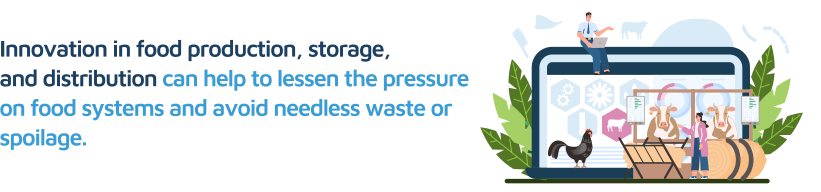
The World Resources Institute estimates that throughout the value chain, as much as 40% of food is lost or wasted, and about 30% of the food produced worldwide is never consumed.
That being the case, to achieve food security, it is vital that food is not lost and left to rot before it reaches people, who should also be assisted in reducing personal food waste.
Suggested reading: World waste: statistics by country and brief facts
2️⃣ Educating more people on food insecurity
It is vital to inform each and every individual about this issue, and this particularly applies to young people, since they are essential for the development of innovative approaches to food insecurity and are the future decision-makers of our food systems.
3️⃣ Assisting vulnerable communities
Tackling food insecurity requires people speaking more about it, pushing for change, and assisting those who are in need.
People, organizations, and governments should work as one entity to bring better policies, new ideas, and financial assistance to improve food systems, making them more resilient.
Furthermore, support must be tailored to local reality, as people may suffer from food insecurity for individual reasons.
4️⃣ Diversifying protein sources
Proteins are required for human growth and development, but they are sourced from animal- and plant-based foods, which are often among the more expensive categories in a typical diet.
Innovation could assist by discovering affordable alternatives, but this will require more investment and new regulatory frameworks to reduce costs while increasing accessibility.
Role of technology and innovation in ensuring food security
Technology provides practical tools to solve food insecurity challenges. For instance, according to the Sustainability Directory, precision agriculture (which features GPS, sensors, and data analytics) can:
- Improve irrigation, fertilization, and pest control
- Increase crop yields
- Reduce food waste
- Connect farmers with markets
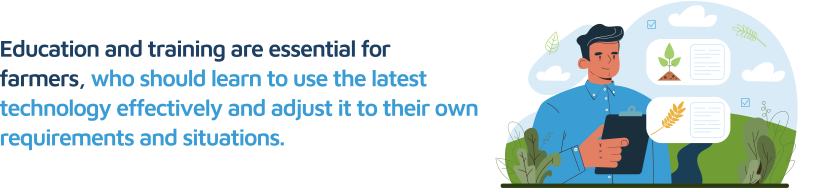
Let’s consider some of the technology that can help to tackle food insecurity:
- Crop monitoring systems (sensors, drones) can:
-
- Provide real-time data on soil conditions, plant health, pest infestations
- Assist with targeted interventions and minimize excessive fertilizer and pesticide use
-
- Better irrigation systems can help to improve water-use efficiency, allowing farmers to produce more with less water.
- Improved storage facilities can minimize post-harvest losses, which means that more fresh food will be available for people.
- Mobile tech allows farmers to evaluate market data, analyze weather forecasts, and learn more about crop management.
- Selectively bred or genetically modified seeds may boost harvests and provide protection against diseases and pests.
- Improved logistics can help transport food from rural regions to cities more effectively.
- Blockchain technology can improve transparency within the food supply chain, minimizing the risk of fraud and ensuring food safety.
Check out how Singapore grows food without farmland with the help of technology: