
Add us as your preferred source on Google to see more of our content in Search.
 Add to Preferred Sources
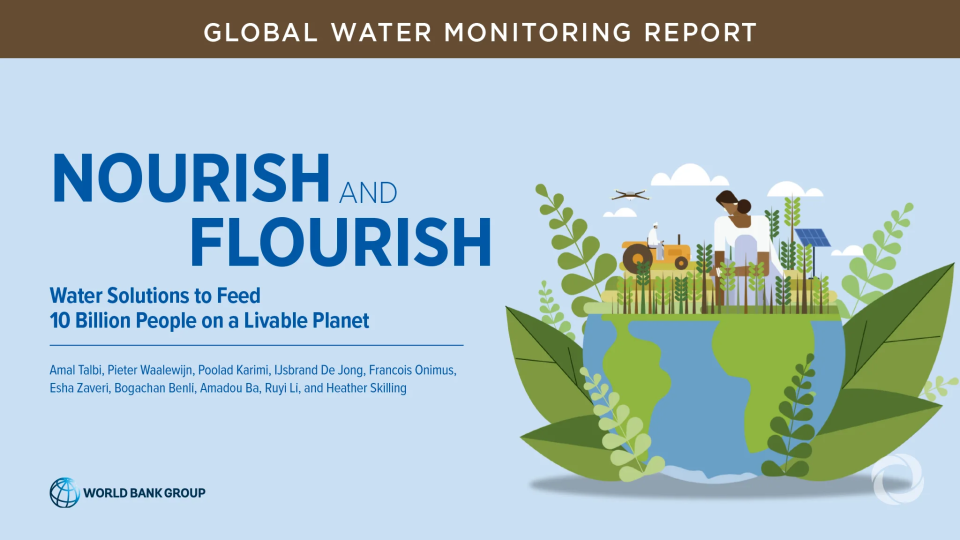
The World Bank Group launched a new report on March 19, 2026, warning that current agricultural water management practices can only sustainably support food production for less than half the global population. According to a press release by the World Bank Group, rebalancing water use across the global food system could generate 245 million long-term jobs, largely in Sub-Saharan Africa. The report, titled Nourish and Flourish: Water Solutions to Feed 10 Billion People on a Livable Planet, argues that smarter water management is key to meeting future food demand in a sustainable way.
By 2050, 10 billion people will need to be fed. The report identifies a dual problem: overuse of water in stressed regions depletes critical resources, while underuse in water-abundant regions leaves productive capacity untapped. Both patterns must be addressed to sustainably meet growing global food demand.
To guide this effort, the report introduces a new framework for agricultural water management that links water availability with food production and trade. The framework categorizes countries by water stress and food import or export status, helping identify where to expand rainfed agriculture, where irrigation investments can unlock jobs and growth, where water use must be rebalanced to protect ecosystems, and where trade offers a more sustainable path than local production. Expanding irrigation where water is available and modernizing existing systems is estimated to require an additional $24–70 billion per year through 2050.
Paschal Donohoe, Managing Director and Chief Knowledge Officer of the World Bank Group, stressed the broader stakes of the issue.
“The way we manage water for food will have profound implications for jobs, livelihoods, and economic growth. By making smarter choices about where crops are grown, how water is allocated, and how trade supports food security, we can strengthen resilience, expand opportunity, and safeguard the resources which we all rely on,” he said.
Guangzhe Chen, Vice President for Planet at the World Bank Group, added that linking global evidence with country realities can help policymakers navigate trade-offs and deliver food, jobs, and resilience together.
The World Bank Group has committed to doubling annual agribusiness financing to $9 billion by 2030 and mobilizing an additional $5 billion per year under the AgriConnect initiative to help smallholders move from subsistence to surplus. Governments currently spend roughly $490 billion annually on agricultural support, most of it on subsidies, and the report calls for redirecting a portion of that spending through regulatory reform, blended finance, and public-private partnerships.