

Add us as your preferred source on Google to see more of our content in Search.
 Add to Preferred Sources
Key reasons to read this article
- 2026 marks the end of the ‘temporary’ water crisis and the beginning of a permanent, structural collapse of our most vital resource.
- Millions of families worldwide are forced into the impossible daily decision of choosing whether to buy bread or a single gallon of water.
- In some of the world’s regions, people are already paying 20 times more for water as their wells run dry.
- The reality of children carrying jerrycans on their heads instead of schoolbags is already here in a race against time.
In 2026, the South African city of Gqeberha remains a cautionary tale of the new water normal. No longer an acute emergency, the water crisis is now a permanent state of managed decline. For aging livestock farmers like Thembani Johnson, the Day Zero warnings of the past have been replaced by a quiet, daily erosion of life, with their animals drinking from contaminated runoff because municipal taps remain dry for weeks.
Driven by drought and infrastructure failure, what was once an emergency has become routine.
The pattern is global. In Afghanistan’s Kabul, groundwater levels have dropped so sharply that many wells are defunct. Bibi Jan, a mother living in the city, is forced to choose between food and water, buying supplies from tanker trucks when household sources fail which is three to four days a week.
Across the world, different contexts reveal the same underlying imbalance.
“An era of global water bankruptcy”
In January 2026, a United Nations report declared that humanity has entered an era of global water bankruptcy, a term chosen deliberately because ‘crisis’ still implies a temporary state.
In finance, when spending outpaces earnings for too long, the debt does not reset; it leads to bankruptcy. Experts now apply the same logic to water. Scarcity is a structural condition where withdrawal has permanently outpaced renewable supply.
Hydrogeologist Scott Jasechko’s research found that 21 of the 37 largest aquifers on Earth are being depleted more quickly than they can recharge. Humans are draining in decades what took 20,000 years to accumulate. In California’s Central Valley, groundwater extraction can reach 55 billion liters a day, far exceeding the natural recharge level.
The consequences are already being lived. Today, 2.2 billion people lack safe drinking water, and about 4 billion, nearly half the world, experience severe water scarcity for at least one month each year.
How did we get here?
The UN report argues that water bankruptcy is not a matter of nature failing us, but a story of us failing to manage what nature provided.
Worldwide, agriculture accounts for roughly 70% of freshwater withdrawals, followed by industry with 20%, and domestic use with about 12%.
In India’s fourth-largest state, Uttar Pradesh, farmers like Sompal Pundir drill deeper every year, chasing a retreating water table. As the world’s largest groundwater user, India extracts an estimated 247 billion cubic meters annually. This is 25% of the global extraction or more than the United States and China combined.
The struggle is often a zero-sum game between communities and industries. In Chile’s Salar de Atacama, lithium and copper extraction consumes over 65% of local water, depleting the available water for indigenous farming communities in an already water-scarce region.
In Mexico’s San Cristóbal de las Casas, 43-year-old Gloria Alvarez must wake up before dawn and take a 30-minute bus ride just to access basic water for drinking and bathing. While her community struggles, a local bottling giant holds a permit to pump over 1.14 million liters daily from the Huitepec volcano basin. This relentless extraction has triggered a massive 122-meter-wide sinkhole, a literal collapse of the landscape.
The people already paying
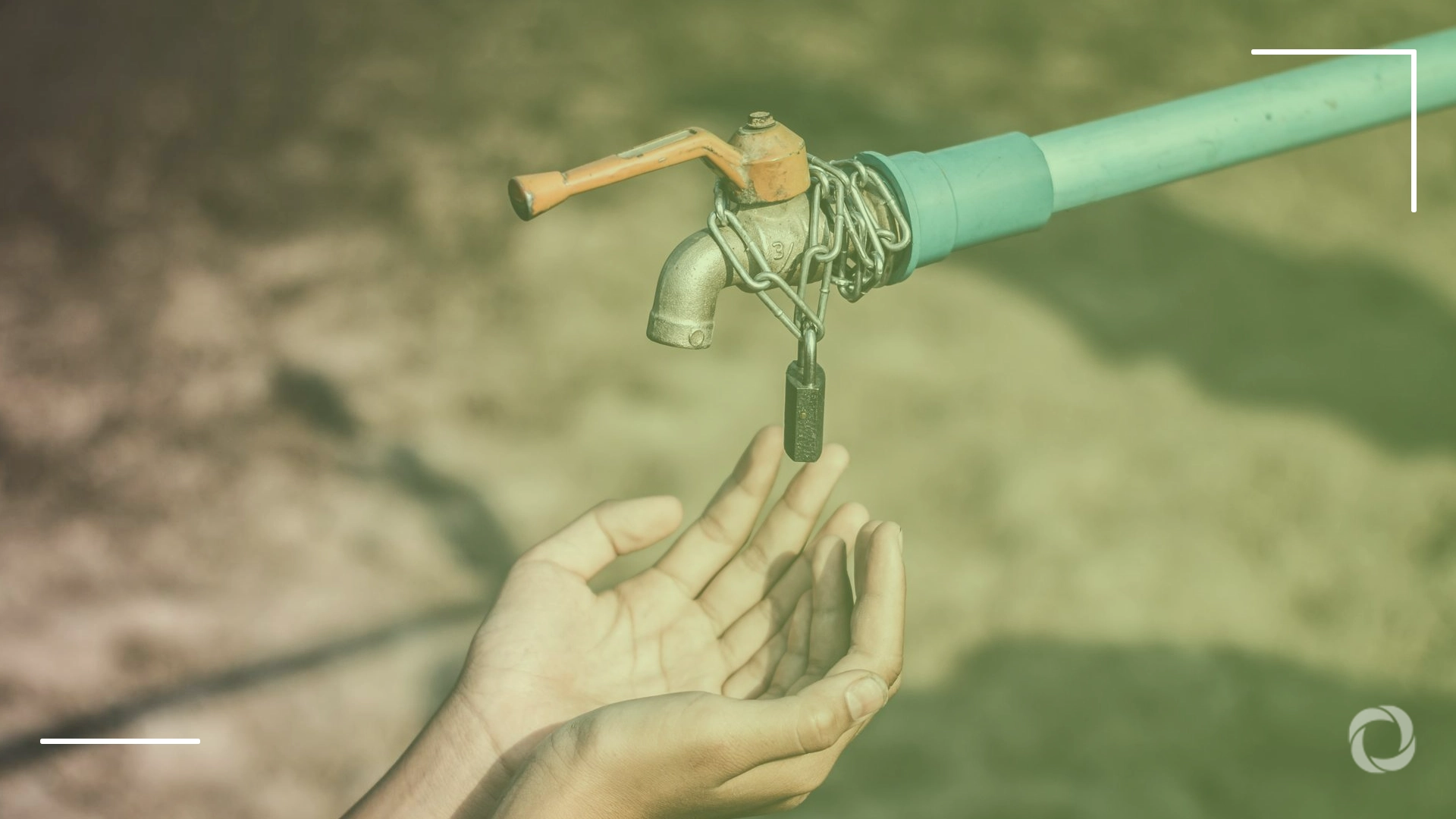
Water bankruptcy manifests as the small indignities of daily survival: the pre-dawn alarm to catch an hour of pipe pressure, or the girl carrying a jerrycan on her head instead of a school bag.
In March 2026, Oxfam reported that in the worst-affected areas of Somalia, the price of water had risen by more than 2,000%. A 20-litre jerrycan now costs US$1- 1.5, up from six cents a year ago. For families who have already lost their crops, their livestock, and their incomes, water has simply become unaffordable.
In Morocco, small-scale farmers are being out-drilled by large agricultural firms that sink wells 200 meters deep, pulling the water table below the reach of traditional boreholes. Without drought insurance, a luxury that only wealthy landowners can afford, these small farmers lose everything.
What recovery might look like
The UN report is emphatic about one point: bankruptcy is not the end of the story. Comparing water action to finance, Madani suggests we must “stop the bleeding” by protecting essential services, restructuring unsustainable use, and investing in rebuilding.
Cape Town provides a road map of what rapid response can achieve. Before its near-miss with Day Zero, the city halved daily water consumption through steep tariffs for heavy users, real-time dam monitoring, emergency infrastructure repairs, and a public awareness campaign so effective that it made water-saving a source of civic pride.
However, a true restructuring of water management requires “circular water economies”. This includes mandatory water audits for industry and a shift toward “regenerative agriculture” – farming techniques that restore soil health to hold moisture naturally, reducing the need for extraction.
According to Jeff Sparrow, water management requires confronting agriculture’s excessive consumption, renegotiating industrial water licenses in stressed regions, investing in desalination and water reuse technology, and halting the political tradition of allowing connected industries to take the water that communities need to survive.
The planet is not running out of water molecules. They still cycle through rain and cloud as they did for the dinosaurs. But we are running out of water where and when we need it. And we are running out of time to pretend the old normal will return.
The UN has confirmed the bankruptcy. The question now is whether we will act before the debt becomes entirely unmanageable or whether we will keep extending credit to industries and governments that have already drained the account, while the wells of the world’s poorest communities go dry one by one.