
Add us as your preferred source on Google to see more of our content in Search.
 Add to Preferred Sources
Key reasons to read this article:
- Follow the trail of the MV Hondius, a cruise ship represents a global warning of an ecological crisis that started on land.
- Learn why biodiversity is not just about saving animals or forests; it is about creating biological dead ends for viruses.
- Discover how a healthy forest acts as a filter that has quietly protected humans from deadly diseases for millennia.
- Explore how urban expansion is turning the insidious hantavirus from a remote wilderness threat into a suburban reality.
- Understand how international withdrawals from the WHO left the world “blind” just as a high-stakes outbreak began.
For most of human history, a functioning natural world has quietly managed the insidious hantavirus on humanity’s behalf. The complexity of intact ecosystems, predators, competing species, and biological checks has always broken the chain of transmission before it reached humans. This service was free. It was invisible. It is now ending.
The cruise ship MV Hondius left Ushuaia, Argentina, on April 1, carrying 147 passengers and crew who had no particular reason to think about any of this. Six weeks later, three are dead, five more are critically ill or in isolation, and the virus has seeded cases across four continents.
The cruise ship has become the most visible symptom of a crisis that began not at sea, but on land, decades earlier, in the slow dismantling of the ecosystems that once made outbreaks like this unlikely.
What is hantavirus?
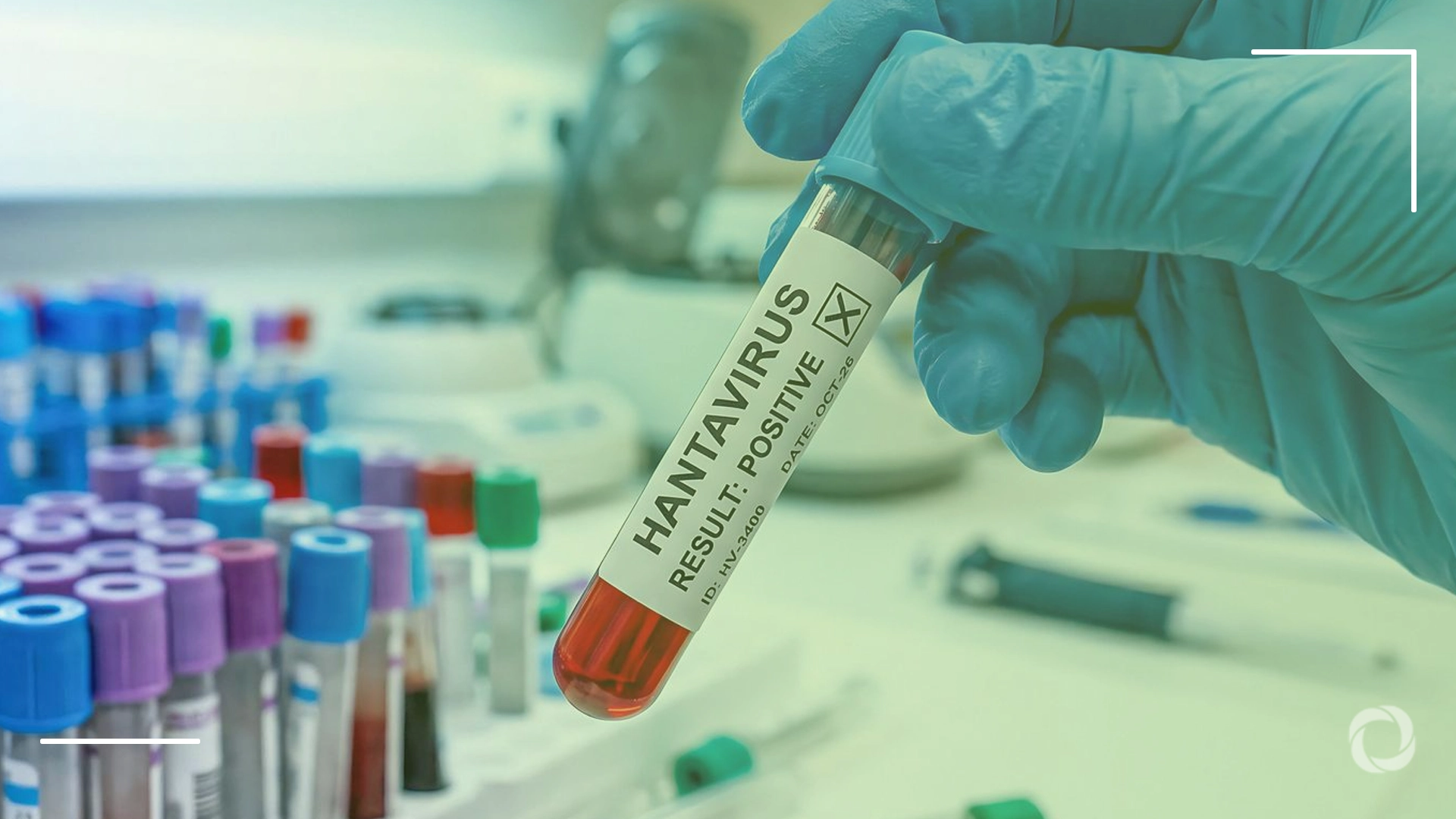
Hantavirus is a family of more than 38 known viral strains, each carried by specific types of rodents. It does not spread through bites. Instead, humans usually become infected by inhaling dust contaminated by infected rodent urine, droppings, or saliva.
While there are dozens of strains, they generally attack the human body in two terrifying ways:
Organ failure: In Europe and Asia, the virus attacks the kidneys and blood vessels, causing internal bleeding and organ stress. The Puumala strain, responsible for most European cases, kills fewer than 1% of those infected; the Hantaan strain in East Asia carries fatality rates of 5 to 15%.
Respiratory collapse: In the Americas, the Andes strain of the virus is even more aggressive. It causes the lungs to rapidly fill with fluid, leading to total respiratory failure, with the body shutting down within days. It was this strain that was confirmed aboard the MV Hondius. The World Health Organization (WHO) puts its case fatality rate at up to 50%. It holds one further distinction that makes the Hondius cluster so alarming. It is the only one of the 38 known strains capable of limited human-to-human transmission, previously documented only in family clusters in Argentina and Chile.
Currently, there is no licensed antiviral treatment and no approved vaccine. Doctors can only provide early supportive care, essentially trying to keep the patients’ heart, kidneys and lungs functioning in the hope that the body can fight the virus off on its own.
Argentina’s silent emergency
Before a single passenger boarded the Hondius, hantavirus was already running at a pace not seen in Argentina since 2018. The 2025–26 season recorded 101 confirmed cases nationally, nearly double the 57 of the equivalent period the previous year, alongside 32 deaths – one of the highest mortality rates in recent memory.
For years, hantavirus in Argentina was associated with Patagonia, a remote, sparsely populated, ecologically intact area. Now the crisis has shifted to Buenos Aires province, which leads the national case count with 42.
Argentina’s Health Ministry has confirmed what other studies have repeatedly proved: habitat destruction, rural residential expansion, and climate-driven shifts in endemic zones have “increased human interaction with wild environments”.
Nature’s invisible shield: How biodiversity protects us
To understand why the virus is spreading now, it helps to look at what has previously kept it in check.
Think of a healthy ecosystem as a natural filter. Ecologists call this the “dilution effect”, a concept developed by Richard Ostfeld at the Cary Institute of Ecosystem Studies and Felicia Keesing at Bard College.
In a wild, untouched forest, a hantavirus-carrying rodent is surrounded by dozens of other species: weasels, birds, foxes, owls, and competing small mammals that do not carry the virus. When the virus tries to spread, it constantly hits ‘dead ends’ because it encounters animals that cannot pass it on. Thus, the risk to humans is diluted because the virus is trapped in a space of immune neighbors.
When we destroy these habitats through logging, agricultural and urban extension, humans do not just lose trees, they break the filter. Predators like foxes and bobcats are usually the first to flee or die out when a forest is cleared. This leaves the creatures most dangerous to humans – generalist, opportunistic rodents, those that carry the virus – with no enemies, more mice and fewer ecological checks on disease transmission.
Controlled field experiments in Panama have provided strong supporting evidence of this. The geographic shift in Argentina’s case data maps directly onto this dynamic. The province of Buenos Aires is no longer a wilderness. It is a complex mosaic of farmland, informal settlements, urban neighborhoods, and peri-urban edges, where cleared spaces blend into an ever-expanding city. It is precisely the habitat, disturbed, simplified, rich in food waste, and poor in biodiversity, where reservoir rodents thrive without competition or predation.
Worst timing possible
The timing for such an escalation could not have been worse. In early 2026, just as the virus began to slip its traditional boundaries, Argentina, like the USA, formally withdrew from the WHO.
So, by the time the MV Hondius became a floating incubator, Argentina was operating outside the international network designed to track and coordinate such outbreaks. While local experts shared data voluntarily with the WHO, the political exit created a “blind spot” in global surveillance.
What the outbreak made visible
The MV Hondius was a symptom of actions made long before the ship set sail. It highlighted the downstream consequences of how we use land, plan our cities, and manage our environment.
Three decades of ecological field research have proven that the diversity of species sharing a landscape is not just a “nice-to-have”; it is a vital wall of protection for human health. When we dismantle that wall, we are left vulnerable to the organisms that carry disease.
The passengers aboard the MV Hondius were exposed to a virus that, in a healthier world, might never have reached them. Those conditions were not inevitable. They were made. This tragic story is a stark reminder that in a globalized world, biological threats do not recognize borders.
Deep understanding and solidarity are our best immunity. Without international cooperation and a commitment to protecting the natural world, the conditions of the next outbreak are likely to have already been written.