

Add us as your preferred source on Google to see more of our content in Search.
 Add to Preferred Sources
Key reasons to read this article:
- Discover the data directly linking sudden foreign aid cuts to a surge in violent clashes and preventable deaths.
- Learn why international aid is a structural floor that means picking up a gun remains economically irrational.
- Read how a single “stop-work” order in Washington instantly triggered a deadly chain reaction inside a Kenyan refugee camp.
- Explore research showing that how quickly donors leave a vulnerable region matters much more than how much money they actually take away.
- See why current Western donor budget cuts are creating dangerous new security vacuums.
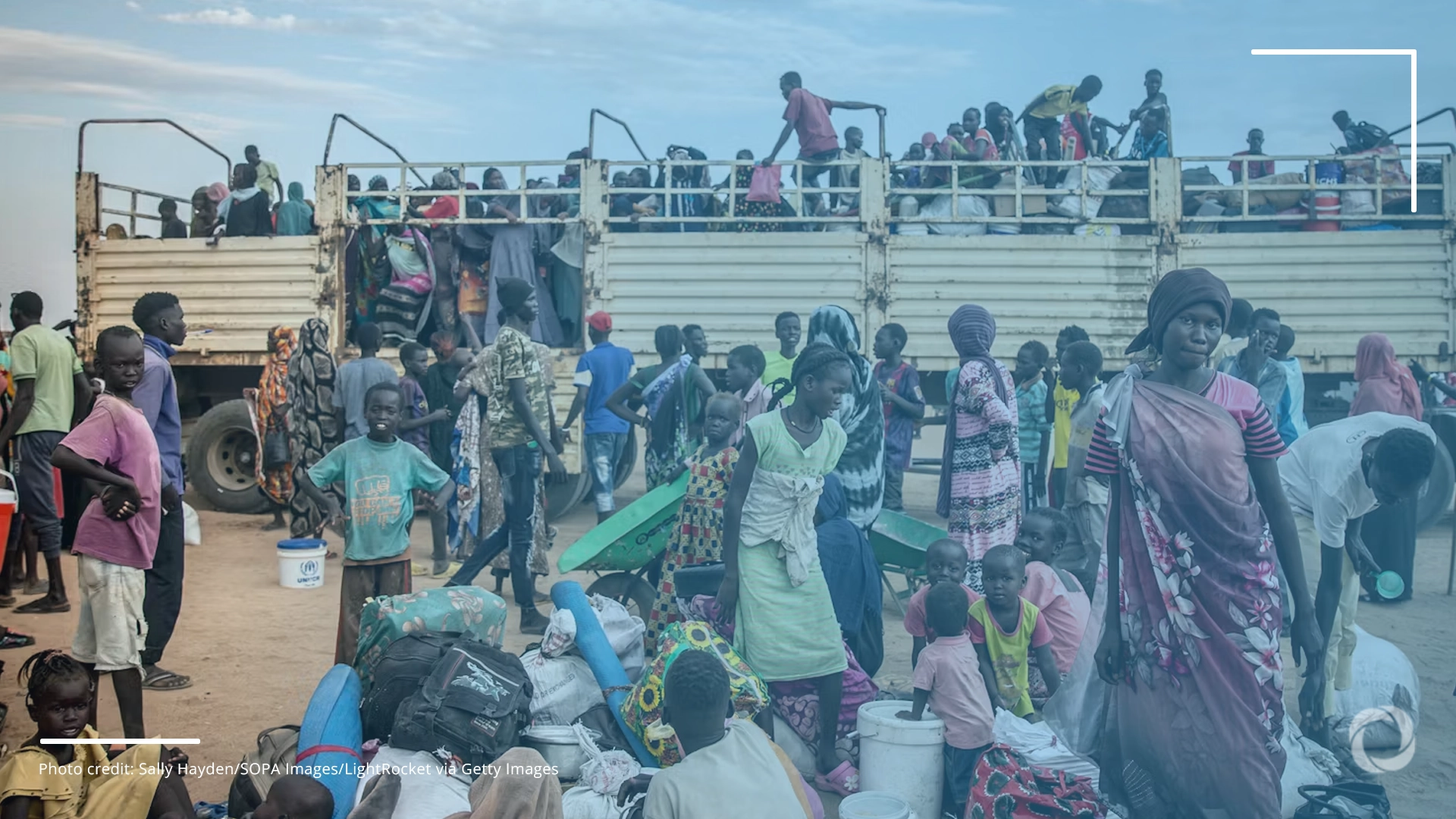
In July 2025, residents of the Kakuma Refugee Camp in northern Kenya took to the streets after the World Food Programme reduced food rations by 60% and suspended cash assistance entirely. The cuts followed an abrupt reduction in the United States’ foreign aid earlier that year, with no transition time for agencies or communities to adjust. By the end of the day, two protesters had died and more than a dozen others had been injured.
This unrest was not an isolated episode. A peer-reviewed study published in Science revealed that sudden aid cuts in Africa were associated with a 16.9% rise in fights, a 12.3% increase in clashes, a 9.3% upturn in mortality, and roughly 10% more riots than in similar regions with lower exposure to aid. The Center for Global Development estimates that around 1,000 deaths can be linked to the conflicts that followed.
When safety nets vanish
The 1994 UN Human Development Report defined human security not only as protection from violence but also from the chronic pressures of hunger, disease, and poverty and from sudden disruptions to daily life. The January 2025 stop-work order by the Donald Trump administration destabilized both simultaneously.
In fragile and conflict-affected contexts, aid does not function as an external supplement to the economy. It often operates as part of the system that sustains basic human security.
Across South Sudan, Somalia, and the Democratic Republic of the Congo, external assistance has historically financed 70% to 80% of healthcare, food systems, and humanitarian operations. When that money vanishes, a family does not just lose a monthly cash transfer, it loses the local clinic, food supplies, and any hope of a predictable income all at once. The pressure to survive rises steeply and peaceful options disappear.
Afghanistan illustrates this dynamic at scale. Before the Taliban regained control in 2021, international aid made up about 40% of Afghanistan’s GDP and covered over 75% of government expenditure. After donors abruptly withdrew much of this funding, the economy plummeted by around 27% in the next two years.
Yet the real story was not told by these national statistics but in the erosion of human security. Food insecurity deepened, health systems were severely disrupted, and households increasingly fell into debt or withdrew children from school to cope with the loss of income. These desperate choices show how easily the baseline for a stable, peaceful society can disintegrate.
The only paying job left
Why do people pick up a gun? Often it comes down to what researchers call the “outside option” – the set of livelihood alternatives that make it economically irrational to choose violence.
Austin Wright, a co-author of the Science study, argues that abrupt withdrawal “shuts down the local economy, obliterates wages, and destroys what we call the outside option“. In short, aid is not charity. It is a structural component of the local economy that quietly sustains the conditions under which peaceful choices remain viable.
When that component is suddenly removed, the consequences create a brutal domino effect. Procurement chains collapse. Local suppliers who depended on contracts with humanitarian agencies lose revenue overnight. Workers funded through aid programs lose their salaries. Informal markets built around the spending of aid workers and recipients change drastically. The effect radiates outwards, reaching households that have no direct relationship with the aid system at all.
This is precisely what makes a gradual withdrawal so different from an abrupt exit. Axel Dreher, co-author of the same study, argues that the destabilizing factor is not the withdrawal of aid itself, but the pace at which it occurs. Gradual reductions allow governments and communities time to find alternatives, diversify income sources, and maintain a minimum of economic continuity.
The USAID localization strategy, which aimed to direct 25% of funding to local organizations rather than external contractors, was built on precisely this logic. Systems become more resilient when operational capacity is in place locally before the donors leave.
The vicious cycle of poverty and war
For years, international bodies have treated poverty reduction (SDG 1) and peace-building (SDG 16) as separate goals. In reality, they are locked in a tight embrace: conflict deepens poverty, and poverty fuels conflict.
Across northern Nigeria, for example, researchers examining recruitment into Boko Haram found that unemployment, economic exclusion, and poor access to educational access were among the conditions that made recruitment easier. Ideology alone did not explain mobilization. Economic vulnerability mattered.
Given this reality, the projections underline the scale of the risk. The Institute for Security Studies estimates that aid reductions could push 5.7 million additional Africans into extreme poverty by the end of this year, rising to 19 million by 2030. In the Sahel, already responsible for nearly half of global terrorism deaths in 2023, shrinking development financing is also weakening the limited leverage that external actors have retained in the face of the expanding jihadist and mercenary networks across the region.
Critically, the study found that local governments with strong institutions managed to absorb the shock more effectively. But in fragile states, the very places most dependent on foreign aid, the cuts hit hardest, weakening already fragile local authorities and leaving a security vacuum.
A doctrine of responsible exit
What has emerged from these findings is a concept that is gaining traction in development policy circles: “responsible exit”, the principle that donors should transfer systems and financing responsibilities gradually, rather than terminate support abruptly.
The Organisation for Economic Co-operation and Development reinforces this, noting that aid often outweighs foreign direct investment and remittances in highly fragile contexts. In such settings, predictable engagement functions as an economic anchor.
There are precedents. During the 2010s, elements of donor-supported HIV programs, including parts of the President’s Emergency Plan for AIDS Relief support in middle-income countries, were phased out over several years while governments gradually assumed responsibility for financing them. Health policy researchers have found that a slower transition reduces service disruption and preserves institutional continuity more effectively than an abrupt withdrawal.
The wider issue is that the international system still lacks agreed standards as to how withdrawal should occur in fragile environments. As aid budgets tighten across Western capitals, the research findings suggest that exit strategies may matter just as much as entry strategies.
Kakuma was not just a protest. It was a signal of what happens when an infrastructure is removed without warning, a transition strategy, or a plan.