

Add us as your preferred source on Google to see more of our content in Search.
 Add to Preferred Sources
Key reasons to read this article:
- As aid funding shrinks, previously hidden refugee economies are stepping into the spotlight, revealing surprising systems of trade, entrepreneurship, and … survival.
- A refugee camp generating US$56 million a year challenges one of the most persistent assumptions about displacement.
- The most vulnerable economies might be stronger than we think but one overlooked factor could determine whether they survive or collapse.
- Behind every aid cut lies a bigger question: are refugee communities closer to self-reliance than the world realizes, or more fragile than they appear?
At a time when humanitarian budgets are contracting, and displacement continues to rise, a growing debate is emerging among development practitioners: can stronger refugee economies and the private sector help refugees to build resilience amid declining aid?
This question has become more urgent as the humanitarian system faces one of its deepest funding crises in decades. Between 2024 and 2025, global humanitarian funding contracted sharply, driven largely by the US, whose contribution fell from US$14 billion in 2024 to US$4 billion. By 2026, the UN Refugee Agency’s funding appeal had fallen to US$8.5 billion, down from over US$10 billion in recent years, with only 29% of that secured as of May. Meanwhile, food assistance programs across several refugee-hosting countries have been scaled back.
Yet aid cuts have also renewed attention to something that has long existed within refugee settlements: local economies.
The misreading of refugee economies
Refugee advocate Barbara Harrell-Bond challenged the assumption that refugees were helpless dependents of aid, arguing that humanitarian systems often overlooked their capacity to create livelihoods. Researcher Karen Jacobsen observed that although refugees were willing to pursue self-reliance, they were blocked by policy constraints that limited economic participation.
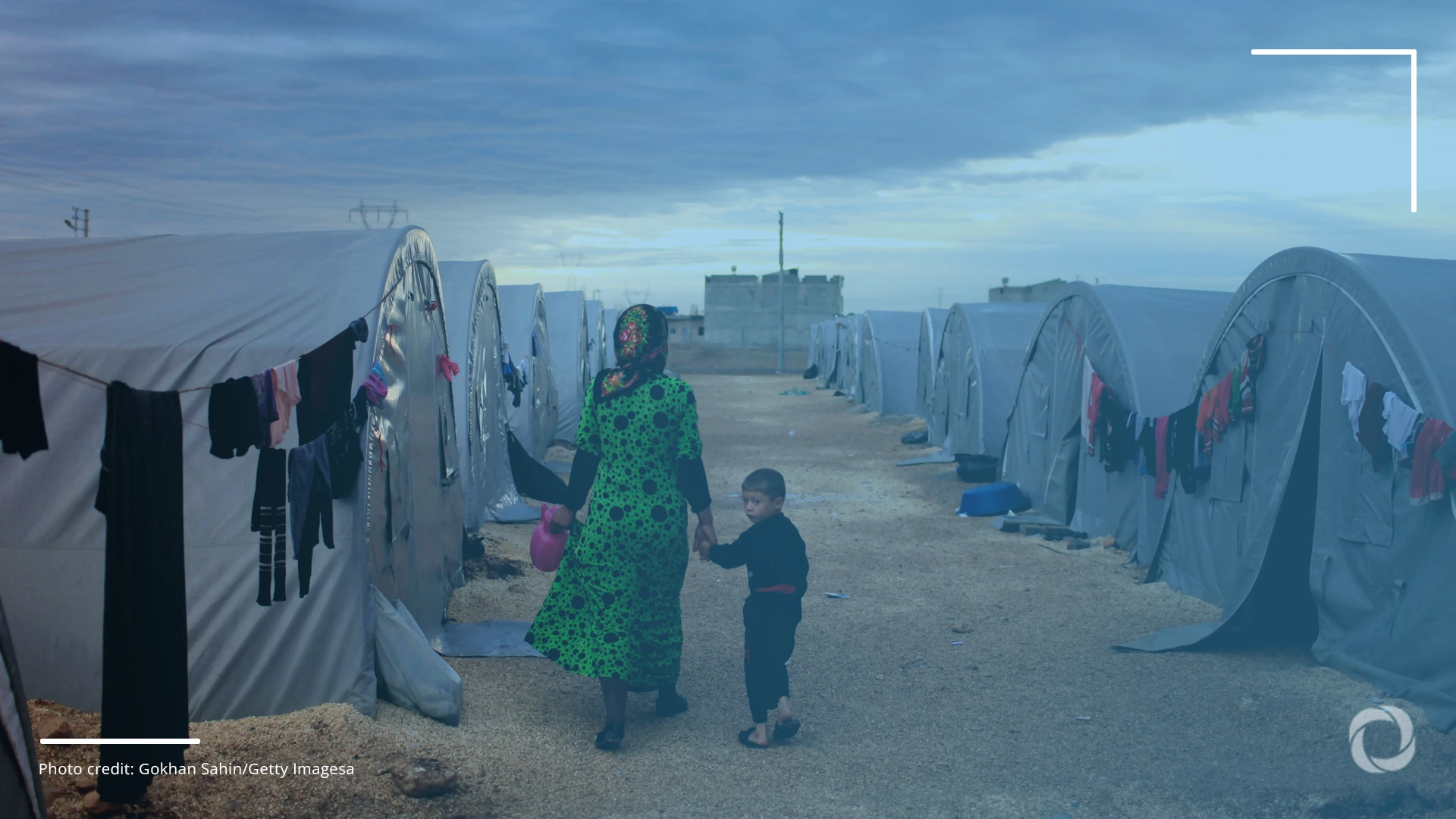
The evidence bears this out. In Kenya’s Kakuma Refugee Camp, researchers estimate the local economy to amount to approximately US$56 million annually, supported by 2,000 refugee-owned businesses.
At AidEx Nairobi 2026, the CEO of Village Enterprise explored this idea through the concept of a second Sazini Mojapeloeconomy: an informal and small-scale commercial activity operating alongside formal financial and corporate systems.
According to Mojapelo, the challenge is not creating markets from scratch; it is leveraging the main economy’s infrastructure to enable the second economy to grow and participate more fully in wider economic systems.
What effect does the withdrawal of aid have on aid-dependent refugee settlements?
This issue has gained traction partly because aid reductions have exposed the vulnerabilities of existing systems.
Research from Kakuma Camp illustrates both the potential and the limitations of refugee-led economies. A 2025 study by researchers from Oxford and Antwerp examined the effects of a 20% reduction in food assistance. Following the cuts, the proportion of households surviving on less than two meals a day rose from 42.5% to 50%.
The researchers also documented the collapse of informal credit networks that many households relied on. Shopkeepers had extended credit to customers for food and essential items, often using expected aid transfers as a form of collateral. When assistance declined, that collateral weakened, undermining the credit system that supported local commerce.
Rather than demonstrating independence from humanitarian assistance, the study suggests that many refugee economies remain intertwined with it. A 2024 World Bank paper reached a similar conclusion, finding that reductions in international support pushed refugee households deeper into poverty and reduced consumption levels. Aid reduction, without an alternative floor in place, increased instability rather than building autonomy.
Can the local refugee economy and the private sector build resilience?
Supporters argue that a stronger second economy and greater private investment could help refugee communities to build resilience beyond humanitarian assistance. The second economy is what refugees have built. The private sector is what arrives when businesses recognize the commercial value of the second economy.
Maike Striffler, founder of Relevant Ventures Uganda, an investment company that focuses on displacement-affected communities, argues that the private sector is more likely to engage refugee economies when they see a commercial opportunity rather than a charitable obligation.
Speaking at AidEx, she pointed to enterprises operating in Uganda’s Nakivale refugee settlement, where refugee-owned businesses continue to generate income and employment despite declining humanitarian funding.
She mentioned one poultry enterprise supported through her organization that generated US$150,000 in annual revenue and has developed a local supply chain that serves consumers both within and beyond the settlement.
She explained that such businesses strengthened local resilience by creating jobs, expanding access to services, and enabling money to continue to circulate within communities independently of any donor cycle.
But the perception of risk in fragile environments remains the primary obstacle between commercial potential and commercial investment, and this is precisely where development actors retain a vital role, according to Striffler.
She noted that guarantees, blended finance instruments, and technical assistance can absorb the initial risk, giving private investors sufficient confidence to step in. Once they have done so, commercial incentives drive the rest. She pointed out that financial institutions, including Opportunity Bank, had expanded into Nakivale not as a charitable exercise but because they identified customers, demand, and commercial potential.
In 2024, the International Finance Corporation and Equity Bank Kenya launched a US$20 million risk-sharing facility to expand lending to refugees and host communities, suggesting that de-risking mechanisms can help to attract private sector interest.
Mojapelo’s formulation captures the underlying logic: “Refugees do not want to be banked. They want to transact.”
The last obstacle
Yet significant barriers remain. Legal restrictions, documentation requirements, and movement controls can also limit business growth.
Research conducted in Kenya by the University of Oxford found refugee entrepreneurs often face higher operating costs and additional scrutiny compared to local businesses. In some cases, these constraints discourage expansion and formalization.
Mojapelo is direct: “Your ability to create local economic development in the second economy has a very strong government influence. You have to have the government put in the right legislation and the right systems and processes to enable the second economy to actually transact and start trading.”
The evidence from Kakuma, Nakivale, and other displacement-affected communities suggests that refugee economies are neither passive recipients of aid nor fully independent of it. They can generate businesses, jobs, and markets, but they also rely on the stability that humanitarian support provides.
As donors pull back, the question is no longer whether refugees can participate in local economies; many already do. The bigger test is whether governments, development institutions, and investors can create the conditions for those economies to grow before shrinking aid erodes the foundations on which they depend.