
Add us as your preferred source on Google to see more of our content in Search.
 Add to Preferred Sources
The United Nations Entity for Gender Equality and the Empowerment of Women (UN Women) has released an explainer outlining why water and sanitation must be treated as women’s rights issues, highlighting how the lack of access disproportionately affects the safety, agency, and time of women and girls worldwide, according to a press release. The organization notes that the United Nations General Assembly recognized the human right to safe drinking water in 2010 and safe and dignified sanitation as a distinct right in 2016. These rights are rooted in the 1966 International Covenant on Economic, Social and Cultural Rights. UN Women underscores that access to clean water and sanitation may determine whether a girl attends school, a pregnant woman delivers a healthy baby, or a family has enough to eat. The explainer argues that without gender-responsive policies, access to water will remain deeply unequal.
Sustainable Development Goal 6 calls for the availability and sustainable management of water and sanitation for all by 2030. However, UN Women warns that current SDG 6 measurement does not include gender-based benchmarks, reflecting a broader absence of gender perspectives across WASH policies. WASH stands for water, sanitation, and hygiene. The global water crisis is being intensified by climate change, environmental degradation, and growing demands from agriculture and industry. Achieving SDG 6 by 2030 will require USD 1 trillion in financing per year.
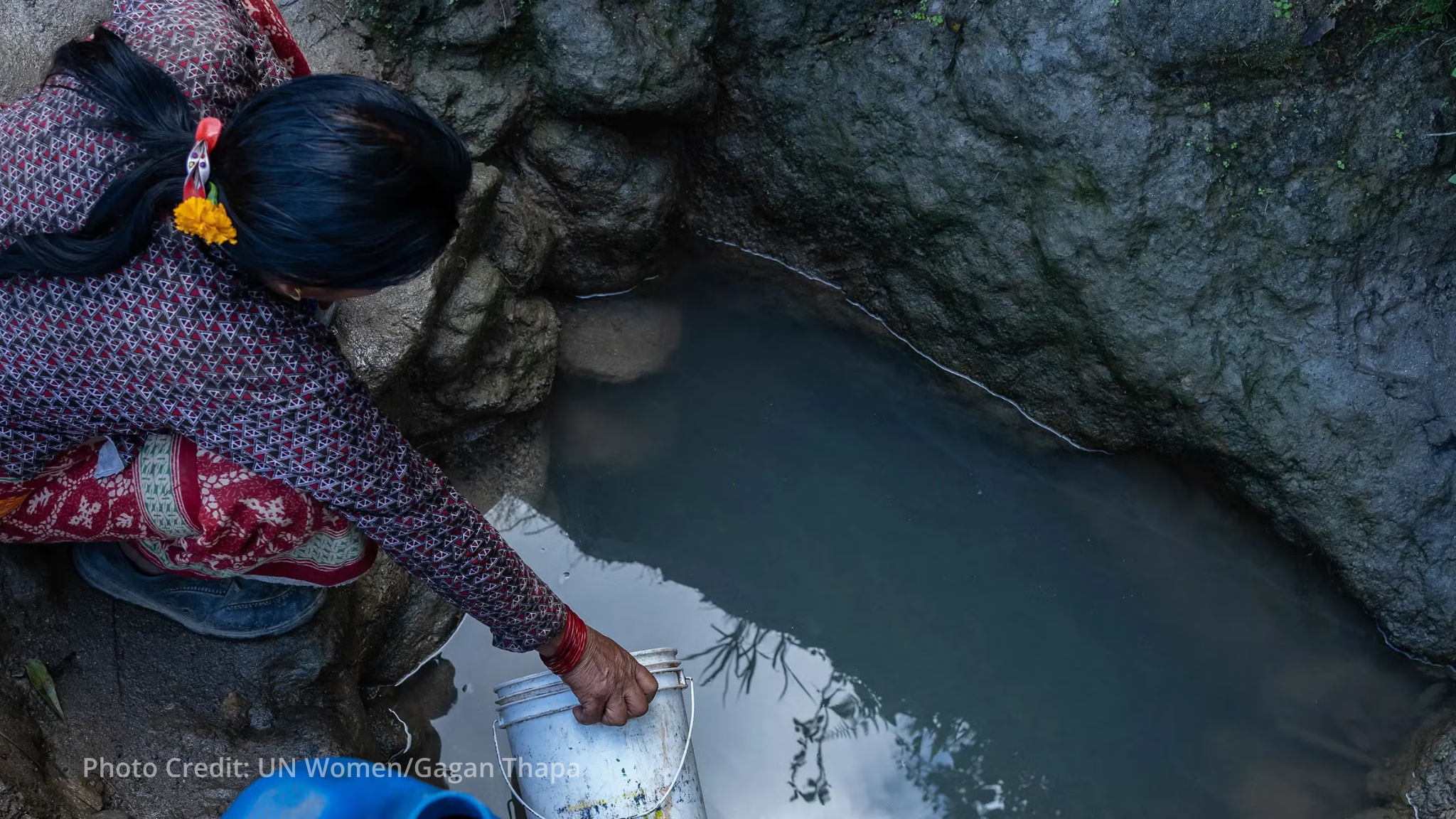
The burden of collecting water falls mostly on women and girls. In seven out of 10 households without running water, women and girls are responsible for collecting it, spending three times as much time on the task as men and boys, based on data from 53 countries. Around one million mothers and babies die each year because of unclean births, with those in low- and middle-income countries or conflict zones most at risk. Globally, 156 million girls aged 10–19 still lack access to basic hygiene services. Water-related disasters account for 70 per cent of disaster-related deaths.
UN Women highlights that water crises heighten risks of violence, child marriage, and displacement for women and girls. During the 2022–2023 drought in the Horn of Africa, intimate partner violence and rape reportedly increased by 20 per cent in Somalia, while child marriage in Ethiopia rose nearly fourfold. A study on drought in Zimbabwe, Mozambique, and Lesotho found a 46 per cent increase in sexual violence, with adolescent girls most at risk. According to the IPCC, already-scarce water supplies in Southern Africa are expected to decline 30 per cent by 2050. Despite carrying much of the responsibility for water management, women remain largely excluded from community water governance, planning, and leadership roles.
UN Women advocates for WASH policies that uphold women’s human rights, promote women’s leadership, and are built on disaggregated data and gender statistics. The organization calls for investment in water and sanitation infrastructure closer to or within homes to reduce women and girls’ time burdens while improving safety and privacy. It urges recognition and redistribution of unpaid care and domestic responsibilities, including water collection. UN Women also emphasizes the need to educate communities and reduce stigma, especially around menstruation and personal hygiene. Protecting water resources sustainably, the organization states, will ensure that the next generations inherit a world that is healthier, safer, and more equal.