
The methane paradox: Why are emissions still rising when the technology to stop them already exists?

Add us as your preferred source on Google to see more of our content in Search.
 Add to Preferred Sources
Key reasons to read this article
- A powerful climate solution is literally disappearing into thin air.
- Discover why fixing methane leaks could deliver climate benefits within years, not decades.
- Learn how billions of cubic meters of valuable natural gas are wasted every year while the world faces energy insecurity.
- Find out why affordable technologies already exist, but emissions remain high.
- See how satellites are exposing methane pollution in ways governments and companies can no longer ignore.
With the recent conflict in the Middle East disrupting global energy markets and sending gas prices soaring, a striking contradiction is unfolding across the world’s oil fields and landfills. At a time when countries are searching for reliable energy supplies, enormous quantities of usable natural gas are still being allowed to escape into the atmosphere.
New data from the International Energy Agency reveals that despite hundreds of climate pledges, methane emissions from fossil fuel operations remained extremely high in 2025. If companies deployed the readily available, low-cost technologies to detect and repair leaks in their infrastructure, they could capture an estimated 200 billion cubic meters of natural gas annually, nearly twice the amount that Qatar exports to global markets.
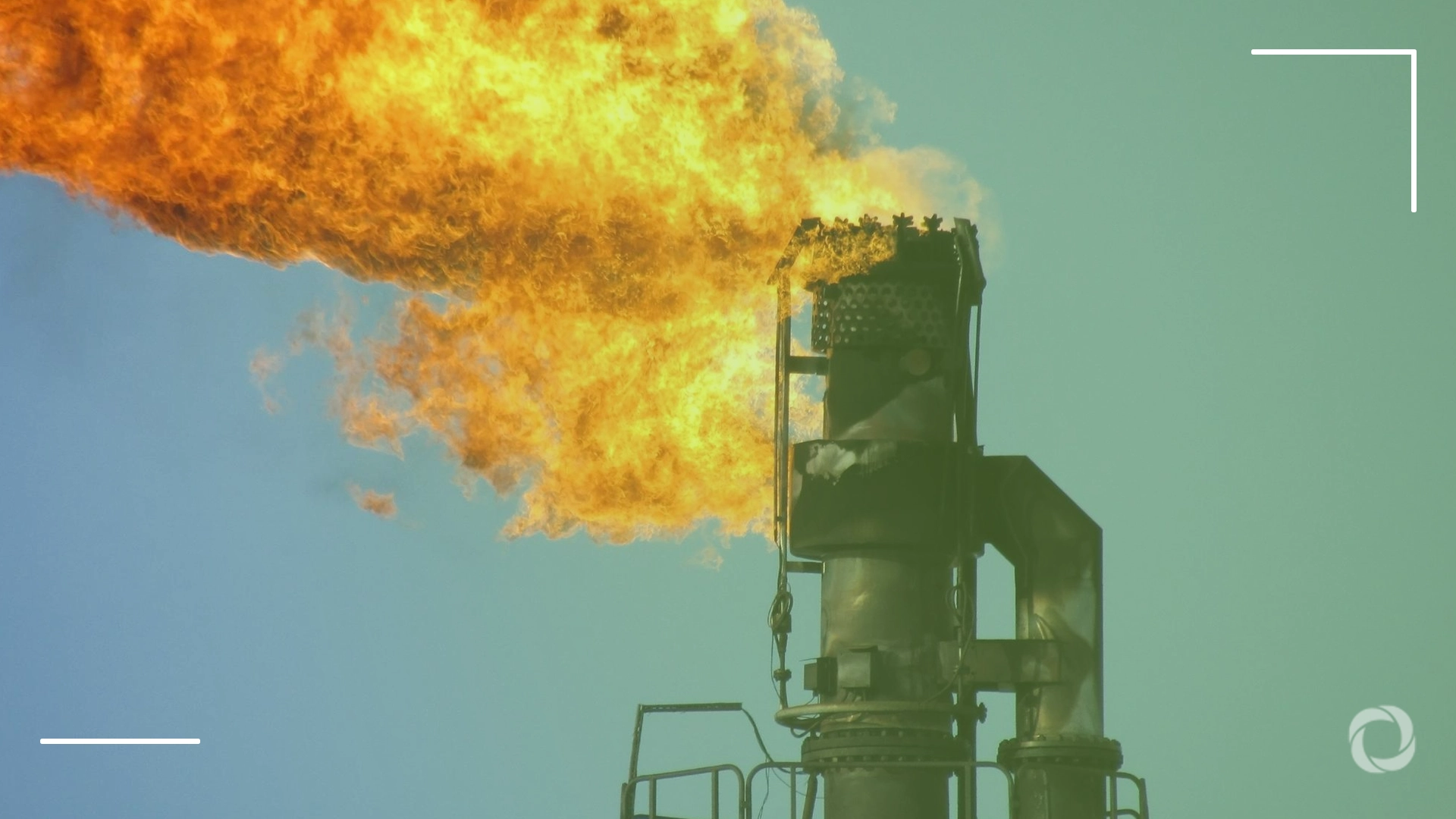
Instead, this potent greenhouse gas is being vented, flared or leaked into the atmosphere, contributing massively to global warming, while simultaneously wasting a valuable energy source.
Why does it matter?
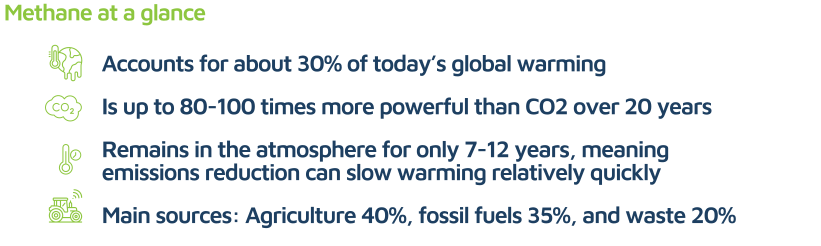
Methane makes up only a tiny fraction of the atmosphere, approximately 1,940 parts per billion, or 0.00019%. This means that if the atmosphere was represented by a stadium containing one million people, only about two would symbolize methane molecules. Yet this gas exerts a huge influence on the Earth’s climate, being responsible for roughly 30% of the warming the world is experiencing today.
While methane occupies minimal space, its warming impact is substantial as it is significantly more effective at trapping heat than carbon dioxide. It can be roughly 28 times more powerful over a 100-year period and 80–100 times more powerful over 20 years.
Carbon dioxide largely determines the long-term level of planetary warming, while methane strongly influences the speed of global temperature rise in the near term. As methane remains in the atmosphere for only 7–12 years, cutting emissions today would produce measurable climate benefits within decades rather than centuries.
However, reducing the levels of methane does not negate the need to also cut carbon dioxide emissions. The UN Environment Programme argues that methane abatement and intensive decarbonization must “go hand in hand” if the world is to keep the Paris Agreement’s 1.5°C temperature goal within reach.
Where is it coming from?
Methane emissions primarily come from agriculture, fossil fuels, and waste management.
✔️ Agricultural activities are the largest source of human-caused methane emissions globally, accounting for 40% of the total. Livestock is the dominant contributor, producing methane through enteric fermentation during digestion. Livestock manure storage systems also release significant quantities of the gas through the decomposition of organic matter. Rice cultivation is another major source, as waterlogged fields create oxygen-poor conditions that favor methane-producing microbes.
✔️ Oil, gas, and coal operations contribute about 35% of all human-caused methane emissions. In 2025, this sector emitted around 124 million tons of CH₄, particularly due to leaks from numerous wells, pipes, and valves that are not detectable without specialized sensors.
Biomass and coal usage for cooking further contribute to methane emissions, with around 2.3 billion people still reliant on polluting fuels and technologies to cook.
✔️ The waste sector is another source of methane, causing about 20% of the total human-caused methane emissions. Every discarded banana peel, plate of leftover rice, vegetable stem, and scrap of food buried in landfill begins to decompose. Deprived of oxygen beneath mountains of waste, this organic matter produces methane. In rapidly growing cities, these sites function like giant biological reactors operating 24 hours a day.
We know how to fix it
Unlike many climate challenges that require new innovations or breakthrough technologies, many of the tools needed to reduce methane emissions already exist.
✔️ Biogas digesters can lower methane emissions while also providing an alternative cooking fuel derived from animal manure and food waste. The adoption of this technology minimizes indoor and ambient air pollution and also offers economic incentives.
✔️ Livestock feed additives can be improved. For example, in Australia, trials involving the seaweed additive Asparagopsis have demonstrated its potential to reduce methane produced during digestion by almost 80%. Farmers simply mix small quantities into animal feed to reduce the amount of methane released through belching without productivity being affected.
✔️ At the Jardim Gramacho Landfill near Rio de Janeiro, methane produced by decomposing waste has been captured and converted into electricity instead of being released into the atmosphere. Engineers have installed a network of vertical wells and underground pipes throughout the site which collect the methane and transport it to a central facility where it can be processed and used in several ways. The easiest option is to burn the gas in generators to produce electricity.
✔️ In the oil fields, operators increasingly use infrared cameras and drone-mounted sensors to identify methane leaks that cannot be seen with the naked eye. Thermal imaging cameras can detect these emissions within minutes. In many cases, repairs involve replacing a faulty component, which costs far less than the value of the gas being lost.
Why aren’t we fixing it?
If methane can be captured with readily available technology, why does so much of it still escape?
The answer is largely economic and political. For many oil and gas companies, repairing leaks is considered to be more expensive than allowing the gas escape or flaring it, especially when gas prices are low. In Texas, for instance, a recent satellite survey identified thousands of methane plumes that could be prevented with routine maintenance. Yet many remain unrepaired because of the cost and labor involved.
Weak regulation compounds the problem. Until recently, many countries relied on companies to self-report methane emissions, leading to substantial underestimates. Outdated measurement methods and limited enforcement mechanisms mean that ambitious climate pledges often fail to translate into actual emission reductions.
The contrast between Norway and Turkmenistan illustrates what regulation can achieve. Both are major oil and gas producers, but Norway has enforced strict regulations on flaring and methane leakage, resulting in one of the world’s lowest methane-intensity oil and gas sectors. Turkmenistan, on the other hand, has been repeatedly identified by satellites as being one of the world’s largest methane super-emitters, with leaking pipelines, malfunctioning equipment, unlit flares, and poorly maintained infrastructure releasing vast quantities of methane into the atmosphere.
Capturing methane from landfills poses different challenges. Building gas recovery systems requires coordination between waste managers, power utilities, and regulators, but many cities remain focused on waste collection rather than investing in energy recovery.
In recent years, however, there has been a shift toward enforcing methane limits, with Canada and the EU mandating the monitoring and reporting of leaks. In addition, over 40 major companies have joined initiatives such as the Oil & Gas Methane Partnership 2.0, while pressure from civil society organizations such as EDF and the Global Methane Alliance has increased accountability. The advent of satellite technology has diminished the industry’s ability to claim ignorance about the locations of leaks, prompting a more urgent response to methane management.
Why is this story now becoming urgent?
Until recently, much of the world’s methane pollution was invisible. That has changed. A new generation of satellites, including MethaneSAT and Carbon Mapper’s Tanager-1 satellite, can pinpoint leaks from oil fields, coal mines, and landfills with unprecedented precision, revealing emissions far higher than official estimates.
This transparency is making it more difficult for governments and companies to look away. The EU is creating a Methane Transparency Database, while tougher reporting rules in North America and Europe are increasing pressure to fix leaks rather than ignore them.
Cutting methane is pragmatic climate action. It buys us breathing space: every fraction of warming avoided today makes it easier to stay within future temperature limits.