
Add us as your preferred source on Google to see more of our content in Search.
 Add to Preferred Sources
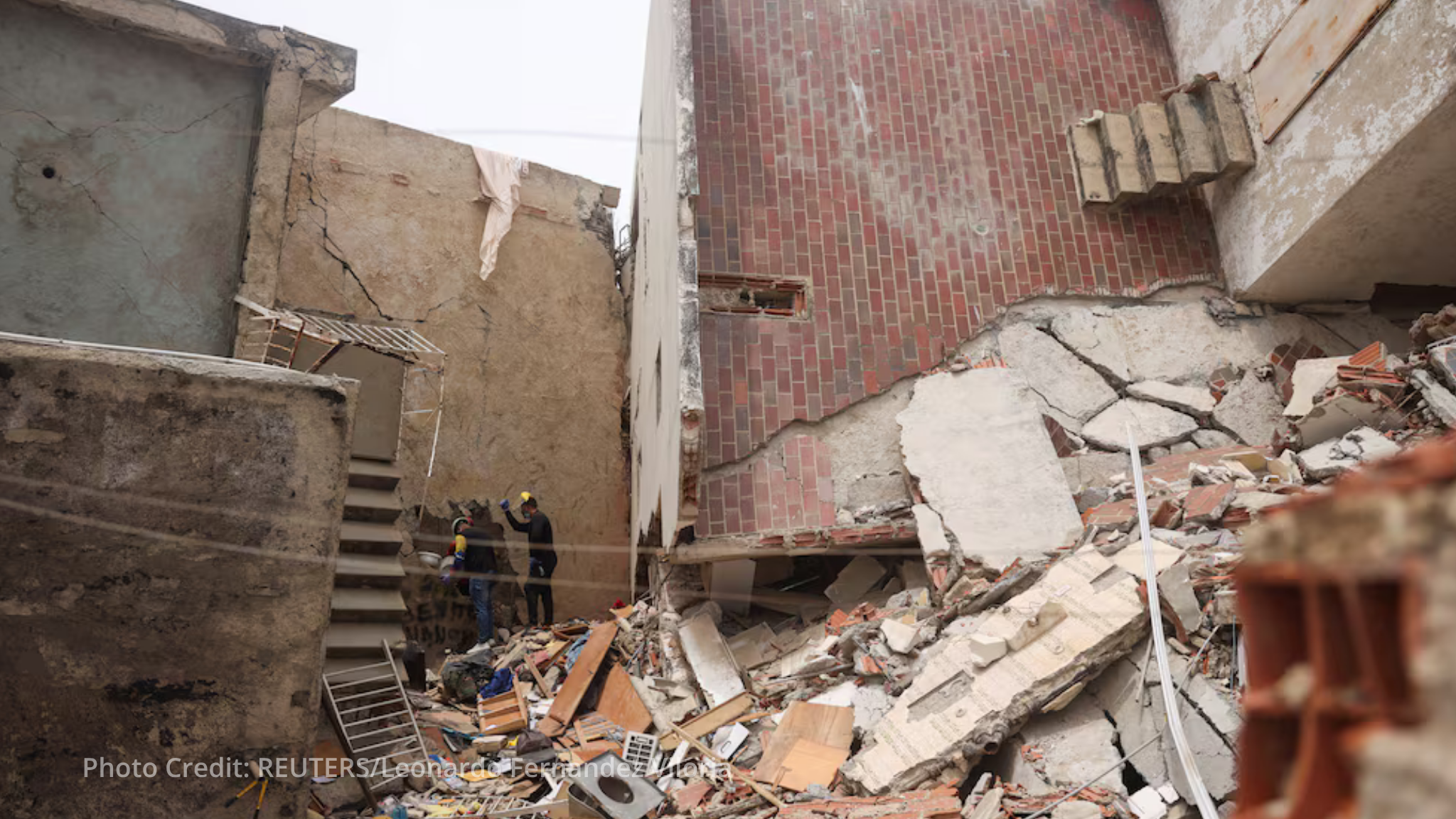
The United Nations (UN) and its partners are expanding humanitarian assistance for people affected by the earthquakes in Venezuela, working alongside the Government’s response, as a new UN estimate puts direct physical damage at $37 billion, according to UN News. Two earthquakes of magnitudes 7.2 and 7.5 struck the north-central region of Venezuela on 24 June, just 39 seconds apart. The Government reported that the death toll stood at more than 3,340 people, with over 16,740 injured and around 17,000 left homeless. UN Spokesperson Stéphane Dujarric confirmed the scale-up during a briefing to reporters in New York on Monday. The updated damage assessment underscores the magnitude of the disaster and the pressing need for coordinated international support.
A first assessment by the UN Office for Disaster Risk Reduction (UNDRR) estimates direct physical damage to housing and infrastructure at some $37 billion. That figure includes around $24 billion in damage to buildings — homes, businesses, schools, hospitals and public facilities — and another $13 billion in infrastructure. Within that latter category, telecommunications sustained the heaviest losses, at around $5 billion, followed by energy generation and roads. The estimate is based on risk modelling rather than on-the-ground inspections. It does not account for losses from disrupted services and economic activity, emergency response costs, supply chain effects or reconstruction, meaning the total economic impact could rise.
Children among hardest hit
The UN Children’s Fund (UNICEF) has warned that children are among those worst affected by the disaster. The agency estimates that 650,000 people — including 234,000 children — will need humanitarian assistance. Around a third of schools in the Capital District, which includes Caracas, were damaged, disrupting access to education for thousands of pupils. UNICEF has deployed emergency teams and sent 68 tonnes of supplies, including medical materials, water and sanitation equipment, and essential household items. The agency has appealed for $52 million to expand its response and secure health care, nutrition, safe water, child protection and education for affected families.
Teams on the ground
On the ground, search and rescue teams remain deployed in the affected areas, according to the UN Office for the Coordination of Humanitarian Affairs (OCHA). Specialized teams — from medical staff to engineers — continue to arrive, while a separate humanitarian needs assessment nears completion and will inform an updated response plan and resource request. Authorities in Caracas are leading the response, Mr. Dujarric said, “focusing on supporting displaced people and addressing urgent humanitarian needs.” At least 79 transitional camps have opened in stadiums and sports centres, hosting displaced residents and providing aid. UN agencies are already delivering services in three of the camps and are assessing additional sites for support.
Services and funding
Health partners are providing primary health care, mental health and psychosocial support, and sexual and reproductive health services where needed. Access to safe water and sanitation in the camps continues to improve, humanitarian officials said, with hygiene kit distributions and expanded sanitation infrastructure ongoing at temporary accommodation sites. The Humanitarian Response Plan for Venezuela has so far received $274 million, alongside more than $32 million from private sector donors and additional in-kind contributions of goods and services. UN agencies continue to coordinate with national authorities to reach affected communities. The response remains focused on meeting urgent needs across health, shelter, water and sanitation, and logistics.