


Add us as your preferred source on Google to see more of our content in Search.
 Add to Preferred Sources
Europe is facing recurring heatwaves, with the current event being unusual for its timing and severity. The extreme heat that began on June 20 is unprecedented with temperatures rising to almost 40°C in some European countries and France’s western regions experiencing extreme temperatures of between 39°C and 43°C, the highest in history. According to climate experts, the heatwaves are caused by a natural weather pattern called a heat dome, a high-pressure system that absorbs extreme heat which remains static for days.
Heatwaves are the most lethal form of extreme weather pattern worldwide, causing thousands of heat-related deaths annually, according to a World Weather Attribution (WWA) study. Energy and civilian infrastructures such as hospitals, schools, and transport are also severely impacted by extreme heat, as are vulnerable people such as the elderly, children, and those with pre-existing conditions.
Scientists claim that in Europe, the hottest period of the year usually occurs in mid-to late July, but recent data shows the continent is now experiencing intense heat from early June. In terms of severity, the current heatwave has exceeded normal temperature records by a significant amount.
In this Development Aid article, we explore the heat dome phenomenon and highlight the European nations most impacted.
An historical overview of heatwaves in Europe
Between 1950 and 1999, Europe experienced five extreme heatwaves, according to WWA research. However, in the two decades between 2000 and 2021, there were about 18 of these. Adding the extreme events to the severe heatwaves of 2022, 2023, and 2025, there have been more than 20 heatwaves in just 25 years. Europe is therefore among the most rapidly warming continents, with temperatures increasing by over 0.56°C per decade since the mid-1990s.
In terms of fatalities, the 2003 European heatwave was the most catastrophic since 1950, causing almost 70,000 deaths.
What is a heat dome and what causes it?
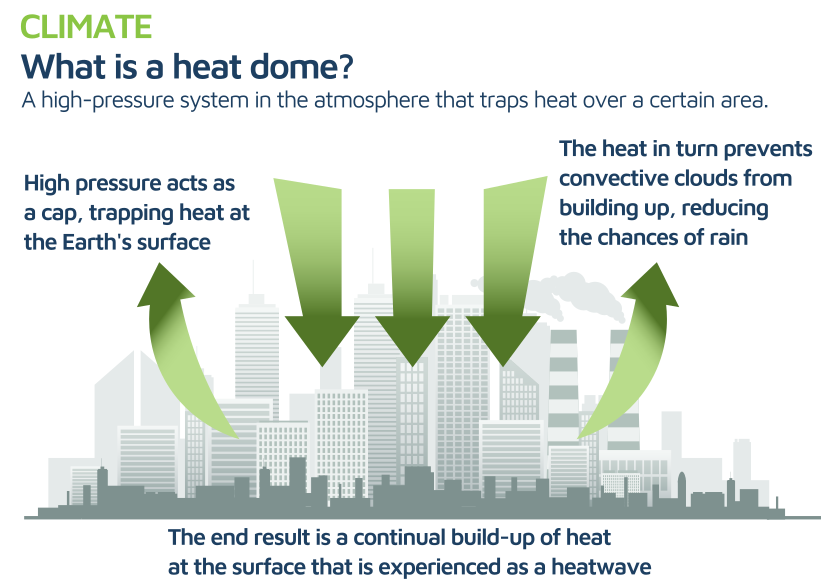
According to ClimateCheck, heat domes are dangerous high-pressure weather systems that push warm air to the surface where it remains for a long period of time. Mireia Ginesta, a researcher at the Climate Litigation Lab of Smith School of Enterprise and the Environment, defines heat domes as “static high-pressure weather systems that trap hot air and humidity for days.”
The dome is created when high-pressure remains over the same region for days, trapping warm air beneath it, akin to putting a lid on a boiling pot. The rapid surge in heat levels is due to the compression of warm air within a smaller space and the resulting extreme temperatures lead to the warming of the ground and the evaporation of moisture, according to the Royal Meteorological Society.
Does climate change cause heatwaves?
A heatwave is a period of temperature that is extreme compared to the average levels recorded in a certain region at a specific time of the year. While not necessarily the main cause of heatwaves, climate change does facilitate favorable conditions for the recurrence of heatwaves in regions such as Europe. The continued burning of fossil fuels increases the emission of greenhouse gases (GHGs) that trap heat in the atmosphere, which then alter large-scale meteorological patterns, which mostly move from East to West.
“The changes to climate systems enable the formation of slow-moving high-pressure systems, which fuel the unusual occurrence of heat domes that cause heatwaves,” explained Gordon McBean, Professor Emeritus at Western University.
Richard Allan, a climate science Professor at the University of Reading in the UK, states that GHG emissions impede Earth’s capacity to lose heat into the atmosphere, thus fueling the severity of heatwaves and leading impacts such as a shortage of water causing drought as well as heavy rainfall and flooding.
He commented:
“It is obvious that heatwaves will surge as the increasing GHGs impede the planet’s ability to lose heat to space. The greater thirst of water by the warmer atmosphere means frequent drought, intense rainfall and subsequent flooding. The weather events occur since excess water obtained from the soil and oceans is directed into storms that are often caused by summer heat”.
A recent WWA study confirms that due to climate change, there is now a 20% likelihood of Europe experiencing heatwaves every June. However, if it were not for global warming, the chance of these occurring would be just 2%.
The main European countries impacted by the 2026 heatwave
France
At the epicenter of the heatwave, France has endured high temperatures since the onset of the latest unprecedented weather event. The temperature surged to nearly 43.8°C in some cities, and reached 40.3°C in Paris, according to CNN. The severe heatwave has caused approximately 1,000 deaths, according to France’s public health department.
Spain
This summer’s first heatwave has led to five provinces out of 50 being put on red alert and maximum temperatures reaching 42°C. Since mid-June, more than 327 deaths attributed to high temperatures have occurred throughout Spain. According to the country’s meteorological department, the warm Saharan air in combination with high sunshine levels mean that temperatures could rise to 44°C in July.
The United Kingdom of Great Britain and Northern Ireland
The current heatwave has broken the all-time record for temperatures in June in the UK, with the average temperature having been exceeded on three consecutive days and a temperature of 37.3°C recorded in Suffolk and Norfolk. According to the UK’s MET department, temperatures reached 38°C in England and Wales, leading to concerns that further historic records would be broken this summer.
Italy
With temperatures soaring close to 40°C in several parts of the country, Italy is experiencing an intense heatwave which is causing disruptions to healthcare and transport systems and increasing emergency hospital admissions as well as heat-related deaths and power outages due to the increased use of air-conditioners.
Switzerland
According to the World Meteorological Organization, Switzerland recorded a temperature close to 38°C in the city of Basel in June with MeteoSwiss noting that temperatures surged to almost 37°C in many regions of the country leading to level four heatwave red alerts being issued for certain cities including Geneva and Central Valais.
Germany
The country has recorded temperatures of up to 40°C during the 2026 heatwave. According to its weather service department, a temperature of 41.7°C in Coschen, on the Polish border, surpassed the record of 41.5°C set in Drewitz. The effects have been devastating, with outbreaks of forest fire outbreaks and the use of water cannons to cool the country down.
Wrap up
The growing number of heat domes, partially triggered by climate change, is fueling the recurrence of heatwaves in Europe, leading to heat-related deaths, wildfires and droughts, and disruptions to energy infrastructure and public health. To reduce the recurrence of heatwaves, Europe should prioritize sustainable climate initiatives such as urban greening and renewable energy.