

Add us as your preferred source on Google to see more of our content in Search.
 Add to Preferred Sources
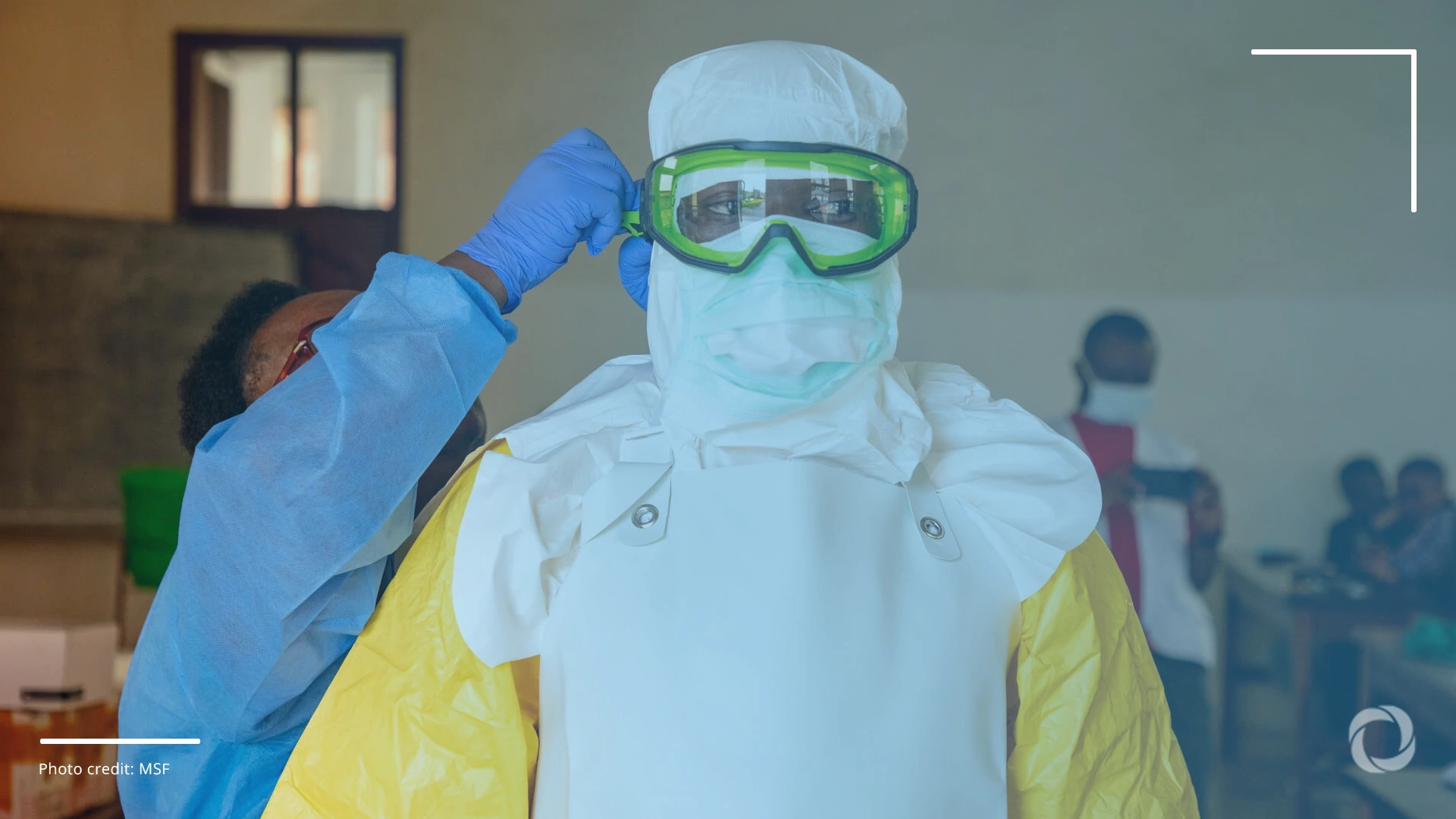
The infamous Ebola virus has once again returned to the conflict-stricken Democratic Republic of Congo’s eastern provinces of Ituri, North and South Kivu.
The outbreak in these regions, where healthcare systems are in disarray, was declared a public health emergency in May 2026. Out of 1708 confirmed cases as of July 6, 580 people have died, demonstrating the lethal nature of the disease.
The Bundibugyo virus – a distinct species of Ebola virus – is transmitted via direct contact with infected body fluids and requires immediate detection and containment. The potential of the virus to spread to the neighboring sub-Saharan region is growing due to cross-country interactions and movements.
Despite the cuts to aid by the U.S. and other donors in the developing world, NGOs and humanitarian organizations are striving to reduce the impact of the recurring Ebola outbreak in the DRC and neighboring nations. This DevelopmentAid article explores the main contributions of non-governmental and aid organizations as well as other stakeholders fighting Ebola in the DRC.
A retrospective look at Ebola
The Ebola virus first emerged in 1976 with an outbreak in Northern Zaire, now known as DR Congo. Since then, the virus has periodically returned due to it being carried by an undiagnosed animal which then infects a significant number of people. The Ebola virus is fatal, with approximately 25-90% of cases resulting in death if no medical intervention is carried out.
The World Health Organization (WHO) and other organizations working in the health sector are taking action by introducing guidance and training on patient care for Ebola cases. The Optimized supportive care mandates the approaches to medication administration, pain management, and nutrition as well as strategies to improve the survival rate of patients with Ebola. The WHO also recommends the treatment of Ebola with mAb114 or REGN-EB3-all antibodies.
Limited funding is impeding the development of an Ebola vaccine and aid efforts
Ervebo & Zabdeno, and Mvabea vaccines are the most recommended and in a confirmed Ebola virus outbreak, Ervebo is the most effective. In spite of the progress made in vaccine development and containment, some interventions have stalled due to a lack of funding and reduced international demand. In an interview with ABC media, Dr Amadou Bocoum, CARE DRC Country Director, explained that the cuts to aid by the U.S. and other donors have caused a shortage of medical supplies and other equipment. As a result, the ability of humanitarian organizations and other stakeholders to reduce the spread of the Ebola virus is being impeded.
He commented:
“U.S. and other donors’ withdrawal of health assistance in conflict-stricken DR Congo made CARE lose over US$8.6 million and caused layoffs. Thus, the low funding levels are causing shortages in medical supplies, PPE, and Ebola virus testing kits.”
What is Ebola?
According to the Centers for Disease Control and Prevention, Ebola is part of a group of viruses called Orthoebolaviruses that cause fatal illness. The WHO states that the virus is transmitted from wild animals such as fruit bats to people and then spreads via direct contact with the bodily fluids of infected people, or contaminated surfaces and materials. Without treatment, the Ebola virus is fatal. Two other strains of Orthoebolaviruses known to cause serious outbreaks are the Sudan virus and the Bundibugyo virus.
Donors and humanitarian organizations tackling Ebola in the DRC
 The Government of the United Kingdom
According to DevelopmentAid, the UK government allocated almost £20 million in assistance to fund the fight against Ebola in eastern DR Congo and to support a DRC-led response to safeguard frontline health workers and vulnerable local communities. The funding also aims to support the UN, the WHO and NGOs to rapidly respond to an Ebola outbreak.
 Doctors Without Borders (MSF)
MSF has mobilized its medical teams in the affected areas of the DRC’s Ituri province to assess medical needs and coordinate closely with the Congolese health authorities. Through its interventions, three suspected Ebola cases were isolated in the Salama clinic based in Bunia. The organization provides medical, logistical, and support staff with experience of tackling Ebola.
 The World Bank
Through its Health Emergency Preparedness, Response, and Resilience (HEPRR) initiative, the largest multilateral development bank is deploying health specialists such as epidemiologists and Ebola prevention experts. Its US$555 million nutrition and health initiative has also safeguarded the provision of maternal and immunization services during health emergencies in at least 3,500 health facilities in the region.
 Gavi, the Vaccine Alliance
By funding over US$10 million in aid, Gavi has supported preparedness of vaccines and response. It also maintains a stockpile of over 500,000 doses of Ebola vaccine and has vaccinated at least 47,000 people in DR Congo. Through its Response Fund, the organization has contributed over US$40 million to facilitate access to investigational doses and approved vaccines.
 The European Union (EU)
The EU has allocated over £15 million in humanitarian aid to tackle the Ebola outbreak in DR Congo and Uganda. It has also mobilized roughly £7.4 million to support the development of vaccines and treatment in conjunction with the WHO, mainly focusing on clinical trials.
 Save the Children International
In collaboration with health authorities and local NGOs in the DRC, Save the Children supports health institutions with PPE and training for medical staff. The organization also offers life-saving information and hygiene kits to local communities to reduce the disease transmission rate, for which it has allocated over US$3 million from its Children’s Emergency Fund.
 World Vision
This INGO educates affected communities, supports frontline health workers, and offers child protection and psychosocial support to the local population. It has also provided at least 5.4 million items of PPE such as face masks, gloves and suits. World Vision continues to train staff and organize awareness campaigns to protect children from Ebola.
 CARE international
CARE International has mobilized emergency responses and made appeals to the international community to tackle the 2026 Ebola outbreak. Its interventions target 500,000- 1,000,000 people in highly affected areas, particularly Ituri province, North Kivu, and other high-risk regions. Vulnerable groups such as women and children, and frontline health workers are given the highest priority
 The U.S. State Department
The U.S. State Department has announced that it has mobilized approximatelyUS$200 million in direct financial aid to curb Ebola. This includes bilateral assistance to implementing organizations and US$50 million to the UN Central Emergency Response Fund to support the Ebola response and related humanitarian activities such as logistics and supply chains.
The bottom line
The 2026 outbreak of the Ebola virus in DR Congo demonstrates the importance of sustained international funding support to address health emergencies. Despite the recent funding cuts by the U.S. and other developed nations, especially for health assistance in the Global South, coordinated actions by humanitarian organizations and donors are helping to contain the spread of Ebola in Africa. Ongoing access to health aid achieved through increased funding and response efforts is important to ending recurring Ebola outbreaks.